


Path of Exile 3.29 brings a viable, low-competition and enjoyable Delve farming strategy that stands out from mainstream map juicing and scarab-dependent farming methods. This PoE 3.29 Delve farm guide focuses on its core strategy, Atlas tree, mechanics, rewards, biomes, bosses, hidden paths, city rooms, best depth and build.
Updated on August 03, 2026:
PoE 3.29 Delve Farm Guide
PoE 3.29 Delve farming is a focused endgame farming method that utilizes the Azurite Mine mechanic. Players farm sulfite via regular maps first, then explore mine tunnels to collect high-value fossils, resonators, rare fractured fossils, and random valuable currency drops. This strategy abandons overcrowded meta farming methods such as strongbox and scarab juicing, focusing on stable fossil-based income with low market competition.
PoE 3.29 Delve Rewards
Path of Exile 3.29 Delve retains the 3.28 buffed reward system, with fossils as the core profitable loot, supplemented by exclusive rare items, boss drops and self-contained Azurite currency. All rewards scale positively with depth within the 1500 depth cap.
Fossils & Resonators (Core Reward): Delve is the exclusive source of PoE fossils, the most profitable core loot in 3.29. Buffed in Patch 3.28, fossils serve as high-value versatile crafting currencies that can be combined with up to 4 fossils per Resonator for powerful item modification. 4-socket Prime Resonators maintain stable high league-long value, while biome-locked exclusive fossils (Faceted, Fractured, Gilded, Hollow, Glyphic) are top-tier profit sources. Casual players can farm hundreds of fossils per hour with zero high-end gear investment. Unique node-specific fossils are only obtainable behind Fractured Walls in specialized dungeon nodes.
Exclusive Unique Items & Mods: Delve spawns exclusive fractured modifiers that cannot be obtained from other game content, such as fractured curse-on-hit rings and high-roll minion wands. Perfect-roll rare items with these mods can sell for double or triple-digit divine orbs. Specific Delve bosses also drop valuable unique boots and craftable charge-stacking ring bases.
Boss Drops: Three exclusive Delve bosses spawn only in rare city biomes, dropping league-specific unique items and rare crafting materials. Key valuable drops such as Doryani's Machinarium, and Ahkeli's Mountain. Ahuatotli and Aul consistently yield the highest-value boss loot, while Kurgal’s drops are generally low-priority for most farming builds.
Azurite: A non-tradable, Delve-exclusive currency earned through dungeon exploration. Its primary uses include purchasing Mine Crawler upgrades, crafting Flares and Dynamite at the Voltaxic Generator, and buying 1-socket Primitive Chaotic Resonators for auxiliary crafting profits. Mine upgrade costs scale exponentially with each rank, requiring deeper Delve runs for sufficient late-game Azurite income.
Basic Currency Nodes: Random PoE currency chests and nodes spawn in dungeons, occasionally dropping high-value orbs including Divine Orbs.
PoE 3.29 Delve Biomes & Nodes
The Azurite Mine is composed of randomly spliced biomes, each with exclusive fossil drops, monster types and node pools. Biomes switch frequently during exploration, so players only need to target specific biome-locked nodes instead of fixed biome areas.
Delve Biomes & Loot
Fungal Caverns: Spawns high-value Gilded Fossils, one of the most profitable biomes for early and mid-league farming.
Magma Fissure: The only biome containing Molten Cavity nodes, which guarantee exclusive Faceted Fossil drops.
Petrified Forest: Common low-difficulty biome with mid-tier generic fossil drops, not a priority farming target.
City Biomes (Vaal/Abyssal/Primeval): Rare endgame biomes hosting Delve’s three exclusive bosses. Abyssal biomes have a minor chance to drop Abyssal Jewels and Stygian Vises. Three city variants have fixed spawn depth thresholds: Vaal Outpost (32+ depth, max spawn rate at 200), Abyssal City (70+ depth, max spawn rate at 350), Primeval Ruins (110+ depth, max spawn rate at 500).
Delve Notable Nodes
Smuggler’s Stash: The most common shallow-Delve fossil node, dropping assorted basic fossils with stable low-mid value.
Specialized Fossil Nodes: Rare high-value nodes including Time-Lost Cavern (Glyphic Fossil), Molten Cavity (Faceted Fossil), Humid Fissure (Fractured Fossil), and Crystal Spire (Hollow Fossil). These node-specific fossils are exclusive and far more profitable than generic drops.
Currency Nodes: Spawn random generic game currencies, low priority due to inconsistent and low returns.
Minion & Aura Item Nodes: Drop endgame gear with exclusive Delve fractured modifiers, the main source of high-value rare wands and rings.
Boss City Nodes: Yellow-bordered enclosed city nodes spawning Delve bosses, extremely rare but high-reward.
Azurite Fissure: High-yield Azurite nodes for rapid mine upgrade resource farming.
PoE 3.29 Delve Room (Hidden Rooms & City Rooms)
3.29 Delve has two special room types: regular city rooms and hidden fractured rooms, both containing better loot than common dungeon paths.
City Rooms: Three types of Delve city biomes spawn exclusive boss rooms with fixed minimum depths: Vaal biome’s The Grand Architect’s Temple (Ahuatotli the Blind, depth 50), Abyssal biome’s The Lich’s Tomb (Kurgal the Blackblooded, depth 90), and Primeval biome’s The Crystal King’s Throne (Aul the Crystal King, depth 130). All city rooms feature interactive Light Disks that create temporary safe lit zones to avoid Darkness damage. Boss health and damage scale exponentially with depth and additional monster affixes; Aul and Kurgal are significantly more challenging than Ahuatotli. Each boss drops unique exclusive unobtainable gear, with Aul offering the most diverse high-value rewards.
Hidden Rooms & Hidden Paths: Hidden rooms are isolated high-loot areas concealed behind Fractured Walls, accessible only via hidden paths. Delve nodes follow a strict 1-3-4 connection rule: valid nodes have 1 (dead end), 3, or 4 directional connections. Any node with exactly 2 connections confirms a hidden branching path with a destructible Fractured Wall. Players use Dynamite to break walls, unlock hidden paths on the Subterranean Chart, and let the Mine Crawler access secret nodes.
Hidden paths and rooms almost exclusively spawn high-tier fossils, specialized resonators, exclusive modifier gear, and rare boss nodes—their loot value far exceeds regular dungeon paths. Long Delve runs typically contain 2–4 Fractured Walls, generating massive consistent profits. Only unlock hidden paths leading to high-value nodes (boss, specialized fossil, minion nodes); skip low-value generic currency hidden rooms to save time. Unlocking hidden walls triggers a dungeon instance reset.
PoE 3.29 Delve Bosses
Delve features three exclusive endgame bosses that only spawn in their corresponding City biome nodes. These bosses are far rarer than regular city rooms and scale infinitely in health, damage, and affix difficulty with dungeon depth. They drop league-valuable exclusive unique items and niche meta modifiers, making targeted boss farming a high-profit late-Delve strategy. All Delve bosses cannot spawn outside designated city nodes and have fixed minimum depth spawn thresholds.
Delve Boss List & Spawn Conditions
Each boss is biome-locked and tied to a specific city node, with fixed earliest spawn depths and peak farming depth ranges:
1. Ahuatotli, the Blind (Vaal Biome)
Spawn Node: The Grand Architect’s Temple
Earliest Depth: 50
Max Efficient Farming Depth: 200 (peak Vaal Outpost spawn rate)
Difficulty: The easiest Delve boss, suitable for early-mid depth farming on most builds.
2. Kurgal, the Blackblooded (Abyssal Biome)
Spawn Node: The Lich’s Tomb
Earliest Depth: 90
Max Efficient Farming Depth: 350 (peak Abyssal City spawn rate)
Difficulty: Moderate-high scaling, with tough abyssal monster affixes and high burst damage.
3. Aul, the Crystal King (Primeval Biome)
Spawn Node: The Crystal King’s Throne
Earliest Depth: 130
Max Efficient Farming Depth: 500 (peak Primeval Ruins spawn rate)
Difficulty: The hardest Delve boss, with layered mechanics, high-scaling defenses, and endgame-tier damage.
Delve Boss Unique Drops & Value Tier
Every Delve boss drops tradeable exclusive uniques that cannot be obtained from any other game content, with clear value tiers for 3.29 league progression:
1. Ahuatotli, the Blind (High Early-League Value)
Core Drops: Doryani's Machinarium, Curiosity (Adorned fragment)
Usage: Doryani's Machinarium maintains consistent early-league value for crafting and build gearing, making this boss the best entry-level target for new players.
2. Kurgal, the Blackblooded (Low Priority)
Core Drop: Uzaza's Mountain Usage: Limited build applicability, low and unstable league-long value. Most players skip Kurgal farming for higher-profit targets.
3. Aul, the Crystal King (Top-Tier Late-League Value)
Core Drops: Aul's Uprising, Ahkeli's Mountain, Uzaza's Valley, Crown of the Tyrant, Luminous Trove, Desecrated Virtue
Special Mechanic: Grants access to the exclusive Aul Bloodline modifier, a niche endgame meta trait that enables “Action Speed cannot be modified below base value” for builds with socketless boots. This bloodline is highly sought-after and can be monetized via 820 Global Chat carry services.
Boss Scaling & Combat Mechanics
All Delve bosses scale dynamically with depth. Their base health and damage grow exponentially from 600–1500 depth, then scale linearly up to the 6000-depth true hard cap. Boss nodes inherit random monster affixes from the surrounding dungeon biome; always hover the boss node to check affixes before engaging, as stacked offensive/defensive affixes can drastically increase fight difficulty.
Dynamite is highly effective for Delve boss fights. Dynamite deals percentage-based boss damage, ignoring most scaled defensive stats. The optimal tactic is to drop two dynamites in a 2-second interval to quickly burn through boss final phases, especially useful for high-depth Aul and Kurgal encounters.
Recommended Boss Farming Delve Depth & Tips
Entry Boss Farming (New Players): 150–300 depth. Farm Ahuatotli for stable early-league unique profits with minimal build requirements.
Mid-Tier Boss Farming: 350–500 depth. Target Kurgal and low-depth Aul for rare fragment and unique drops.
Endgame Boss Farming: ~500 depth. This is the optimal depth for Aul spawn rate and loot value balance, before monster scaling becomes overly punishing.
Deep Depth Note (1000+): Boss fights become prohibitively difficult due to negative Darkness Resistance, minimal light radius, and max-scaled monster stats. Deep Delve boss farming is only viable for highly specialized endgame builds.
PoE 3.29 Delve Farming Strategy
The PoE 3.29 Delve farming follows a simple repeatable cycle. First, prioritize sulfite collection by running simple, fast-clear maps to stack up sulfite reserves. Second, enter Delve and use permanent phasing and high movement speed to traverse dark areas quickly. Monitor darkness stacks carefully, resetting stacks with flares when they reach 30–40 to avoid taking excessive dark damage. Third, target shiny golden fossil nodes and break hidden walls to access hidden loot zones. Fourth, collect all fossils, resonators and rare drops, then return to map farming to refill sulfite when running low. Finally, bulk-sell collected fossils and resonators for stable currency income.
Best Map:
For map selection, use Atoll maps instead of repetitive Strand maps for better farming diversity.
Scarab Setup:
For scarab setup, adopt 3 regular Essence Scarabs, 1 Stability Scarab and 1 Ascent Scarab to stabilize essence and map loot output without excessive cost investment.
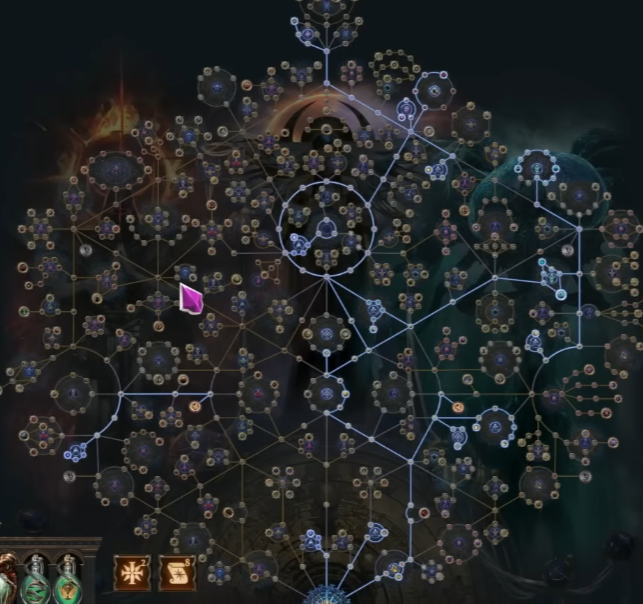
PoE 3.29 Delve Atlas Tree
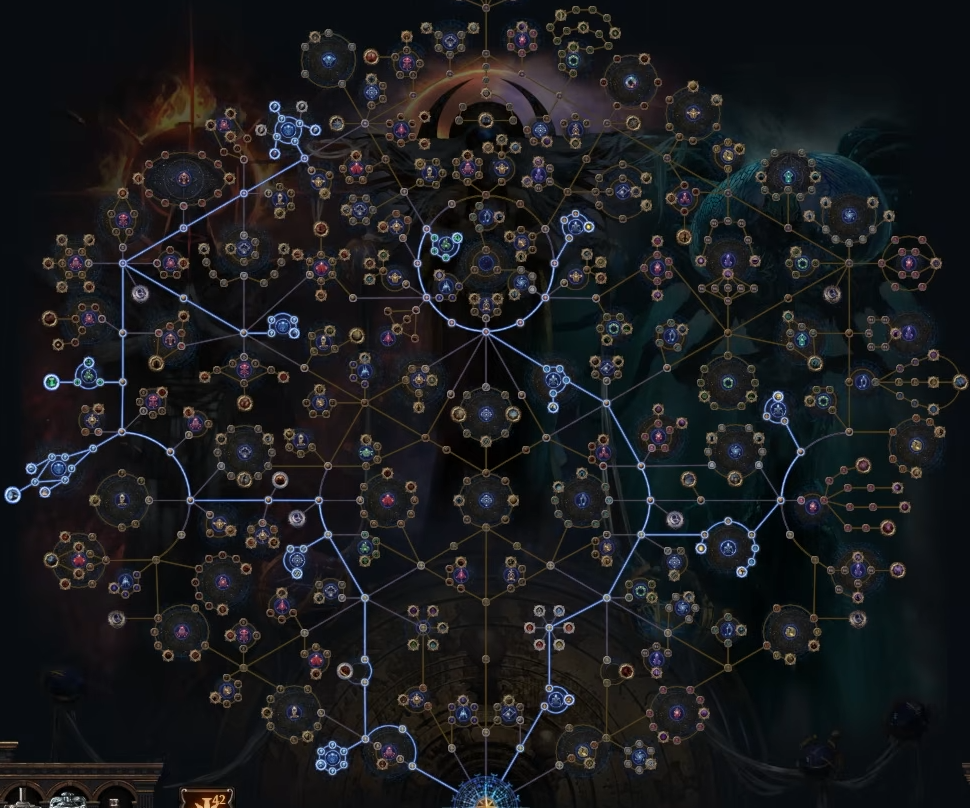
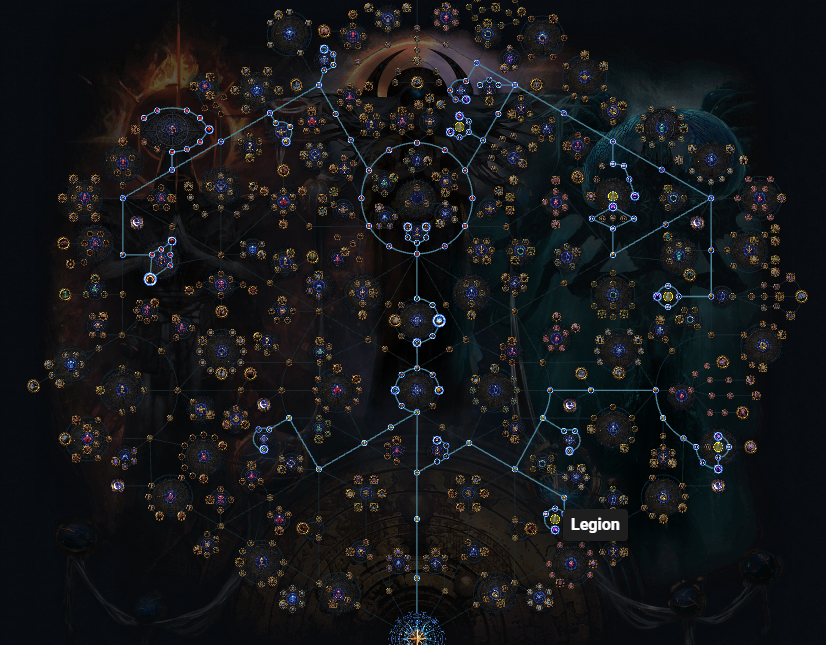
The Atlas Tree for this build is simple, practical and fully tailored for Delve resource gain, with no complicated niche allocations. The core allocation principle is to maximize Delve-related drops while supplementing auxiliary stable income sources.
1. Allocate all Delve-specific Atlas nodes to boost sulfite gain, fossil drop rate and hidden Delve zone spawn chances, which is the core of the entire strategy.
2. Add a small number of general map drop nodes to ensure stable map supply for sulfite farming.
3. Invest in minor scarab drop nodes to gain extra auxiliary loot during map runs.
4. Prioritize blue Altar nodes to avoid chaos resistance penalties that cripple chaos damage builds.
5. Aadd essence drop nodes for additional steady bulk income, as essences sell reliably in large quantities.
Best Build for PoE 3.29 Delve Farm
The optimal build for 3.29 Delve farming is the Death's Oath Chaos Aura Build, this is a zero-button casual build with ultra-smooth clear speed. It relies on Death's Oath aura and Profane Bloom to automatically explode and eliminate all surrounding monsters, eliminating frequent skill casting. The build stacks 6–7 million base DPS, which rises further with full Wither stacks, enough to clear shallow and medium Delve tunnels efficiently. Movement and survival are guaranteed by automated core skills: automated Phase Run and Withering Step provide permanent phasing effect, the most critical mechanic for Delve dark area exploration. Permanent phasing allows free traversal through dark zones without being blocked by monsters, and prevents darkness damage interruptions. For buffs and defense, triple Vaal Haste is used for maximum movement speed; Determination is dropped for higher mobility (safe for shallow Delve runs). Omen of Amelioration is equipped as a safety buffer for level 97+ characters. The build achieves 74% attack block rate with mana-infused staff and flask buffs, providing solid physical defense. A Quartz Flask is matched to stabilize phasing uptime, avoiding reliance on inconsistent kill-triggered phasing effects in dark areas.
This build is perfect for casual, fast-paced Delve farming. It requires almost no manual operation during exploration, only holding right-click Blight and occasional flare resets. For deeper Delve exploration, a tankier variant of this build is recommended to improve survival rate against high-damage deep mine monsters.