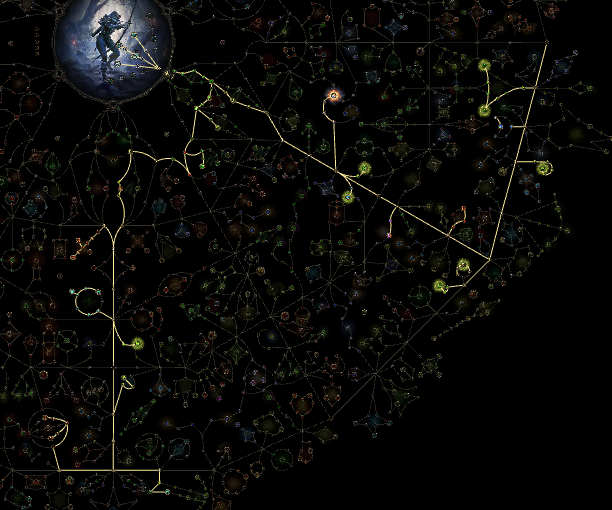



The release of Path of Exile 2 0.5 Return of the Ancients has brought a wave of changes that completely reshape how players generate wealth in the endgame. With reworked Atlas mechanics, the new Ezomyte Runesmithing system layered into Expedition, and refreshed crafting interactions through desecration and omens, the early days of this league have already produced some of the most lucrative farming opportunities the game has seen. Players who jumped in on day one are reporting 100+ divines pulled from focused strategies, and the currency meta is still actively being figured out.
This guide pulls together the strongest currency farming methods available right now in 0.5. Each section covers what the strategy is, why it performs, and exactly how to execute it so you can pick the path that fits your playstyle and start banking divines early in the league.
PoE 2 0.5 Currency Farming Guide (Return of the Ancients & Runes of Aldur)
The 0.5 patch has flipped the currency-making meta on its head. Expedition has been merged with the Runes of Aldor mechanic and is now arguably the single most profitable league mechanic in the game, capable of producing multi-divine loot explosions with zero juice invested. Abyss continues its tradition of being broken at league start, especially when paired with a rare-monster-focused Atlas tree. On the trading side, belt crafting has emerged as a low-risk, high-reward recipe that's printing divines while new players scramble to cap their resistances.
Below is the full ranked tier list of currency farming strategies, with each method covered in detail so you know exactly how to run it.
Related Read: PoE 2 0.5 Rune Remnants Location & Recipes Guide
1. Expedition Farming with No Atlas Tree for 100+ Divines
Expedition has been combined with the new Runes of Aldor mechanic, and it is currently producing the largest loot explosions in the league. Players are reporting 100 divines made in roughly a day and a half of farming purely from this one mechanic, without Atlas passives, without tablets, and on white maps.
Why It Works
Veressium remnants drop heavily: raw divines, alloys, runes, and rare uniques pour out of these encounters even with zero juice invested.
Expedition is not on the Atlas tree - the only way to juice it is through Atlas master nodes, meaning the entry barrier for serious profit is very low.
Loot explosions scale hard with rune slot count: 7 and 8-slot Veressium encounters absolutely dwarf the smaller ones.
How To Run It
Pick Jedo as your Atlas master and grab the node "Veressium remnants have a 10% chance to be rolled an additional time, keeping the rarest outcome." This passive is the single biggest multiplier for the strategy.
Push to around tier 8 maps, then head to the expedition area in the bottom right of the ocean.
Use a log book to reveal an area of the sea. Path through the middle of the ocean first to keep the right and left mechanics available later.
Target Grand Expedition encounters (identified by the spike border around the map). They spawn 2–3x the Veressium remnants compared to regular expeditions.
Scout the area first, see which Veressium remnants have worthwhile rewards, then commit to those. If a remnant has nothing good, drop one explosive and move on.
Hunt for Mirror of the Fallen Skies - a unique map that appears as a single Veressium encounter offering up to 8 slots of rewards.
The Alders Saga Play
When you find Mirror of the Fallen Skies, always take Alders Saga as the reward (instead of the tempting 3 raw divines). This item modifies your next Grand Expedition session with effects like:
"Veressium in this map has at least 5/6/7 slots"
"Veressium remnants in area are lucky"
With a 5-slot minimum modifier active, you'll average 2+ divines per map, with peak runs hitting 9 divines. Alders Saga is barely on the market yet, and once people catch on, it will become a multi-divine item.
What To Avoid
The downside of Alders Saga is variance, sometimes only one Grand Expedition spawns in your area and you've burned a rare item for one map. On average it applies to 3–4 Grand Expeditions per use, so it usually pays off massively. If log books spike in price and you can't afford to chain Mirror hunts, switch to running regular expeditions instead.
2. Low Budget Abyss Strategy for Printing Divines
This is an extremely low-investment, high-fun farming strategy that stacks multiple new Atlas mechanics from Patch 0.5 - primarily Abyss (with Amanamu faction for valuable Omens), alongside Rogue Exiles, Strongboxes, Shrines, Spirits, and Expedition - to generate roughly 2.6 divines per map on average (4+ div per map with lucky drops). With only ~180 exalts of tablet investment, testing yielded 81 divines across 20 maps, making this one of the most efficient low-budget strategies available without requiring rarity gear or expensive setups.
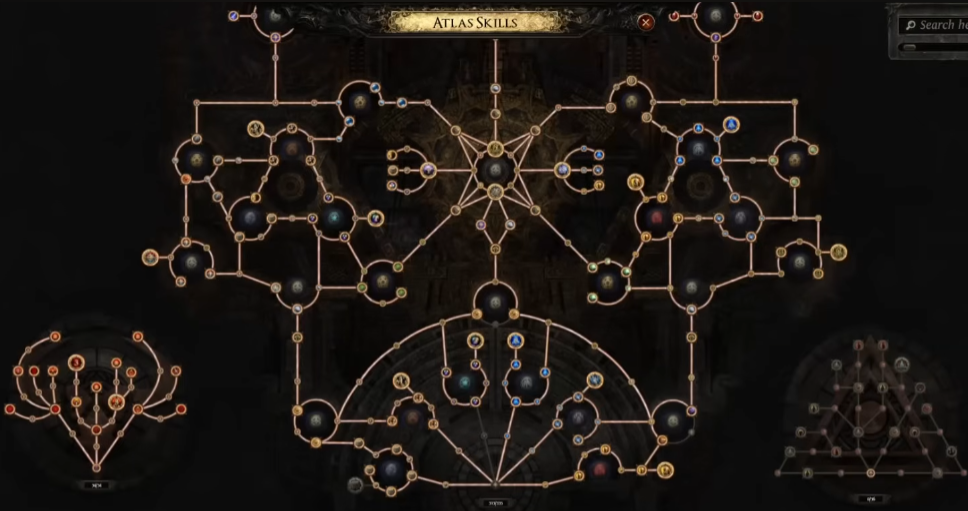
Step 1: Configure Your Atlas Passive Tree
Fill out the entire Atlas tree, but make these specific choices on notable nodes:
Shrines & Spirits:
Divine Blessing → Seeking Shrine (item rarity from shrines).
Wisps → Vivid Spirits (yellow spirits — most valuable, can drop Rite of Passage).
Other Wisps → Purified (25% chance for Sacred Wisps — orange, transforms monsters into map bosses).
Favor the Villain (25% chance shrines buff the boss instead of you — boss drops massive loot).
Abyss Mechanics:
Lord of the Pit → Proliferation (Abyss pits scatter through 70% of map).
Wild Treasure → Omens (boost Omen drops).
Balance of Power → Amanamu (drops Omen of Light and Omen of Echoes).
Chosen Path → Ruiner's Desires (Abyss can drop Heart of the Vaal jewels).
Overlord's Influence → Overlord Domain (powerful map bosses give additional Ruiner's Desires).
Bosses & Monsters:
Blood on the Stone → Powerful Summoning Circle Bosses.
Well-Equipped Opponents → Dexterity.
Evolving Thorns → Magic Pack Size.
The Journey Ahead → Effectiveness.
Nemesis Rising → Effectiveness.
Currency & Loot:
Essences → Ruin (chaos resistance essences — valuable).
Crystallized Patterns → Opulence (item rarity essences).
Legendary Jewels → Re-roll Jewelry (for tier 1/2 rings).
Increased Lightning Support Gems node (expensive drops).
Glass / Perfect Currency → 5% chance greater currencies upgrade to perfect in glass areas.
Corrupted Lattice node.
Swamp Mastery → 10% chance Exalted Orbs drop as Chaos Orbs.
Mutant Alliance → Cities count as Mountain biome.
Mountain Mastery → Chests contain 50% increased currency + tablet drops.
Step 2: Configure Your Master (Djinn Barya)
Use Djinn Barya with Spycraft / Eastern Knowledge:
Ancient Activations
Untold Histories (boosts Lineage Support chance)
Partial Translations (the broken double-tablet-effect mod — mandatory)
Step 3: Acquire Your 3 Tablets
Use a 3-tablet setup (drop to 2 if you need a safer 5-mod waystone):
Elevated Tablet — Provides +1 to zone level (boosts level 20 skill gem drops). Any secondary mod is fine; item rarity, monster effectiveness, or additional rare monster modifiers are best.
Abyss Tablet — Mandatory mod: "Map contains an additional Abyss." Other mods (monster rarity, strongbox chance) don't really matter.
Overseer Tablet — Empowers the map boss for massive extra loot. Increased monster effectiveness is a nice secondary mod.
These tablets are cheap — total investment around 180 exalts.
Step 4: Roll Your Waystones
Aim for 6-modifier waystones with 30–40% increased Item Rarity.
If your build feels unsafe, drop to 5-mod waystones for an extra revive (and skip the Overseer tablet).
Rolling tip: Use a stat filter site to search "Waystone Item Rarity Increase 35" and copy-paste into your map tab to instantly highlight good rolls.
Use Exalted Orbs to push rolls toward 6 mods.
Step 5: Execute the Map - Mechanic by Mechanic
Run every mechanic on the map for full value:
Abyss (your main income):
Clear all Abyss encounters thoroughly.
When Rogue Exiles spawn inside an Abyss and you kill them, they respawn inside and drop Granulated Orbs and Heart of the Vaal Diamond Jewels — with the new 0.5 notable, 5% chance these drop as 5-modded jewels (worth 2–3 divines uncrafted).
Amanamu drops Omen of Light and Omen of Echoes — sell instantly on currency exchange.
Strongboxes:
Only prioritize Researcher's Strongboxes.
Always juice them with Exalted Orbs until completely full — they drop Granulated Currency that frequently nets a divine or other valuable currency.
When a Spirit possesses ANY strongbox, juice that one too — possessed strongbox monsters drop tier 5 items, divines, and rare currency.
Shrines:
Click every shrine. Remember: with the Favor the Villain node, 25% of shrines will buff the map boss instead of you. This is good — buffed bosses drop significantly more loot.
Spirits:
Engage every Spirit encounter — they boost rare monster drops, map boss drops, and possess strongboxes.
Sacred Wisps (orange) can transform monsters into multiple simultaneous map bosses for huge loot.
Expedition:
Always do every Expedition encounter — high-quality maps make these drop excellent loot, including Lock Boxes that sell for ~1.5 divines each on the currency exchange.
Step 6: Profit Breakdown (What to Expect)
Across 20 maps in the test run:
Raw currency: 18 raw divines, 130 exalts, perfect orbs, fracture orb, chance/chaos orbs → ~29 divines.
Tablets dropped: 16 divines worth.
Abyss/Delirium drops (omens, jewels, Heart of the Vaal): 32 divines.
Misc (six-links, 53 maps for ~2 ex each, white heavy belts for HH chancing): 3.5 divines.
Total income: 81 divines (with lucky drops) / 58.4 divines (without lucky drops) for ~180 ex investment, averaging 2.6–4 divines per map.
Tips for Maximum Efficiency
A tanky build will let you safely level up while farming (ran from 95 to 96 during testing).
Don't skip any mechanic — every encounter contributes meaningfully to your per-map average.
This strategy scales naturally — once you have profit, reinvest into better-rolled tablets (especially Abyss tablets with the additional Abyss mod) for even higher returns.
3. Map Sustain & Fracturing Orb Farm for Printing Currency
Pathkeeper's Cleanse is a currency farming and map sustain strategy built around three pillars: stacking hidden waystone drop chance from Atlas passive nodes, juicing maps with multi-mod tablets, and hunting down Cleansed Areas to farm Fracturing Orbs (worth roughly 3.5–5 Divines each at the time of recording). The strategy snowballs naturally, early on you focus on sustaining maps and climbing tier, then transition into using Summoning Circles, Tablets, and the Ritual "Rite of the Nameless" synergy to multiply boss spawns inside Cleansed Areas, where each fractured nexus boss has a chance to drop Fracturing Orbs. It's flexible, sustainable, and pairs well with any league mechanic side juice (Abyss has been most rewarding so far).
Step 1: Be Aware of Hidden Buffs and Critical Bugs
GGG added 35–40% hidden quantity of waystones dropped by map bosses to certain Atlas nodes (Top of the World, Pathkeepers, Archaeological Interest, Valuable Paths, Eons of Contamination). These bonuses are server-side only and won't show up on the tooltip, but they are active. Also avoid these progression-breaking bugs:
Hilda can brick if you kill bosses in the wrong order on a Great Beast map with two bosses
Abyss "Balance of Power" keystone — only take the "Any Faction" option, or skip it entirely until hotfixed
Jada can brick if you fail his encounter
Arbiter of Divinity sometimes doesn't unlock the Atlas tree section — relogging may fix it; otherwise file a
/bugreport
Step 2: Maximize Mods on Your Maps
The number of modifiers on a waystone directly increases the final waystone drop chance:
4-mod map = ~55% waystone drop chance
5-mod map = ~80% waystone drop chance
6-mod map = guaranteed waystone from map boss
Early on, use Transmute → Aug → Regal to hit 3 mods. Once you reach red maps, Alchemy Orb to hit 4 mods is the standard. Use an extra Exalt to push to 5 mods whenever you can afford it — the difference in sustain is substantial.
Step 3: Climb in Tier Using Powerful Map Bosses
Look for maps marked with the "Powerful Map Boss" icon. Killing a Powerful Map Boss is guaranteed to drop a map one tier higher than the one you're running. These are the toughest non-pinnacle bosses in the game, so make sure your build can handle them before committing.
If you fall behind on tier, use the Doriani fallback: Alt-click him to buy maps one tier below your highest, take 9 of them to the Reforging Bench, and 3-to-1 them into higher tiers. His stock resets each time you climb a tier.
Step 4: Unlock the Atlas Passive Tree
From the Ziggurat Refuge starting point, head northwest to the Ancient Gateway to enter the Fortress region. Clear maps in this area to earn passive points (1 per map normally, 3 for points-of-interest with arrow icons, plus bonus points from pinnacle encounters). Eventually you'll fight the Arbiter of Divinity at the Origin Tower, who unlocks a button that auto-completes an entire Atlas section, granting ~50 points instantly.
Important: There are no respec points, so the order in which you allocate matters greatly.
Step 5: Atlas Passive Tree - Priority Path
Take these nodes in this order for maximum sustain and currency:
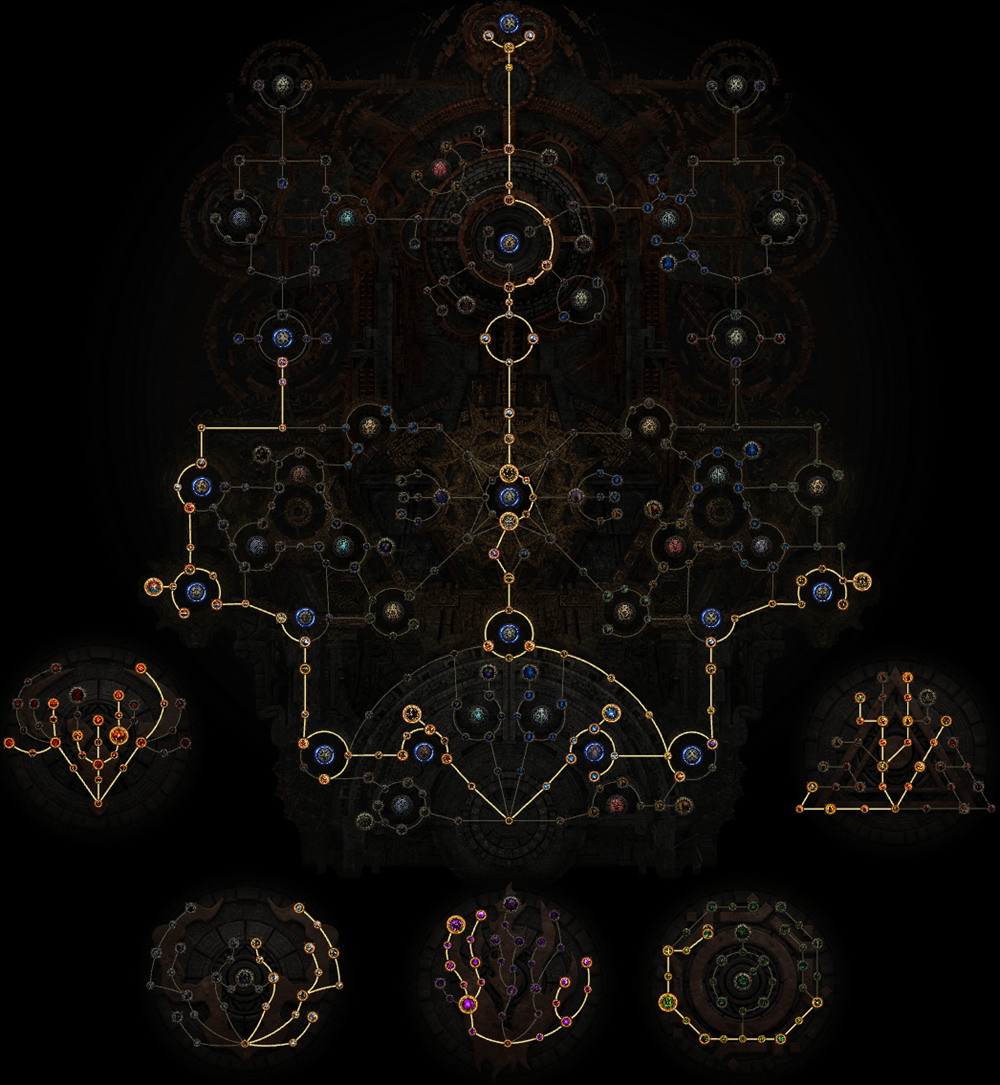
Shrines (skip Strongboxes — too slow) → path through to the right side
Pathkeepers — 15% increased quantity of waystones (hidden invisibuff)
Valuable Paths — 10% increased waystones from map bosses (hidden invisibuff)
Top of the World — precursor tower reveal radius + 10% chance for boss to drop an extra waystone (hidden invisibuff)
Eons of Contamination — another 10% waystone drop chance (hidden invisibuff)
Archaeological Interest — 15% increased quantity of tablets (hidden invisibuff)
Then fill out rare monster nodes — Rising Danger, Twin Threats, and No Simple Battles (floor of 3 modifiers on rares). Rare monsters are the primary loot source in maps, so prioritize these heavily. For magic monsters, take the 15% chance for additional modifier node over the 5% keystone — the stat budget is significantly better.
Step 6: Unlock Tablet Crafting Tier
Tablets are your primary juicing mechanic, so unlock the ability to roll up to 4 mods on them:
Reverse Transcription → unlocks 3-mod tablets
Partial Translation → unlocks 4-mod tablets (requires defeating the Arbiter of Divinity)
Once unlocked, Regal/Alch your tablets to 4 mods. The key roll to look for is 30–40% increased quantity of waystones — combined with 4–5 mod maps, this can push your effective waystone drop chance over 120%, doubling or even tripling sustain.
Step 7: Unlock Fracturing Orbs (The Jackpot)
This is the core moneymaker of the strategy. Path to:
Hidden Scars — REQUIRED to make Cleansed Areas drop Fracturing Orbs (part of Doriani's questline)
From Distances Untold — both small passives on this side give a 5% chance for Summoning Circle bosses (with extra modifier) to drop Fracturing Orbs
How to find Cleansed Areas: Look on the Atlas for blobs marked by a Corrupted Nexus (red coral blob). Kill the nexus boss, and the area transforms into white stone — that's the Cleansed Area. Clear it out, and the cleansed monsters can now drop Fracturing Orbs (only after taking Hidden Scars).
Step 8: The Big Synergy - Summoning Circles + Ritual's Rite of the Nameless
This is where the strategy explodes. Pick up Blood on the Stones (Summoning Circles) and the Ritual node "Bring Forth the Unseen" (Rite of the Nameless), which carries map bosses across a chain of maps into subsequent rituals. The bosses summoned by your Summoning Circle bonuses get pulled into the chain — and they can each drop Fracturing Orbs. This routinely produces multiple Fracturing Orbs per map (one map dropped 2 in a single run = ~7 Divines).
Other synergistic Atlas nodes:
Challenging Foe — extra circle bosses
Spreading Darkness (Ritual) — tainted rituals for higher belt/flask drop chance (Mageblood hunt)
From the Mists, Reborn, Shadow (Ritual) — pack more monsters into ritual zones for more tribute
Step 9: Run League Mechanic Trees Efficiently
Each league mechanic has its own Atlas tree branch unlocked by doing that mechanic. Recommended priority:
Abyss (most rewarding so far): take From Below and Dark Depths first, then loop back for the left-side nodes. Take Lord of the Pit for scattered abyss pits and increased effectiveness per closed pit. ⚠️ Avoid the bugged Balance of Power options.
Breach: take left-side nodes first; right side requires heavy Genesis tree crafting to unlock. Take Slower Fog Dissipation and Are You Sure You Want To Do That? early.
Ritual: prioritize the free reroll chance on favors and the synergy nodes mentioned in Step 8.
Step 10: Master System Setup (Hilda Priority)
Unlock all 4 Hilda points first by completing simple boss-kill quests on directed maps. Best Hilda nodes for currency farming:
Breeding Season - more rare monsters and monster mods
Mighty Prey + Soul Eaters - strong for bossing-focused builds
Ancient Inscriptions - 25% increased effective explicit mods per type of tablet (excellent if running multiple league mechanic tablets)
Patient Betu - chance to replace rare monsters with random map bosses (huge for sustain AND rewards)
Then move to Doriani points by clearing Corrupted Nexus areas (which you're already doing for Fracturing Orbs).
Step 11: Tablet Modifier Priority
On your 4-mod tablets, roll for:
Increased quantity of waystones (30–40%) - top priority for sustain
Effectiveness - roughly equivalent to quantity, XP, and toughness
Modifiers that synergize with your league mechanic of choice (Summoning Circle bonuses, Ritual mods, etc.)
Step 12: Execution Loop
Your moment-to-moment gameplay becomes:
Alch maps to 4–5 mods, slap on 2–3 tablets with waystone quantity
Path your maps to hit Cleansed Areas and Powerful Map Bosses whenever possible
Run Ritual chains (Rite of the Nameless) across blocks of maps to multiply boss spawns
Cash in Fracturing Orbs (~3.5–5 Divines each), reinvest into more tablets and mapping
Continue filling out the Atlas tree — every league mechanic point you unlock adds another layer of juice
5. Boss-Focused Map Progression Currency
Before any league mechanic spec'd hard, simply pushing the Atlas through bosses produces a steady currency stream. This serves as the bridge between campaign and the bigger farming strats above.
Atlas Path
Path toward the Burning Monolith first, because surrounding maps reward journal passive skill points.
Aim for the Eastern or Western Enigma Chamber at Wasteland tier 10, completing both unlocks a huge chunk of the Atlas tree.
Tier 6 unlocks already grant most of the foundation passives.
Early Picks Worth Taking
Essence nodes - great for general crafting, and Perfect Essence of Battles sells for solid currency
Shrine nodes - Gloom Shrine for damage, Lightning Shrine for clear, Seeking Shrine for currency and XP
Pack size and extra monsters on the left side of the tree
Adaptive Biology for juicing rares
This is the foundation everything else sits on. Once tier 10 hits, transition into Abyss or Expedition specialization.
6. Belt Crafting via Desecration
Belt crafting was the first big money-maker for traders in the opening days, with one streamer pulling 100–150 divines in 24 hours from a low-risk recipe. This works because new Monk and Spirit Walker ascendancies are squishy, so demand for resistance and life belts is sky-high during the first few days of any league.
Sniping the Base
Filter the trade site for:
Item level 71+ belts
Two charm slots minimum (one charm slot belts won't sell)
One empty suffix
At least 70 weighted sum across resistances
Life prefix is a bonus but optional
Ideal snipes go for around 20–35 exalts. If you target T1 resistances specifically, raise the weighted sum filter to 80–85.
The Craft Itself
Buy Preserved Collar Bones for desecration
Apply Omen of Dextral Necromancy to force the desecration onto the suffix
Apply Omen of the Sovereign if you want to guarantee a specific Ulaman modifier (1 in 4 chance for the resistance pair you want — fire+chaos, cold+chaos, or lightning+chaos)
Desecrate at the Well of Souls to add the third resistance
Slam exalted orbs on remaining open prefixes for life and mana
Optionally use a Greater Exalted Orb (around 10 exalts) for a guaranteed minimum modifier of 35
Expected Returns
Triple T1 resistance belts: 15–20 divines
Belt with life + triple resistance: 3–5 divines
Total cost per craft: roughly 1–3 divines
You can also craft from magic bases with a single resistance roll using greater elemental essences for an even cheaper entry point. The window for this strategy is short — once players settle into Genesis 3 mapping, demand will cool off after 2–3 days.
More effective currency farming strategies will be updated here after testing, stay tuned!
The most consistent path to currency in 0.5 is layered: push your Atlas through bosses to lock in tier 10 and the Burning Monolith, transition into either Expedition or Abyss as your main farm depending on which mechanic feels better, and run belt crafting on the side during the first few days while resistance demand is peak.
Expedition currently offers the biggest single-map payouts thanks to Mirror of the Fallen Skies and Alders Saga. Abyss provides the most consistent grind with the deepest Atlas tree synergy. Belt crafting gives you a high-margin trading loop that doesn't require any mapping at all.
As the league matures, juicing methods for both Abyss and Expedition will get refined further. For now, focus on one main strategy, max out its supporting Atlas tree, and let the side strategies feed in passively.