


Path of Exile 3.29 Curse of the Allflame has arrived with sweeping reworks to Abyss, Legion, Breach, and the entire gem socket system, but one league mechanic that remains a rock-solid PoE 3.29 currency generator is Harvest. If you're looking for a low-effort, near-Alch-and-Go farming loop that pays out consistently from the moment you hit maps all the way through your late-game progression, Harvest is still one of the top picks for the opening weeks of the league. Here we are going to break down the current state of Harvest in 3.29, the balance changes that affect its profitability, and a fully fleshed-out Atlas tree, Scarab, and mapping setup that averages roughly 0.2 Divines per map at league-start prices.
PoE 3.29 Harvest Farming Guide
Harvest in 3.29 sits in a slightly awkward spot compared to previous leagues. Its raw Lifeforce-per-hour has taken a hit from indirect nerfs, and its role in high-end crafting has been trimmed back with the removal of Synthesise crafting. That said, Lifeforce prices remain elevated at league-start (around 100 per 1 Chaos, or roughly 10K per Divine once the economy settles), and the mechanic still functions as one of the most accessible currency loops in the entire game because it runs cleanly in white 8-mod corrupted maps with almost no investment.
Before jumping into the Atlas tree and mapping strategy, it's worth going over exactly what changed in 3.29 so you know what to expect from the mechanic this league.
Changes To Harvest in PoE 3.29 League
Several patch changes directly and indirectly affect how Harvest performs in Curse of the Allflame. Some are direct nerfs to Harvest itself, and others are ecosystem shifts that ripple into Harvest's overall value.
Synthesise Crafting Option Removed
The single biggest direct Harvest change this league is the removal of the Harvest crafting option that Synthesised an item. The practical consequences are:
You can no longer use Harvest to add Synthesis implicits to items.
Non-unique Synthesised items are no longer normally obtainable through this route.
The Bestiary craft to reroll Synthesis implicits now only works on Unique items.
This effectively removes Harvest as a source of new Synth bases in 3.29, which lowers Harvest's ceiling for mirror-tier crafting but has almost no impact on standard Lifeforce farming.
Mirage Removal Reduces Harvest Yield
Because 3.29 removes the Mirage league mechanic from the core game, the Horned Scarab of Awakening is also gone, which means Harvest can no longer be doubled via that route. In practical terms this translates to:
No more double Harvest setups.
Lower overall Lifeforce-per-hour ceiling.
Fewer high-volume Harvest farm strategies compared to 3.28.
Community analysis estimates Harvest profitability is meaningfully reduced due to the loss of Mirage doubling and Awakening interactions, but the mechanic remains extremely profitable in absolute terms, just not as absurd as it was last patch.
Party Quality-of-Life Change
A small but useful improvement: any player in a party can now interact with Harvest plots. Previously only the map owner could trigger them, and this change improves party mapping flow considerably.
Ecosystem Shifts Around Harvest
Because Synthesis crafting was removed from Harvest and non-unique Synth items were removed from normal acquisition, the broader high-end crafting ecosystem has moved in the following directions:
Less access to Synth implicits overall.
Greater reliance on Fracturing mechanics for endgame gear.
More emphasis on conventional influence crafting.
This indirectly reduces Harvest's role in mirror-tier item creation, but has no impact on the standard "farm Lifeforce, sell for currency" loop that most players run.
With the balance picture clear, the next step is putting together the Atlas tree, Scarab loadout, and mapping loop that turns Harvest into a consistent 3-minute-per-map currency engine.
PoE 3.29 Best Harvest Atlas Tree, Scarabs, and Mapping Strategy
This strategy averages roughly 0.2 Divines per map on 3-minute runs, which translates to several Divines per hour at league-start prices. It uses one Scarab to guarantee Harvest on every map, and it pairs Harvest with Eldritch Altars to double-dip on per-map value. The setup works whether you're still progressing your Atlas or already sitting on all four Voidstones.
1. Atlas Tree Setup for Harvest Farming
The Atlas tree splits into two versions depending on your Atlas progression state.
If you're still progressing through the Atlas:
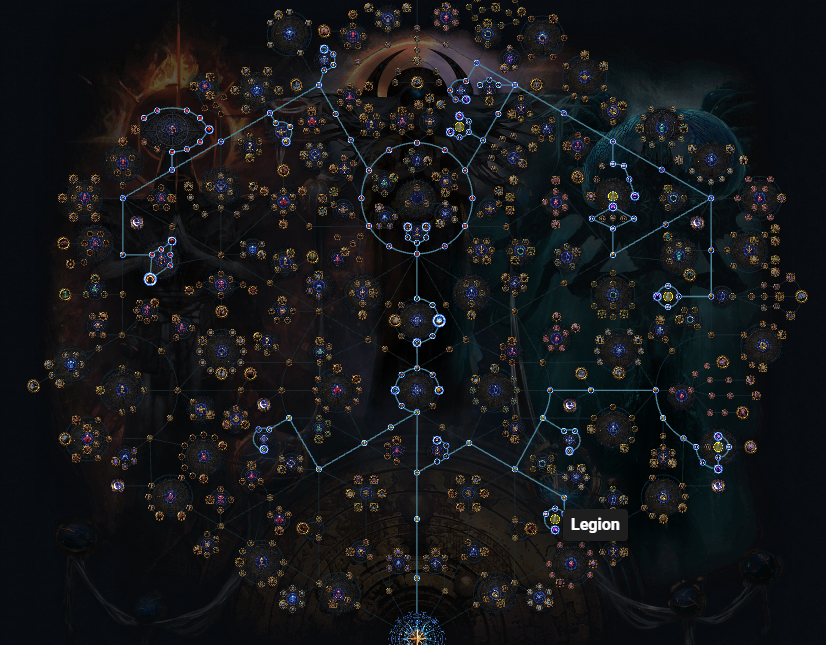
Rush through the middle of the tree all the way up to Enravering Vision.
Then loop back and start picking up all the Harvest nodes so you see Harvest spawn while you're clearing yellow and red maps.
This gives you passive income during Atlas completion without slowing down your progression, and it's the setup recommended for the start of every season.
If you're already in T16 with a completed Atlas:

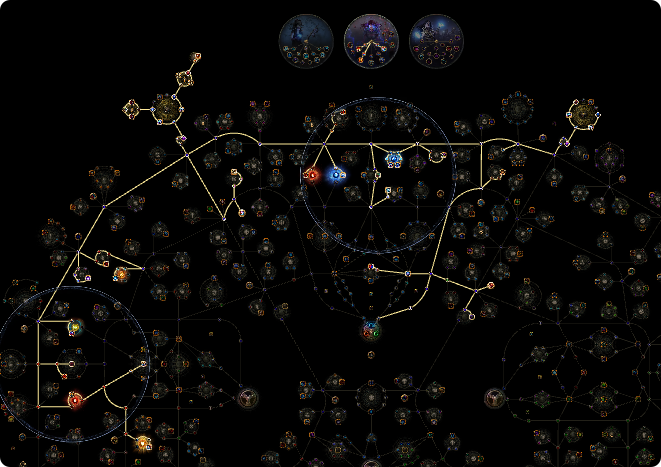
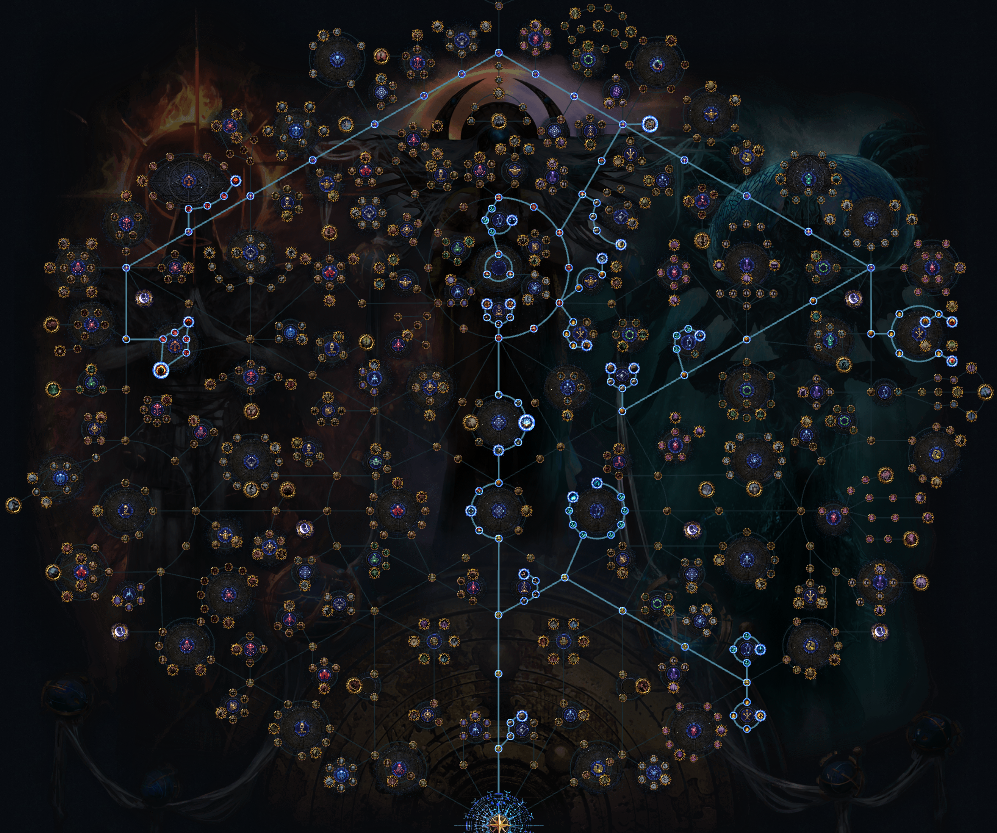
The full 138-point tree focuses on Harvest nodes as the core.
Pick up all the good Harvest cluster nodes for plot size, Tier 3 seed chance, and Lifeforce per plant.
If your map sustain feels stable, feel free to cull the beetles and any of the map sustain nodes to reclaim points.
Light of Dawn and some of the blockers for bear Scarab drops can also be culled depending on the current Scarab economy.
You can also do Harvest on 8-Mod Maps if you wish:

Crop Rotation notes:
Crop Rotation is skipped in an Alch and Go setup like this because the effort-to-reward ratio is bad at league-start.
At the beginning of the league, all Lifeforce colors trade for roughly the same amount, so targeting specific colors doesn't matter.
If you're running this a week or two into the league and one Lifeforce color has spiked in price, pick up the nodes that reduce the chance of the current cheapest Lifeforce color.
Additional Atlas cluster picks:
Take all the Strongbox nodes for a decent per-map profit bump.
Take the Shrine nodes because shrines accelerate map completion and are just fun to have.
Take some of the Scarab drop nodes for passive Scarab income across hundreds of maps.
Block all mechanics with low-value Scarabs at league-start (this shifts as the season progresses, so check Scarab prices weekly and adjust).
Mercenary and Luminary considerations:
If you're playing Luminary, you're basically forced to pay the Luminary tax and pick up all the mercenary nodes on the tree.
If you're not a Luminary and don't care about mercenaries, skip these and pick whatever else you want with those points.
Mercenaries can add reasonable per-map income (the chance of Divines in their rucksack is honestly kind of high), but they're difficult to handle, so only invest if your build can deal with them.
For Luminary mercenaries specifically, take Less Strength and Less Endurance along with 60 and Supremacy for a higher chance of Many Shots, which is what Luminaries actually want.
Scarab Setup
The Scarab loadout is where this strategy earns its Alch and Go reputation:
Harvest Scarab of Doubling is the only mandatory Scarab, guaranteeing a Harvest encounter in every map.
Fill the remaining slots with generic Scarabs (Cartography, box, or Divination) based on what you have available and what pairs with your Atlas tree.
If Sacrifice Fragments are cheap and you have the Multiplying Modifiers notable, slot those for the 2% increased Scarab effect per fragment.
Don't waste time hunting for a perfect Scarab combo, this is a volume strategy, and Scarab overhead eats into your profit.
Map Choice: Mausoleum Is the Pick
All maps in this strategy run on Mausoleum, and there's a specific reason for it:
The Mausoleum boss doesn't exist. This matters because Eldritch Altars can't roll boss-related modifiers when the map has no boss, giving you better overall modifier odds.
Skip the boss entirely on every run. The only exception is when your Exarch or Eater progress bar fills up and you want the invitation.
Roll your map, regex out any mods your build can't handle, slot the Harvest Scarab of Doubling, and send it.
Map rolling tips:
Run white base maps and 8-mod corrupt them with a Vaal Orb if you want the maximum Quantity and Pack Size bonuses.
Aim for 110%+ Item Quantity and 40%+ Pack Size on rolled maps, though at league-start you can absolutely run cheaper rolls and still profit.
Any tier works for Harvest Lifeforce yields, T7 gives similar returns to T16, but T16 is preferred here because of Altar profitability scaling.
Altar Strategy: Exarch vs. Eater
The strategy stacks Eldritch Altars on top of Harvest for a serious per-map profit multiplier:
Exarch Altars are better at league-start, they're a lot more profit than Eater in the opening weeks.
As the season progresses, Exarch and Eater profitability tends to normalize, at which point you can run whichever one is easier to build for.
When clicking altars, prioritize Quantity-related modifiers because they apply to the amount of Lifeforce you get from Harvest.
The Full Map Loop
Once everything is set up, the per-map execution is fast and repeatable:
Alch and regex your Mausoleum map.
Slot in the Harvest Scarab of Doubling plus any filler Scarabs.
Run through the map, clicking every Eldritch Altar as you go, favoring Quantity modifiers.
Skip the boss (there isn't one).
Locate the Harvest encounter and trigger it.
Prioritize the plots with the most Tier 3 seeds, don't worry about Lifeforce color at league-start.
Kill everything, collect Lifeforce, and exit.
Repeat.
Each map takes roughly 3 minutes with decent clear speed and yields around 0.2 Divines in combined Lifeforce, Chaos drops from Xoph's Cultists, Strongbox rewards, and Scarab drops.
Flask and Keystone Setup for Speed
Since this is a "run in, harvest, run out" strategy, movement speed is everything:
Use two Quicksilver flasks with Increased Movement Speed and Increased Effect rolls, plus the Increased Effect enchant. Alternate between them for near-permanent uptime.
Take the Dance of Destruction keystone on your Atlas tree if your gear is still under-tuned, monsters have less life, which lets you clear Harvest plants and Altar mobs faster.
Expected Profits and Scaling
At league-start prices, expected returns from this setup are:
Roughly 0.2 Divines per map on average, with variance based on Altar rolls and Harvest plot spawns.
Several Divines per hour given 3-minute map times.
1,000 to 3,000+ Lifeforce per map, with lucky runs pushing 4,500+.
Once you've completed the full 138-point Atlas tree, expect 60,000 to 100,000 Lifeforce per hour, or roughly 600 to 1,000 Chaos per hour at opening prices.
Prices fluctuate throughout the league, but this strategy consistently accelerates early-game upgrades enough to fund your first real build investments and get you into more specialized farming loops afterward.