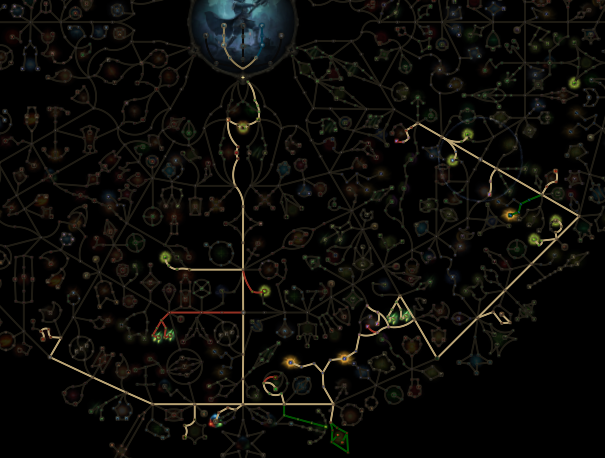



The Forbidden Rites Event League is live, and the first few days of any fresh economy are where fortunes get built. With Path of Exile 2 patch 0.5.5 resetting the market, adding new Ritual mechanics, reworking the Trial of Chaos, and introducing Expedition Tablets, knowing which farming routes print currency fastest can put you weeks ahead of the pack. In this PoE 2 0.5.5 farm guide, we will update the best Atlas trees, mapping setups, and farming rotations for Forbidden Rites, covering everything from day-one Breach printing to endgame Vaal Temple stacking, so you can pick the right strat for every phase of the event.
PoE 2 0.5.5 Best Farming Guide (Atlas Tree, Mapping, Tablets Setup Strats)
Path of Exile 2 patch 0.5.5 went live on September 4th, 2026, bringing with it the Forbidden Rites Event League. This event runs as a mini-league lasting roughly three months, ending alongside Runes of Aldur when Path of Exile 2 1.0 fully launches on December 11th. With a fresh economy, new Ritual mechanics, a reworked Trial of Chaos, and the addition of Expedition Tablets, players have a clean window to stack currency fast.
Since Forbidden Rites resets the economy and adds new endgame layers like the Viridian Wildwood, veteran farming routes need adjustments. Before diving into the top strategies, let's look at what actually changed in the Atlas and mapping systems for this patch.
Changes to Atlas, Map & Farming in Path of Exile 2 0.5.5
Before going over the top strategies, let's look at what actually changed in the Atlas and mapping systems for this patch:
Ritual & Viridian Wildwood Additions
Rituals now spawn guaranteed in each campaign zone, giving powerful Rare items during the campaign (with a few designated Ritual altars still dropping Uniques). Unique enemies slain in a Ritual carry over to the next area, producing chained multi-boss encounters by the end of a zone.
In the endgame, a new currency called Sacred Blossoms may appear in Ritual windows. Applying it to any Atlas map adds a Viridian Wildwood area at the start of the map, where you collect three wisp types before being teleported back to the surface:
Blue Wisps turn monsters magic
Yellow Wisps add mods to Rares
Purple Wisps add Rarity to monsters
Collected wisps then empower monsters in the map, making them far more dangerous but also far more rewarding.
Trial of Chaos Overhaul
The Trial of Chaos got the largest changes in this patch. You can now leave between rooms and return later, run up to 30 rooms instead of 10, and receive bonus chests per room. Boss fights were redesigned with less flying, the Trialmaster only freezes time once, all modifiers now grant extra item Rarity, and over 10 new Wager modifiers were added. Soul Cores got buffed and new ones were introduced. Rewards from the Trial now exclusively grant Currency and Soul Cores.
Fortress & Atlas Streamlining
Defeating the Arbiter of Divinity multiple times is no longer required to reveal the entire Fortress. A single additional Arbiter of Divinity kill now completes the process. Abyssal Ravines can also appear as you travel the Atlas, and each closed Ravine adds bonuses to the next map.
Runes of Aldur Going Core & Expedition Tablets
Runes of Aldur content is now core, and a new tablet type called Expedition Tablets has been added. These tablets can spawn two Expeditions in one area, two standalone remnant encounters, or roll modifiers that mimic what the Alder's Saga used to give players. The Runes of Aldur League also continues to run alongside Forbidden Rites for anyone finishing challenges.
Breach Rares Nerf
One of the few direct nerfs in 0.5.5 was to Breach tablets. The maximum number of additional rare monsters that can spawn per Breach tablet dropped from three to two. Pure Breach rare farming still works, but it dropped from S-tier to A-tier because of this adjustment.
With those Atlas and endgame changes covered, let's move into the actual farming rotations that produce the best returns as the league progresses.
PoE 2 0.5.5 Fast Atlas & Map Tiers Progression
Getting to juiced T15 mapping as quickly as possible is the priority in the first days of Forbidden Rites. The faster you clear the campaign, complete the Fortress, and finish your core Atlas passives, the sooner your farming routes actually print currency. Here is the exact order to push through the campaign, map tiers, and the main Atlas quest line.
Campaign Speedrun Priorities
Push through the campaign as fast as your build allows. Speed here has two payoffs: you catch Unique-heavy Rituals during their peak value window, and you enter maps while the economy is still starved for gear.
Try the campaign Rituals for the multi-boss chain reward, but do not overinvest during acts. Grab the Reforging Bench quest reward in Act 3, since that bench is central to fast map tier progression later. Keep a compact zone layout guide open on a second monitor for tricky areas like Burial Chambers and Red Veil so you can read entrance layouts at a glance.
Once you finish acts, head straight to the Seal Vault to bring Jaydo online. He is the top pick for Breach farming, so this step is mandatory before any serious mapping starts.
Pushing Map Tiers Fast (3-to-1 Reforge Method)
You start the Atlas at T1 maps, but there is no reason to sit there if your build handles higher tiers. Two methods push you up the tier ladder quickly:
The Reforging Bench (3-to-1) - Feed three waystones of the same tier into the bench and receive one waystone of the next tier up. This bypasses the powerful map boss requirement entirely. Three T1 maps become a T2, three T2s become a T3, and so on. Doing this immediately after entering maps can jump you from T1 to T3 or T4 within minutes.
The Doryani Vendor - Doryani always sells maps one tier below your highest completion, and his stock refreshes on every level up. Buy his stock often, especially right before you level up. Pair Doryani purchases with the Reforging Bench and you can chain-craft your way into T5 or T6 maps before your Atlas is even half explored.
Powerful Map Bosses - Outside of the Reforging Bench, powerful map boss nodes are the only in-map source of higher tier waystones. If you have limited stock, save your highest tier waystone for a powerful map boss node so you have a real shot at a plus-one tier drop. Running your top waystone on a random node when you cannot spare it wastes progression time.
Alchemy vs Transmutation on Maps
While pushing the Atlas, run maps as Magic (transmutation) rather than Rare (alchemy) unless you need extra map sustain. The reason is simple: with no Atlas tree points yet, extra juice on maps returns almost nothing, and you are mostly boss rushing anyway. Alching every map wastes currency that should go into Breach belts, Hinekora's Lock, or Chaos Orb storage.
Save your Alchemy Orbs for red-tier maps once your core Atlas passives are in place. If you have plenty of T14 and T15 stock, magic maps are the correct call for fast Atlas completion.
Atlas Points Process (Fortress Rush)
Patch 0.5.5 cut the Fortress completion requirement in half. You now only need to kill the Arbiter of Ash once and the Arbiter of Divinity twice to open every Atlas point. Here is the clean route:
Rush the first Precursor Tower to spawn the Fortress.
Push the main gate to the middle, then hit the side gates to reach the Western Enigma Chamber and the Eastern Enigma Chamber. Clear both to get the last two stones for the Arbiter of Ash fight.
Kill the Arbiter of Ash to open the area past the Fortress.
Head to the Original Tower in the middle, which triggers the quest to clear one Matriarch Hold and one Patriarch Hold. These usually spawn near each other outside the Fortress, often within visual range.
Fight the Arbiter of Divinity the first time to complete one Fortress section.
Do one more Matriarch Hold and one more Patriarch Hold outside the Fortress to power up the second Arbiter of Divinity fight.
Kill the Arbiter of Divinity a second time and the full Atlas is complete.
This is a huge time saver versus the old six-kill requirement.
Atlas Trap Nodes to Skip
Three Atlas passives are traps that give up more than they return in 0.5.5:
Mantrap (10% chance for Essence monsters to be Rogue Exiles). Still buggy, Rogue Exiles frequently spawn outside Essence range, avoid it.
Survival of the Fittest (rare packs in desert areas gain additional rares, but with additional rares they instead become one rare with double effectiveness). Terrible for Abyss farming since Abyss is capped at one Omen drop per rare monster, so fewer rares means fewer Omens.
Reactive High Seeding (Breach completion chance to add Hives to maps). Hives are widely considered poor content, so seeding them randomly into your maps just drains time.
The three small increased gold nodes are optional skips. Gold may have a very minor negative effect on raw currency drops, though the impact is small. Path around them if your Atlas layout allows it.
Which Atlas Cluster to Rush First
For a trade player, skip the main Atlas story cluster early. Those upper nodes only offer a few map tier drop chances, which is not enough return for the boss workload at low character power. Instead, push into a league mechanic cluster first:
Abyss (east) for guaranteed rares, waystone drops, and desecrated currency
Breach (also strong for day one) for splinters and specialized item drops
Ritual (south) for uniques and Head of the King ritual farming
Expedition (between) for Perfect Flux and logbook rewards
After your first mechanic tree is done, take a Master node or two (Doryani for the "maps are always one tier higher" perk, or Jaydo for Breach scaling), then push the core Atlas tree, layer in Delirium as a background setup, and finally pick a late-league mechanic transition like Expedition or Vaal Temple.
General Endgame Progression Tips
Only push into higher tiers when your build is comfortable at the current one. Dying costs 10% XP per death and can also brick maps with tablets or powerful boss nodes attached. If your build cannot handle T15 yet, farming T13 or T14 at full speed prints more currency than corpse-rushing red maps.
Sustain the tier you are on with Doryani buys plus the Reforging Bench, and only push to a higher tier when a powerful map boss drops a plus-one waystone or your build gets a fresh upgrade. Quest state requirements are the one exception, some league mechanic quests (like the second Abyss step) require yellow tier maps, so force a push when the quest gates you.
PoE 2 0.5.5 Best Farming Strats (Early, Mid, Endgame)
Not much shifted between 0.5 and 0.5.5 in terms of farm design, so most veteran routes still hold their spot. The strategies below are ordered from league starter routes you can run on day one to mid-league and endgame content that scales as crafting demand builds up.
1. Breach Farming with the Genesis Tree (S-Tier, League Starter to Mid)
For the first days of Forbidden Rites, Breach farming is by far the strongest early strat. It's cheap to set up, works with low-budget gear on T14 through T16 maps, and Breach tablets are absurdly affordable at league start (around 15-40 Exalted Orbs each). Within 15-20 hours of gameplay, you can pull 100k Breach splinters solo, and even more running in a party where only the host needs the Atlas tree fully specced.
How To Set Up:
Get your tablets. The only modifier that matters is increased quantity of Breach splinters found in map. Ignore pack size, effectiveness, rarity, and rare monster mods. If you roll a secondary mod of quantity of Wound Gifts found in map, keep that tablet since Wound Gifts are the choke point for Breach farming. You need four tablets for city biome runs.
Rush Jaydo first. After campaign, head straight to the Seal Vault to bring Jaydo online. He is the best master for Breach farming, so this step is mandatory.
Push the Breach Atlas cluster. Once Jaydo is handled, push toward the Breach cluster on the Atlas passive tree. Every node in this cluster matters. The city map node especially pushes Breach splinter yield from 7-8k per map up to 11-13k depending on Jaydo progression.
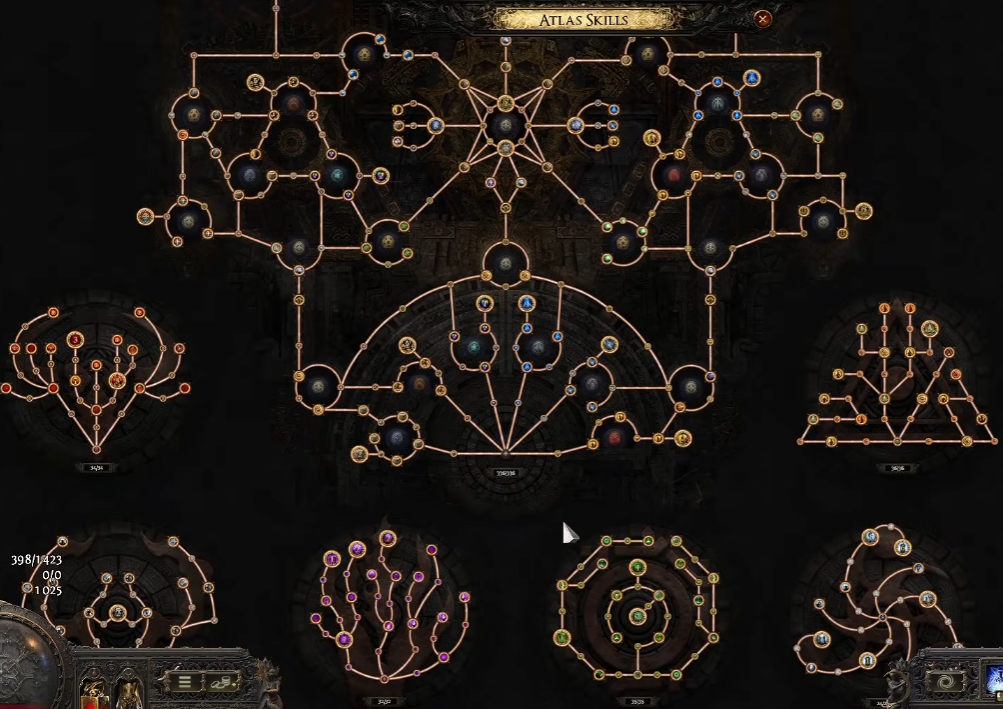
Print belts on the Genesis Tree (day 1-3). Belts fix defenses fast, which is exactly what Twister and Grenade builds need to push into T14-T15 maps. Your tree setup:

Plan to spend around half a million Breach splinters on belts. List everything at 1-2 Exalted Orbs, keep the double or triple-res rolls for careful pricing.
Minimum modifier level 20, reroll to keep highest value
Minimum modifier level 30 and 40 (guarantees at least 34+ resistances)
Chance to yield additional item nodes
Cannot have flasks (charms are better)
Skip mana mods, prioritize high life and resistances
Pivot to rings (day 3-5). With most of the player base running Twisters, Monks, or Gemlings, flat damage rings are in massive demand. Set up the ring tree with:
Target prefixes are flat physical, flat fire, flat lightning, flat cold, plus Rarity. Suffixes want elemental resistances, all-elemental resistance, or attack speed alloys. A T1/T2 double-flat kinetic ring with open prefixes can sell for several divines on day two.
Minimum modifier level 20
Chance for additional Breach ring
Additional item nodes x2
Chance for Kinetic ring
Minimum modifier level 30 and 40 for damage mods
Minimum modifier level 40 for resistances
5% chance for Refined Breach Rings (25% max quality)
Pick the most expensive Wound Gift type. Lavish Wound Gifts are usually the priciest, selling for 5x-6x what Belt Wound Gifts go for. Selling one Lavish can fund two or three Belt Wound Gifts, so pay attention to market prices before picking your Atlas node.
Run maps at T14-T16. Avoid the deadliest map layouts. Anything you feel smooth on works. Party farming saves 20-30 minutes per 100k splinters, so if you can group up, do it.
2. Expedition Farming (S-Tier, Best Farm in the Game)
Expedition is currently the top farm in PoE 2 0.5.5, even without Alder's Saga existing as a standalone mechanic. Reports show 200+ divines pulled in early league runs, with single maps dropping 6-9 divines in raw currency plus level 82 bases and remnant rewards. It has the highest skill ceiling of any farm and requires a build that can handle giga-juiced rare monsters, but the payout is unmatched.
How To Set Up:
1. Logbook Setup
Complete the King's March quest to access the ocean, then use Log Books on Uncharted Waters to progress deeper. Toggling a saga guarantees a specific boss encounter:
Olroth Saga: Costs less than half a divine, guarantees an Olroth boss fight that can drop Lineage Support Gems like Olroth's Conviction (38+ divines). Best value saga.
Utrid Saga: Guarantees the Utrid boss, which has a chance to drop the quest item that converts (at 10,000 mana) into a 200-500 divine wand. Only one per account, so treat it as a bonus.
Top rumor tags to run include Cold as Ice (frigid bluffs, dense remnants), Origin of the Fallroth, and Starrinker Secluded Temple.
2. Travel Maps (Delirium Setup)
Use travel maps as free income between grand expeditions. The Delirium boss rush setup adds no meaningful time to a map and prints extra splinters.
Tablet mods: Rarity, effectiveness, rare monsters on prefix; increased unique monsters, increased fracturing mirrors, increased simulacrum splinters on suffix. These tablets cost 10-20 exalts each.
Atlas master: Jade Spycraft (Doryani style tree with unexpected missions, Eastern knowledge, partial translations, keen appraisal).
Delirium tree: Only six points needed, with the simulacrum splinter drop node as the target.
Map roll: Any six-mod map. Grab the Delirium mirror, run to boss, kill boss, end delirium.
Return: Roughly one-third of a divine per map in splinters alone, on top of your normal map loot.
3. Grand Expedition Maps (Main Payout)
This is where the currency prints. Two strategies exist based on build power.
Chest priority (lower budget). Focus on remnants with actual currency drops or good runes, skip bad remnants, and path toward chests. Currency chests drop 2+ divines each on average, and golden wrench chests drop guaranteed exceptional items.
Chain remnant proliferation (max juice). Take every remnant regardless of listed reward and prioritize rune quality. Bordered (glimmering) runes proliferate to all downstream remnants. Stack chains of 5-7 remnants with Opulent (gold), Death, Bond, Power, and Soul runes to push monster modifier count to 15-20. These mobs die hard but drop stacks of divines, Orbs of Annulment, and level 82 bases.
4. Grand Expedition tablet setup:
Radiate tablets with rarity + effectiveness + rare monsters + monster rarity. Around 60 exalts per tablet, giving a full 10-map set at roughly 1.3 divines total.
Map rolling: Chaotic Quantity to strip pack size, then chaos orb to six mods. Corrupt for Jaydo bonuses to guarantee I level 81 maps, which produces I level 82 bases from magic and rare monsters.
Atlas master: Jaydo with unexpected missions, Eastern knowledge (reroll remnants), partial translations (extra tablet modifier effect), keen appraisal.
Lower budget alternative: Doryani with evolutionary pressure, stitch the flesh, improve calibration, and careful procurement. Less juice but adds an extra revive for safer runs.
5. Rune Tier List (Chain Priority):
S-Tier: Opulent (gold, monster rarity), Bond, Soul
A-Tier: Death, Power
B-Tier: Life and other blue runes (worth taking to keep the chain going)
6. Boss Farming (Lineage Support Gems)
For pure boss rushes, drop keen appraisal and take untold history (increased chance of finding Lineage Support Gems). Run white or blue maps for extra revives since juicing does not affect Lineage drop rates. Combined with the Olroth Saga, this gives a roughly 1-in-20 shot at a 35+ divine Lineage gem for less than half a divine and 45 seconds of map time.
3. Omen Abyss Farming (S-Tier, Mid to Endgame)
Abyss is one of the most consistent raw divine and raw loot strats in the game. It scales heavily off Abyssal Depths and Lightless Void buffs from mid-0.5, both of which are now always worth full clearing. Typical juiced runs pull one to two Omens of Light per map, with Lightless Void bosses (Kulemak invitations) guaranteed to drop Ancient Abyssal Bones.
How To Set Up:
1. Atlas Master
Hilda is the current top pick. Claimed territories have a 45% chance to add one additional Rogue Exile per map, and you avoid the corrupted map requirement that Jaydo needs. Jaydo works but adds risk.
2. Tablet setup:
One Abyss tablet with 30%+ chance to spawn four additional pits (more pits = more Rogue Exile chance).
One Overseer tablet with maps are inhabited by one additional Rogue Exile (stacks with Overlord's Domain on the Atlas tree).
One Irradiated tablet with one additional Rogue Exile, which pushes maps to level 80 so drops become item level 82.
3. Boss pick:
Amanamu (Omens): Harder because rare monsters must be pulled out of the dark mist before dying. Drops Omen of Light and Omen of Abyssal Echoes, both extremely valuable.
Ulaman (Currency chests): Easier and safer. Currency chests are worth more early league when Divines cost only 60-70 Exalts.
4. Map roll
Six-mod maps, rarity favored for Amanamu runs since higher rarity boosts Omen of Light chance.
5. Do not skip Abyssal Depths
Rare monsters in Abyssal Depths now have a high chance to drop Omens. Full clear every one you get.
6. Rolling diamonds with Omen of Abyssal Echoes
After a session, head to the Well of Souls and prep some Omen of Abyssal Echoes. Use one to roll the first mod on your diamond. Extra fire, cold, or lightning damage mods only appear on the first and fourth rows, so save omens for those rolls. Hit two of them and your diamond is worth 13+ divines. Hit a perfect roll and prices climb sharply.
7. Skip Survival of the Fittest
The trap node caps rare monsters to one per pack with double effectiveness, but Abyss is capped at one Omen per rare, so consolidated rares halve your Omen income.
4. Delirium + Lineage Rush (S-Tier, League Starter)
This is one of the top opening strats in Forbidden Rites. Run 3x Delirium tablets while hunting city biome anomalies, Matriarch Holds, and Patriarch Holds for high boss loot value plus Lineage Support Gems (Rakiyata's Flow, Her Declaration, Serrice's Heart, Omnathol's Embrace). Grand Mirrors spawn frequently, which can then be used to spawn free Simulacrums for Voices jewel attempts.
How To Set Up:
1. Tablet loadout
Three Delirium tablets with fog scaling mods. Prioritize modifiers that boost boss drops and fragment yield.
2. Target zones
City anomalies and Matriarch/Patriarch Holds run at 8-mod maps with high waystone drop chance. This means zero-portal runs, so your build must be solid.
3. Reward density
Two to three fragments returned per boss on 8-mod juice, plus Grand Mirror spawns that convert to free Simulacrum splinters.
4. Voices scaling
Simulacrum drops climb sharply mid-league as players min-max. Free Simulacrum runs from Grand Mirrors make this strat scale from day one to end of league.
5. Ritual Farming (A-Tier, League Starter to Mid-League)
Rituals are the top-tier league-start mechanic thanks to the flood of Unique items they drop in the first week and a half. Almost every map produces multiple divines worth of drops with minimal investment, and you can farm them on a plain natural pull without rerolling in cities. As the league matures, purple omens (especially Omen of Sinistral Erasure) become the target for crafters, giving Rituals a second wind around week 2-3.
How To Set Up:
Blast through the campaign
The faster you finish acts, the more Unique-heavy Rituals you catch during their peak value window. Try the campaign Rituals for the multi-boss chain reward, but don't overinvest during acts.
Slot Ritual tablets in your Atlas
Basic Ritual scaling on tablets is enough at league start, no need for aggressive rerolls.
Farm natural Rituals in maps
You do not need to reroll altars through the host's head or use city biome tricks early on. Plain progression already prints several divines per map.
Collect Sacred Blossoms
This new currency appears in endgame Ritual windows. Apply it to maps for the Viridian Wildwood effect, adjusting wisp collection based on which reward type you want (magic monsters, rare mods, or rarity).
Hold purple omens
Once you hit maps, keep every purple omen you loot instead of selling immediately. Prices climb sharply as crafters ramp up week 2 onward.
Head of the King farming and reroll strategy
Head of the King items now roll at the start of Rituals and can be reused to spam Mageblood or Headhunter omens. Farm them across your Atlas, and either sell them when prices spike or hold them for personal reroll attempts. If Head of the King prices crash to below one divine, that is the buy window for anyone attempting a Mageblood or Headhunter forcing run at low cost.
4. Trial of Chaos (Mid-League into Endgame)
The reworked Trial of Chaos has become one of the strongest mid-to-late league farms. With 30 rooms instead of 10, bonus chests per room, exclusively Currency and Soul Core rewards, and the ability to leave and return later, this mechanic finally competes with the top farms. Soul Cores drop directly for immediate turn-in at Anga, giving you live currency without waiting for market listings.
Testing shows a full 30-wave run pulls roughly 2-6 divines in raw currency per attempt, with dupe modifiers doubling all pending rewards and occasional greater Exalted Orbs appearing on room clears. That makes it one of the more consistent early-endgame farms in 0.5.5.
How To Set Up:
Slot Trial of Chaos tablets on your Atlas. Modifier density scales rewards hard now that all modifiers grant extra Rarity.
Pick smart Wager modifiers. Over 10 new ones exist. Test wagers for extra reward stacks in low tiers where modifier danger is reduced.
Push Room 30 gradually. The leave-and-return feature lets you tackle it in sessions. Difficulty ramps up, but so do rewards.
Turn in Soul Cores at Anga. Convert directly into divines rather than listing them, giving you fast build power increases.
Sell Adorned drops carefully. Guaranteed boss access at Room 30 makes Adorned more common, which may soften its price slightly but doesn't kill it.
5. Abyss Farming (Mid-League into Endgame)
Abyss has two viable paths. The blackened currency route peaks around week 2 when crafters start needing mats in bulk. The exile hunt route works from day one because exile drops include Unique jewels with extra damage rolls (chaos, fire, cold, lightning), which every player wants for build power. With Abyssal Ravines now appearing on the Atlas, Abyss content also enjoys natural pack density boosts.
Day one Abyss with Rogue Exiles is arguably the top opening play in Forbidden Rites. High Rarity gear (aim for 180%+) plus Rogue Exile spawns drops enough rare jewelry to fund both a Headhunter and a Mageblood inside 24 hours if the market prices align.
How To Set Up:
Choose your path. Early league, run the exile hunt for Unique jewel drops and rare gear sales. Week 2 onward, switch to the blackened currency route.
Tablet setup for day one. Slot two Abyss tablets plus one Overseer tablet. The Overseer tablet guarantees a Rogue Exile in every map, which stacks on top of your Atlas passives. Fortunate Abyss Pits and "chests are twice as likely to drop rewards" are top secondary mods.
Farm Ulaman Abyss early, Amanamu later. Ulaman drops currency chests, which are extremely valuable when Divines are cheap (60-70 Exalts each on day one). Once Omen prices climb past a few divines each, swap to Amanamu for Omen drops.
Skip Survival of the Fittest. As noted in the trap nodes section, this passive kills Abyss returns by capping rare monsters to one per pack with double effectiveness. Abyss is capped at one Omen per rare, so fewer rares means fewer Omens.
Combine with Delirium for pack density. Running Delirium fog to 200% inside Abyss cracks juices rare monster spawns, but requires a stronger build. Not viable in the first week and a half on most builds.
Close Abyssal Ravines when they appear on your Atlas. Each closed Ravine adds bonuses to the next map, stacking with your Abyss investment.
Hold blackened currency drops. Prices climb as crafting demand ramps mid-league. Do not dump them in week one.
6. Abyss + Rogue Exile Atlas & Farm Stragey for Mageblood & Headhunter (Day 1)
This is the exact route that landed both a Mageblood and a Headhunter belt inside the first 24 hours of Forbidden Rites, and it works because it prioritizes core Atlas power over league mechanic dabbling. The strategy has two phases: first, rush the main Atlas points by killing the Arbiter of Ash once and the Arbiter of Divinity twice while skipping every league mechanic inside your maps (yes, even Rituals and Breaches), since running mechanics without their Atlas trees is a low-return trap. Second, once the main tree is done and every map has full baseline juice, pivot straight into Abyss with Rogue Exiles as your first mechanic. Exiles drop a huge volume of jewelry and rare gear, which sells for premium prices on day one when the market is starved for basic life-resist rings, amulets, and belts. Stack Rarity gear (aim for 180%+), pair Abyss with Ulaman currency chests while the Exalt-to-Divine ratio sits around 60-70:1, and you can pull enough raw currency and gear sales to buy both endgame belts before day two.
How To Set Up:
Rush the main Atlas points first
Take every core Atlas passive along the main path, skipping only the three trap nodes (Mantrap, Survival of the Fittest, and Reactive High Seeding to Breach) plus the three optional gold-find nodes. These main-tree passives give increased rare monsters, better tablets, and more tablet drops, which is generic juice you cannot afford to miss.
Skip every league mechanic during the rush
No Rituals, no Breaches, no Abyss, no Expedition inside maps until your main tree is finished. Running any mechanic without its Atlas cluster is inefficient, and the extra time slows down Fortress progression.
Complete the Fortress fast
Kill the Arbiter of Ash once, then the Arbiter of Divinity twice using the streamlined 0.5.5 path (one Matriarch Hold and one Patriarch Hold outside the Fortress between each Arbiter of Divinity fight). This opens the full Atlas.
Pivot to Abyss with Rogue Exiles
After main-tree completion, spec the Abyss cluster and start running Abyss in every map. Slot Rogue Exile mods on your tablets (or take the Overseer tablet, which guarantees a Rogue Exile per map).
Tablet loadout
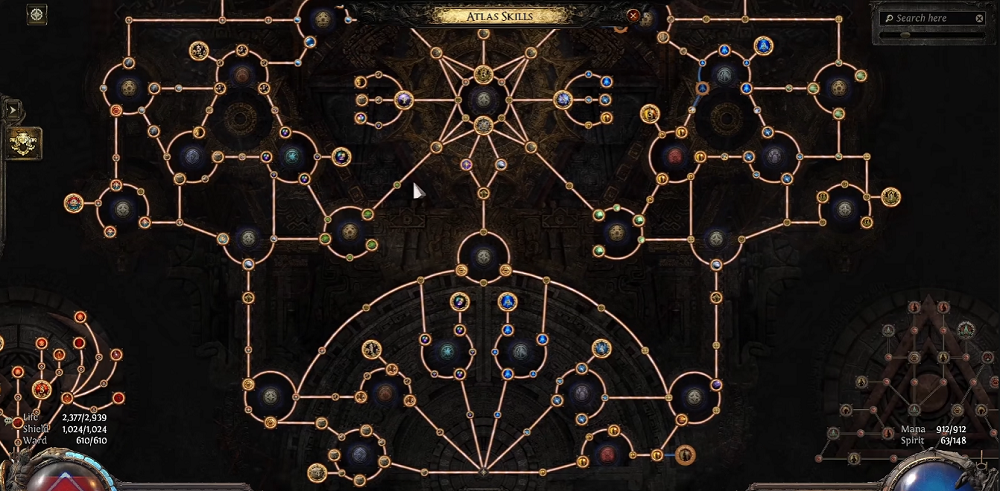
Run two Abyss tablets plus one Overseer tablet. Priority Abyss mods are monster weakness, increased Rarity, extra rare monsters, Fortunate Abyss Pits, and "chests are twice as likely to drop rewards." Do not touch Survival of the Fittest since Abyss caps Omens to one per rare, so consolidated rares hurt returns.
Target Ulaman early, Amanamu later
On day one and two, Ulaman drops currency chests that pay three to four Exalts each, which is huge when Divines are 60-70 Exalts. Once Omen prices climb, swap the target boss to Amanamu.
Stack Rarity gear
Push to 180%+ item Rarity as fast as possible. Rogue Exiles combined with high Rarity produce the jewelry and belt drops that fund the Mageblood and Headhunter purchases.
Sell rare gear immediately
Day one buyers pay well for basic life + resistance rings, amulets, and belts even without perfect rolls. Do not stash them, list them cheap and keep the currency flowing.
Layer in a strong league starter
This strat only prints if your build can push T14-T15 comfortably at 180% Rarity. Flameblast Oil Grenade Gemling, Twister, and Whirling Assault Monk all handle it. A slow starter cuts your income in half regardless of how well the Atlas route is set up.
Continue while unlocking Ritual and Delirium
Once Abyss is producing, keep the exile hunt running as your background income while you progress Ritual and Delirium trees. The strat stays profitable through roughly day three or four, at which point rare gear prices soften and it is time to transition into Breach belts, Trial of Chaos, or Ritual Omen holding.
7. Currency Appreciation Storage (All League Long)
Divine Orbs are a poor storage vehicle across a league. Certain items appreciate faster against divines and should be bought or held when you have spare currency. This is not an active farming strat by itself, but pairs with any other route you run.
Items worth holding:
Perfect Flux (Expedition). Starts around 3 divines day one, climbs steadily through the first month. Used to upgrade skill levels on items from certain Uniques.
Preserved Cranium and Omen of Light (Abyss). Both go up as crafters chase perfect items later in the league.
Sibling Catalysts and Reaver Catalysts (Breach). These add quality that boosts attack or caster mods on amulets, rings, and jewels. Refined Sibling Catalysts appreciate hardest.
Level 8 and Level 9 Uncut Spirit Gems. Players settle for lower-level gems to avoid mana cost or attribute requirements, so demand stays consistent.
Vaal Catalysing Infuser. Needed to push item quality past 20%. Very few players farm Vaal Temple, so supply stays tight while demand climbs.
Hinekora's Lock. Starts around 40 divines day one and climbs to 2,000+ later in the league. Getting one on day one or two sets you up for the rest of the event.
Lineage Support Gems. Her Declaration, Serrice's Heart, Omnathol's Embrace, and Rakiyata's Flow. All build-defining gems that scale up as more players min-max.
Chaos Orbs. Skip Exalted Orb storage since Exalts lose value fast. Chaos Orbs, on the other hand, tend to crash to a 1:1 ratio with Exalts on day one or two, then climb steadily every following week. Buy at the crash and hold for at least one week for near-double returns.
Alchemy Orbs (short window). On the first two or three days, Alchemy Orbs trade at three per Exalt due to map crafting demand. Buy a stack of 1,000-2,000 and sell them back once the ratio flips to 1:1, netting 50-100% profit in under a week. Do not hold longer than three days.
Origin Cores, Origin Sparks, and Origin Cridos. Since Fortress completion now only needs the Arbiter of Divinity killed twice, players buying their way through will still want one set of Origin Cores. Demand spikes hard in weeks 1-2, then drops off as the player base finishes their Fortress. Buy early to farm, sell inside that two-week window.
How To Set Up:
Skip exalted orb storage. Exalted orbs lose value fast. Hold divines and chaos orbs as short-term storage, but convert into appreciating items when possible.
Buy low, sell high. When you have spare currency you don't immediately need, purchase Perfect Flux, catalysts, or Vaal Temple items instead of stockpiling divines.
Day 2 lock target. Farm 40-100 divines by hour 5-10 of day two, then buy a Hinekora's Lock immediately for maximum appreciation runway.
8. Trial of Chaos (Mid-League into Endgame)
The reworked Trial of Chaos moved from a niche run into a competitive mid-to-late league farm. With 30 rooms instead of 10, bonus chests per room, exclusively Currency and Soul Core rewards, and the ability to leave and return later, it finally competes with the top farms. Soul Cores drop directly for immediate turn-in at Anga, giving live currency without waiting for market listings.
Testing shows a full 30-wave run pulls roughly 2-6 divines in raw currency per attempt, with dupe modifiers doubling all pending rewards and occasional Greater Exalted Orbs appearing on room clears.
How To Set Up:
Slot Trial of Chaos tablets on your Atlas. Modifier density scales rewards hard since all modifiers grant extra Rarity.
Pick smart Wager modifiers. Over 10 new ones exist. Test wagers for extra reward stacks in low tiers where modifier danger is reduced.
Push Room 30 gradually. The leave-and-return feature lets you tackle it in sessions.
Turn in Soul Cores at Anga for direct divine conversion instead of listing them.
Sell Adorned drops carefully. Guaranteed boss access at Room 30 may soften its price slightly but does not kill it.
9. Vaal Temple Farming (Endgame)
Vaal Temple is a stable endgame farm that requires practice to build a proper route (roughly 10 hours of learning). It drops the Vaal Catalysing Infuser, Corrupted Stabilizer, Architect's Orb, Crystallised Corruption, and Vaal Orb of Alteration. All of these appreciate against divines. Boss rush attempts also chase Sadhira drops and Unique support gems, though those are lucky-drop dependent.
How To Set Up:
Skip week one. Vaal currency demand is low before crafters ramp up. Come back around week 2.
Build your route. Consider the snake-style layout that lets you chain floors efficiently.
Hold Vaal currencies. Don't liquidate immediately. Prices climb across the league as crafters chase perfect items past 20% quality.
Boss rush selectively. Only push boss rush if your build handles it comfortably. Otherwise stick to the currency farm.
10. Simulacrum & Delirium (Late League Only)
Simulacrum is a lucky-drop grind targeting Voices jewels at roughly a 1-in-100 rate. Skip it entirely in the first two weeks since splinter demand is low and the mechanic itself needs a strong build to clear. Delirium works better as a supplementary layer on top of Breach or Abyss runs, not as a standalone farm early on.
How To Set Up:
Farm splinters passively. Pick them up during other content, don't run pure Delirium maps early.
Hold splinters for week 3. Simulacrum runs pick up around that point when players start chasing Voices for build min-maxing.
Run Simulacrum a few times day one. There's a soft belief that first-day drop rates get quietly boosted for stream moments, so a handful of runs won't hurt.
Combine Delirium with Breach or Abyss. Push fog percentage only when your build can handle the tankier monsters.
11. Gold Farming & Unique Map Selling (All League)
Gold-farming services and Castaway unique map sharing become one of the best paydays around the middle of the league, with top farmers reportedly pulling 300 divines per hour selling gold and unique map access. On day one, this works because everyone respecs multiple times as builds shift and metas settle, keeping gold demand high across the entire player base. Farm Castaway maps naturally as you push the Atlas, then either sell entries to buyers or run gold routes for direct sales.
Forbidden Rites runs until December 11th, 2026, giving you plenty of runway to cycle through all these strategies. Start with Breach for immediate currency, transition to Rituals as Unique demand peaks, hold appreciating items across the whole event, then push endgame farms once crafting picks up. With no balance changes in 0.5.5, every build from Runes of Aldur still functions, so pick a comfortable starter (Twister, Grenade Gemling, or Whirling Assault Monk) and focus your efforts on the Atlas routes that print the most currency per hour.