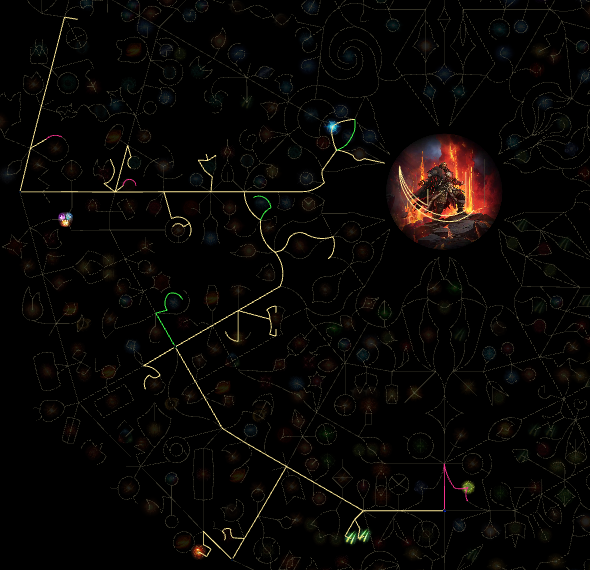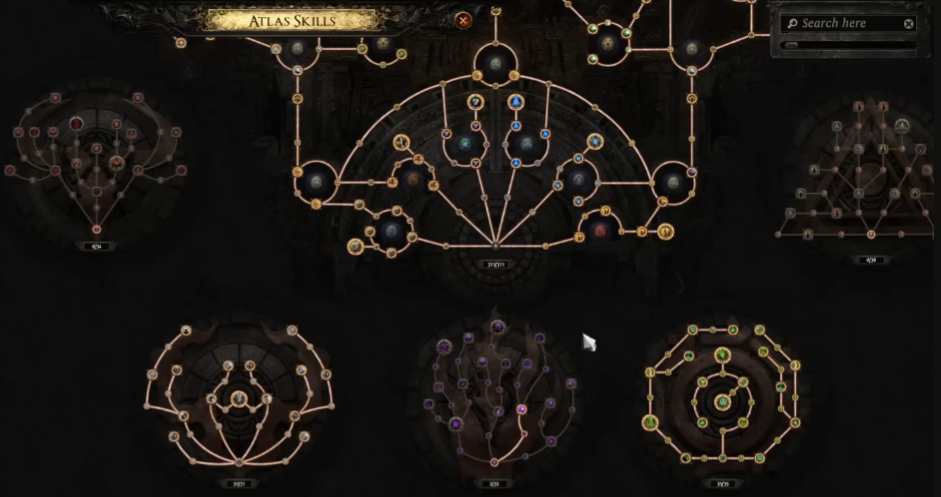


The 0.5.4 patch turned Expedition from "really good" into arguably the most lucrative farm in Path of Exile 2. The headline change is enormous: Expedition now has its own dedicated Atlas passive tree, complete with biome selection, runic modifier scaling, Verisium density nodes, and brand-new currency called Liquid Verisium that lets you reroll remnant rewards. Players are routinely pulling 20–30 Divines from a single juiced Grand Expedition map, and the entire mechanic has been rebalanced around the Runes of Aldur ocean Atlas region southeast of Kingsmarch.
This guide covers everything reworked in 0.5.4: the new Expedition tree, the Liquid Verisium reroll loop, updated Standard and Grand strategies, map mod priorities, and how to stack the new buffs together for maximum profit.
PoE 2 0.5.4 Expedition Farming Guide
Expedition has been reworked alongside the entire endgame and is now tied directly to the Runes of Aldur league mechanic. Rather than appearing on the Atlas tree, Expedition encounters now take place across a sprawling ocean region southeast of the Atlas, where players sail between islands using logbooks, place explosives to dig up Kalguuran ruins, and battle waves of unearthed monsters for Verisium Remnants, alloys, runes, and raw Divines. The mechanic comes in two flavors: Standard and Grand, each offering a different balance of sustain, density, and payout. Below, we'll cover what each variant offers, how they differ, and how to set up the most profitable farming routine for both.
1. What Changed in Patch 0.5.4
Before getting into setups, here's a quick rundown of every meaningful Expedition change in 0.5.4, because the entire farm scales differently now.
Expedition Atlas Tree (the big one). Expedition received a full passive tree with biome nodes, runic modifier multipliers, Verisium density nodes, explosive speed-up, and master domain bonuses. Almost every farming strategy that worked before is now significantly stronger, but the monsters are also significantly tankier, especially when you stack power runes and effectiveness mods.
Liquid Verisium (new currency). Talk to Farrow in your hideout. He'll trade you Liquid Verisium for 600 raw Verisium per unit. Liquid Verisium lets you reroll the rewards on any Verisium Remnant (rune slot count, reward type, and modifiers) before detonating. The reroll is locked in once placed, exactly like corrupting an item. Trade value is roughly 9 Liquid Verisium per Divine, or ~41 Exalted each.
Grand Expedition buffs. Grand Expeditions now spawn with +1 area level and up to 3 map-wide modifiers, with new icons telling you which Grand Expedition is easier or harder. The +1 level matters because Tier 16 Grands now reliably drop item base 81–82, prime real estate for crafting and Exceptional items.
Power Runes are now scalable. A new Atlas node gives Verisium Remnants a 25% chance to be affected by a Power Rune, which upgrades every other runic modifier on the remnant. Stack this with effectiveness and you'll see explosive payouts (and explosive deaths).
Other QOL. Logbook and Verisium drops are noticeably higher inside maps, you can now hold Alt to see total currency counts in your inventory and trade windows, and unique items granting skills now scale the skill down to the level you meet, so high-level Lifesprings and similar items are no longer dead weight.
2. PoE 2 0.5 Expedition Explained (Standard & Grand)
Before jumping into strategy, it helps to know what each Expedition type looks like, what they drop, and which one fits your build and budget. The 0.5.4 patch reworked both variants with the new Expedition Atlas tree, Liquid Verisium rerolls, and meaningful buffs to Grand Expedition specifically.
Standard Expedition (What It Is and What It Drops)
Standard Expeditions are the regular encounters you'll find while sailing across the ocean Atlas region near the Ruins of Kingsmarch. Each map features a full Expedition layout where you place explosives, detonate runic markers, and claim rewards from chests and remnants. After 0.5.4, the new Atlas tree adds biome bonuses, extra remnants, faster explosive chains, and the option to reroll bad remnants with Liquid Verisium, making even basic Standard runs significantly more profitable than before.
Common drops from Standard Expeditions include:
Verisium Remnants with up to 8 rune slots, providing currency, runes, gems, alloys, and uniques, and now rerollable with Liquid Verisium for a second shot at a better roll
Raw Verisium in larger quantities thanks to the new tree, which you'll trade to Farrow at 600:1 for Liquid Verisium
Logbooks dropping more frequently from runic monsters (often 2–3 per map post-patch versus the old 1)
Currency chests scattered throughout the dig site for gold and orbs
Random loot explosions that scale with map mods, rune slot count, and the new Power Rune modifier system
Alloys, fluxes, and starlit ores such as Adaptive Alloy, Mystic Alloy, Prismatic Alloy, and Perfect Flux
Rare uniques from the rare unique recipe (which has produced multi-Divine drops including Headhunter, with the very rare unique recipe at roughly 1 in 700 odds inside 9-slot remnants)
Grand Expedition (What It Is and What It Drops)
Grand Expeditions are the upgraded version of regular Expedition maps, identifiable by the spike-shaped border surrounding the map node on the Atlas. They spawn two to three times more Verisium Remnants than Standard maps and can be cleared faster, but the trade-off is reduced map sustain since they consume logbooks more aggressively. The 0.5.4 patch dramatically buffed Grand specifically, giving every Grand Expedition +1 area level and up to 3 map-wide modifiers, with new icons on the Atlas indicating which Grand Expeditions are easier or harder before you commit a logbook.
The +1 area level is a quietly huge change - Tier 16 Grand Expeditions now reliably drop item base 81–82, which is prime territory for crafting and Exceptional items. Combined with the new Atlas tree and Liquid Verisium rerolls, players are routinely hitting 20–30 Divine maps, with streamer records pushing 11 Divines from a single remnant chain.
Grand Expedition specific features include:
Higher Verisium Remnant density with bigger payouts per encounter, amplified further by the new "+1 Verisium Remnant" Atlas node
+1 area level and up to 3 map-wide modifiers rolled on every Grand Expedition (new in 0.5.4)
Difficulty icons on each Grand Expedition node so you can scout before sailing
Buff nodes marked with an X that apply effects like "monsters drop rare items"
Power Rune scaling via the new Atlas tree, a 25% chance for remnants to be affected by a Power Rune, upgrading every other runic modifier on that remnant to a stronger variant
Mirror of the Fallen Skies unique map drops with up to 8-slot reward picks, appearing roughly once every 25 logbooks
Aldur's Saga modifiers that guarantee minimum rune slot counts on remnants (5/6/7-slot floors), reliably producing 2–9 Divine maps
Boss caves that drop Verisium, Exceptional Verisium, and lineage support gems
Item base 81–82 drops on T16 Grand maps thanks to the +1 area level, enabling top-tier crafting bases
Standard vs Grand Expedition: Which One Should You Farm?
Both options work well, but the right pick depends on your build strength and budget. Standard Expedition is better for new players, tight budgets, and characters that can't yet handle the harder monsters that come with stacked runic modifiers and Power Runes. It sustains itself on logbook drops during the early quest line and still produces steady Divine drops on basic white maps with minimal investment.
Grand Expedition is now the clear endgame ceiling thanks to the 0.5.4 buffs — denser Verisium spawns, +1 area level, three map-wide mods, Mirror of the Fallen Skies, and Aldur's Saga rotations push earnings far higher than Standard. The catch is that fully-juiced Grand Expedition with the new tree's Power Rune and runic modifier nodes spawns genuinely deadly monsters, so your build needs to be ready for it. If your character is struggling, swap to a simpler map setup (rarity and effectiveness only) until your gear catches up.
For maximum profit, blend both approaches: take every Grand Expedition along your sailing route, fall back on Standard maps to keep your logbook supply topped up, and use Liquid Verisium to reroll low-slot remnants in both variants. The new Atlas tree benefits both equally — there's no reason not to allocate the full tree even if you're sticking to Standard farming.
3. Standard vs Grand Expedition After 0.5.4
The difference between the two variants is wider than ever, and Grand is now the clear endgame target.
Standard Expedition still spawns on regular Atlas map nodes throughout the ocean region. It drops Verisium Remnants with up to 8 rune slots, currency chests, alloys (Adaptive, Mystic, Prismatic, Perfect Flux), the rare unique recipe (Headhunter-tier outcomes), and now noticeably more logbooks from runic monsters thanks to the new tree. This is still the best low-investment farm in the game.
Grand Expedition is identified by the spike-shaped border around the map node. After 0.5.4, Grand maps spawn with:
2–3× the Verisium Remnant density of Standard
+1 area level and up to 3 map-wide modifiers (the icons tell you difficulty at a glance)
Buff nodes marked with an X (e.g. "monsters drop rare items")
The unique map Mirror of the Fallen Skies drops
Aldur's Saga modifiers guaranteeing minimum rune slot counts
Boss caves dropping raw Verisium, Exceptional Verisium, and lineage support gems
Which one should you farm? Standard is still the right pick for new players, tight budgets, and anyone whose build can't handle the harder monsters that come with full Atlas tree allocation. Grand is the profit ceiling — particularly when paired with Aldur's Saga and the new tree nodes. The optimal play is to blend both: take every Grand on your route and fall back on Standard to sustain logbooks.
4. Expedition Logbooks & Liquid Verisim (How To Get)
Expedition still runs on logbooks, and Liquid Verisium is now the second pillar of the economy.
Getting logbooks
Three sources: deadly bosses on the Grand Expedition quest line (Makoru's, Vorana's, Uthred's, Olroth's), runic monsters under the big flagpoles inside dig sites (the new tree dramatically increases this drop rate), and the Currency Exchange (~83 Exalted each post-quest). With the new Atlas tree, in-map logbook drops are noticeably more frequent, many players are pulling 2–3 logbooks per map post-patch where they used to get one.
Getting Liquid Verisium
Visit Farrow in your hideout and exchange 600 Verisium for 1 Liquid Verisium. Make sure your loot filter shows Verisium so you actually pick it up - at ~9 Liquid Verisium per Divine, even raw Verisium is worth grabbing. Selling Liquid Verisium directly is also a respectable side-income (people are clearing 30 Divines per hour just selling them post-patch).
The Detailed Records node (+1 logbook level, +4 implicit mods) on the Atlas tree is still worth grabbing as soon as you're serious about juicing.
5. The 0.5.4 Expedition Atlas Tree - Optimal Setup
This is the most important section of the guide. The tree is where 0.5.4's loot explosion actually comes from.
Cultivate the Sea (biome selection). You're picking one biome to add on top of the ocean. The top contenders:
Desert - increased quantity of items + increased monster effectiveness. This is the consensus best biome for pure loot output.
Grass - heavy monster effectiveness, more rare monsters, more quantity. A strong alternative if you want to lean into rare-monster density.
Forest - solid all-rounder.
Desert is the safest pick if your build can handle the harder monsters. Grass works well if you're already stacking rare monster density elsewhere.
Double or Nothing. Pick 25% chance to add an additional runic modifier. This option directly amplifies the rewards (and the monster difficulty) of every remnant you detonate. Only swap to the alternative if monsters are killing you in seconds.
Steady Development. Pick +1 Verisium Remnant per Expedition. Extra remnants are far more valuable than the extra explosive, especially since you already have a generous explosive budget.
Strategic Advantage. Pick explosives only wait for 50% of monsters to be slain before continuing. This is a massive quality-of-life buff that doubles your effective clear speed. Only take the alternative (runic monsters spawn with 20% missing life) if your build literally cannot keep up with the spawn rate.
Expanding Territory. Pick +1 Verisium Remnant if you're running Grand Expeditions. The alternative ("Expedition chance" inside basic maps) is only useful if you're farming Expedition encounters during general mapping.
Calculated Investment. Two viable choices here:
Option 1: 25% chance for Verisium Remnants to count as affected by a Power Rune. This upgrades all other runic modifiers on the remnant to their stronger variants. Higher ceiling but harder monsters.
Option 3: Increased quantity of items dropped by monsters per runic modifier. More consistent, less risky, easier on tanky-monster builds.
Most farmers are running Option 1 for the higher payout ceiling. Option 3 is the safer pick if you're not one-shotting elites.
Other key nodes to grab on the way:
Extreme Archaeology - replaces 5 explosives with one massive blast. Excellent for speed but risky with immunity remnants.
Detailed Records - +1 logbook level, +4 implicit mods.
Big Boom Expedition - increased explosive radius (decent backup).
Liquid Verisium exchange node - unlocks the Farrow trade. Mandatory if you want to reroll remnants.
+10% additional Verisium Remnants - the more remnants, the more transferred modifiers stacking on top of each other.
6. The Liquid Verisium Reroll Loop
This is the new core gameplay loop in 0.5.4 and it's worth learning.
When you enter an Expedition map, scout every Verisium Remnant before detonating anything. Most remnants will be mediocre 3–4 slot rolls with unimpressive rewards. Instead of just exploding them or skipping them:
Click any low-slot remnant (3–4 runes, sometimes 5 if rewards are bad)
Apply Liquid Verisium to reroll the entire reward and slot count
The roll is locked in — you can't reroll again
Decide whether to detonate or move on
A reroll can turn a 3-slot trash remnant into a 5-slot, 6-slot, or occasionally 8-slot reward. Since Liquid Verisium costs ~600 Verisium each and a single hit on a Divine-tier reward pays for many failures, this is a positive-EV play in juiced maps. Rule of thumb: reroll everything under 6 slots, and reroll any 6+ slot remnant with bad rewards.
A single map's reroll session can transform a mediocre run into 10+ Divines. Streamers have hit 11 Divines in a single map purely off rerolled remnants with three Perfect Runes apiece.
7. Atlas Master & Map Setup
Atlas Master: Jado (still mandatory). The Verisium reroll passive - "Verisium Remnants have a 10% chance to be rolled an additional time, keeping the rarest outcome" - stacks multiplicatively with Liquid Verisium rerolls. This is non-negotiable for any Expedition farmer.
Map mods to prioritize:
Increased rarity of items - the highest-impact mod on Expedition rewards
Increased monster effectiveness - directly scales remnant explosion size
Increased monster rarity - more rare monsters means more loot per detonation
Pack size wherever you can get it
The juicing recipe: alchemy all incoming maps, Vaal them for 6+ mods, keep anything with rarity, effectiveness, or monster rarity. Tier 16 maps with double effectiveness and double rarity tablets are where the 20–30 Divine maps come from.
Tablets that work well:
+1 Remnant per Expedition (suffix)
Increased number of Runic Monsters / Runic Monster Markers
Increased Quantity of Logbooks from Runic Monsters
Increased Effect of Remnants
The Forgotten by Time unique tablet (duplicates all runic monsters at half life), still extremely strong if you can find one, though sourcing them is harder post-patch
8. PoE 2 0.5.4 Standard Expedition Farming Strategy
Standard Expedition is now the cheapest, most accessible juicing strategy in the game.
Setup: Run white waystones (mods barely matter at entry level), allocate the Jadha reroll passive, take the new Expedition tree's Steady Development and Strategic Advantage nodes for sustain and speed, and clear quest maps first. Once your quest logbooks are gone, refill from the Currency Exchange.
Inside the map: Target high-slot Verisium Remnants (5/6/7+ slots), grab currency chests and gold piles, and use Liquid Verisium to reroll low-slot trash. Big 7–8 slot rune sets are where you'll see chained Divine drops in a single detonation.
Pathing: Place explosives toward the highest-value remnants first, and use the new "explosives only wait for 50%" node so the chain detonates faster.
9. PoE 2 0.5.4 Grand Expedition Farming Strategy
This is the endgame loop. Numbers are insane post-patch, 30 Divine records in a single map are no longer rare.
Unlocking Grand Expedition. Complete your first Tier 1 map, then talk to Farrow in Ziggurat Refuge to enter the Ruins of Kingsmarch. From there, the quest chain:
Speak to Farrow → opens Ruins of Kingsmarch
Talk to Dannig and Makoru → Makoru's Logbook
Defeat Medved (T11 waystone) → Vorana's Logbook
Defeat Vorana, Last to Fall (T11) → Uthred's Logbook
Reach Uthred, The Stardrinker (T14) → Olroth's Logbook
Defeat Olroth in the Obscure Island (T14+) → Shattered Triskelion
Sail to the Verisium Crater → Triskelion Reforged
Defeat The Aberration → quest complete
After the quest, logbooks no longer drop from deadly bosses — buy them off the Currency Exchange (~83 Ex each) or sustain them via the new in-map logbook nodes.
The Grand farming loop:
Allocate the full Expedition tree (Desert biome, +1 Remnant, +25% runic modifier, 50% explosive wait, Power Rune option, Liquid Verisium exchange)
Set Jadha as your Atlas Master
Use a logbook to reveal an ocean area
Path through the middle of the ocean first to avoid competing edge mechanics
Target Grand Expeditions (spiked border) along the way
Inside each map: scout remnants first, reroll trash with Liquid Verisium, detonate high-slot remnants, grab buff nodes (X icons), and chain everything
When Mirror of the Fallen Skies drops, pick Aldur's Saga as the reward
Activate Aldur's Saga on your next logbook to buff Grand Expeditions in that area
Repeat
Verisium Remnant slot tiers:
5-slot: early tier maps, ~2 Divines per
6-slot: T11+, frequently 3–5 Divines
7-slot: T11+, 5–9 Divines common
8-slot: largest payouts, biggest explosion radii, multi-Divine chains
9-slot: rare unique recipes (~1 in 700 odds for very rare uniques like Headhunter)
Run remnants from lowest to highest slot count, chaining Verisium properly juices later detonations.
10. Mirror of the Fallen Skies & Aldur's Saga
Drops roughly once every 25 logbooks. It's a single Verisium encounter with up to 8 slots where you pick any reward: 3 raw Divines, any rune, any gem, any alloy.
Always pick Aldur's Saga unless you desperately need the alternative. Aldur's Saga is a buff item applied to your next Grand Expedition map and rolls guarantees like:
Verisium in this map has at least 5/6/7 slots
One Verisium in your map has 7 slots
Verisium Remnants in area are lucky
Even the 5-slot floor reliably nets 2+ Divines per map. The 6 and 7-slot floors regularly produce 5–9 Divine maps. The only downside: if a logbook only opens one Grand Expedition, you burn an Aldur's Saga on a single encounter. On average, you'll get 3–4 Grands per Aldur's Saga area.
11. Bonus Tips & Closing Notes
Even without Aldur's Saga, naturally-rolled Grand Expedition modifiers (guaranteed Power Runes, increased explosive radius) regularly produce 1–3 Divines per encounter.
Some Grand Expeditions still spawn bugged/empty, skip them and move on.
Regular Expedition encounters spawn caves leading to bosses that drop Verisium, Exceptional Verisium, and lineage support gems.
The market is dynamic right now: Liquid Verisium hovers around 9 per Divine, Aldur's Sagas have spiked since launch, and prices will shift as more players unlock the new tree.
Keep an eye on the Atziri orbs of sacrifice (Kamasa's, Yugol's, Yo-Yaomac's, Copex's) added in 0.5.4, they upgrade corrupted enchantments at the cost of a random explicit mod. They occasionally show up in Expedition loot tables and can be flipped for steady currency.
After 0.5.4, Expedition isn't just a strong farm, it's the dominant strategy in the league economy. Standard Expedition remains an excellent low-investment entry point that prints Divines on white maps, while Grand Expedition with the full Atlas tree, Liquid Verisium rerolls, Aldur's Saga rotations, and double-tablet juicing has become the highest-ceiling farm in the game. Pick Jadha, build the Expedition tree around Desert biome + Power Rune scaling, master the Liquid Verisium reroll loop, and chain high-slot remnants. Once Aldur's Saga enters your rotation, the earnings ceiling is essentially uncapped — confirming Expedition as the defining mechanic of the 0.5.4 economy.