


The Horadric Cube is making its long-awaited return in Diablo 4 with the Lord of Hatred expansion and Season 13, bringing a full-fledged crafting system that fans have been requesting since launch. Inspired directly by the original Horadric Cube from Diablo 2 rather than the Kanai's Cube from Diablo 3, this new system gives players the ability to create items from scratch, recycle duplicates, modify gear with precision, and turn nearly every drop in the game into something useful. White items, blues, yellows, legendaries, uniques, charms, all of them now serve a purpose within this single crafting hub, and the developers have confirmed that the system was specifically built to be expanded over time with new recipes in future seasons and updates.
Diablo 4 Horadic Cube Guide
Below is a full breakdown of how the Horadric Cube works, what it can do, every known recipe, and answers to common questions about the system in Diablo 4: Lord of the Hatred.
How the Horadric Cube Works in Diablo 4 Lord of Hatred?
Where Is the Horadric Cube Located?
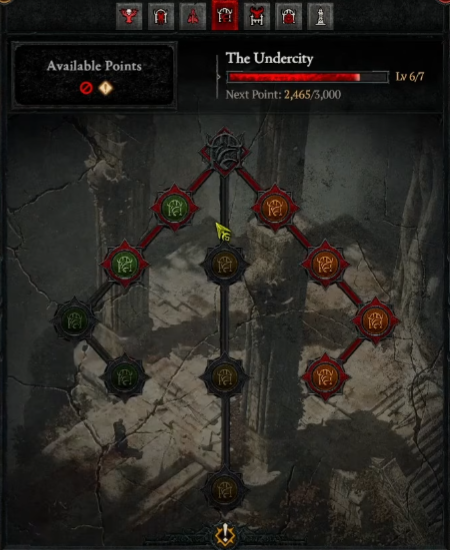
The Horadric Cube is physically located in Scosglen, the new region introduced with the expansion. As you enter the city, you'll see the cube floating in place, and you need to walk up to it and interact with it directly. There's no mobile version or shortcut, you'll need to travel back to this location whenever you want to use it.
One important note: only players who own the Lord of Hatred expansion will have access to the Horadric Cube. If you haven't purchased the expansion, this system won't be available to you.
Who Can Access It?
Only players who own the Lord of Hatred expansion can use the Horadric Cube. It's tied to the expansion content and is not available to base game players.
How Do You Use It?
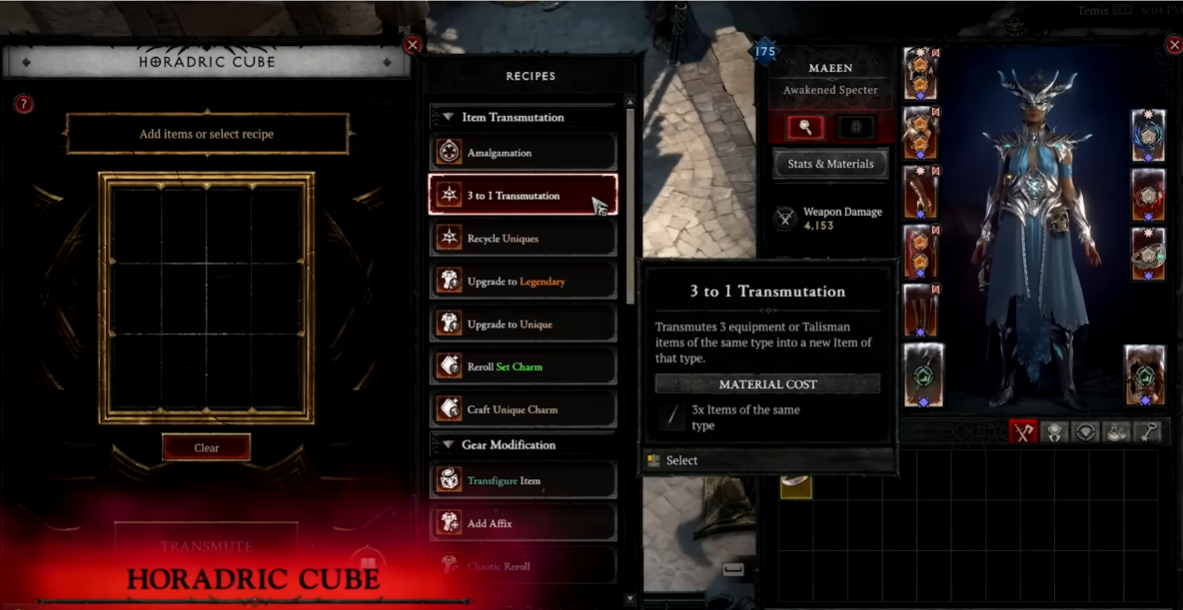
The interface offers two options when you interact with the cube: Add Items or Select Recipe. Selecting a recipe brings up a list of available crafts organized into two categories, Item Transmutation and Gear Modification. Once you choose a recipe and place the required items into the cube, the system automatically pulls any necessary crafting materials from your material tab. You then hit the Transmute button, and the result appears.
There's no need to manually drag materials one by one. Resources like Primordial Dust function similarly to herbs, forgotten souls, and other account-bound materials you already collect. They sit in your materials tab, can't be traded, can't be duplicated, and are consumed automatically when you craft.
What Is the Horadric Cube Used For in Diablo 4 Lord of Hatred?
The Horadric Cube serves as the central crafting and item modification system in the expansion. Nearly everything related to creating new gear or changing existing gear flows through it. The developers have stated that going forward, rather than adding new NPCs or separate UI systems for crafting, new recipes and modifications will be added directly into the Horadric Cube.
Two Core Itemization & Recipe Types:
The Horadric Cube organizes its recipes into two distinct sections:
Item Transmutation focuses on turning items into other items. This includes combining duplicates, upgrading item rarity, recycling uniques, crafting charms, and converting base items into legendaries or uniques. You're putting items in and getting new items out.
Gear Modification focuses on changing gear you already have. This includes adding affixes, rerolling stats, and applying final-step enhancements like transfiguration. You're taking a piece of gear and making it better or different.
Which Items Can Be Used in the Horadric Cube?
The cube accepts a wide range of item types. Based on everything shown so far, you can put in white (common) items, blue (magic) items, yellow (rare) items, legendary items, unique items, talisman charms, set charms, consumables, socketables (gems and possibly runes), and dungeon keys. Different recipes call for different item types and quantities.
What Items Can the Horadric Cube Create?
The outputs are just as varied. Through the cube, you can produce randomly rolled legendaries from rare items, random uniques from white items, rerolled versions of existing uniques, new talisman charms, unique charms derived from unique gear, upgraded gems and dungeon keys, and items with additional or rerolled affixes. In short, the cube can touch nearly every part of your character's gear and progression.
Horadric Cube Crafting Materials
Several new materials are tied to Horadric Cube recipes. The confirmed ones include Raw Primordial Dust, Enhanced Primordial Dust, Coarse Primordial Dust, and Tuning Prisms.
Raw Primordial Dust has been seen dropping from elite enemies as early as level 20 during campaign content. It's an auto-pickup material that goes straight to your material tab. Different recipes require different types and amounts of dust, and rarer materials will likely come from harder content or specific farming activities. The developers have hinted that certain materials will have dedicated sources, giving players targeted goals when they need specific crafting components.
Diablo 4 Horadric Cube Recipes
Here are all the known recipes organized by category.
Item Transmutation Recipes
Item Transmutation Recipes
Amalgamation
What it does: Transmute several of the same item to upgrade it. Limited to certain specific consumables, socketables, and dungeon keys.
Material Cost: Combinable Items
This is the classic upgrade-by-combining recipe. The most straightforward application is gem crafting, take three flawless rubies and turn them into a royal ruby, for instance. This could end up being significantly cheaper than using the jeweler, where high-tier gems demand millions of gold and hundreds of thousands of fragments. Three royal diamonds through amalgamation would cost far less than crafting a grand diamond the traditional way.
The mention of dungeon keys suggests you'll be able to upgrade lower-tier Infernal Horde keys into higher-tier versions. Compasses and tributes might also work here, though that hasn't been confirmed. There's also speculation that new elixir or incense recipes could fall under this category, along with potential rune combinations.
3 to 1 Transmutation
What it does: Transmute 3 equipment or talisman items of the same type into a new item of that type.
Material Cost: 3x Items of the same type
Take three daggers, get a new randomly rolled dagger. Three helmets become a new helmet. Three talisman charms of the same type produce a fresh charm. The output is completely random, but it matches the input type.
This gives real value to items you'd normally ignore. Every mediocre pair of gloves you pick up is now one-third of another shot at a better roll. Three non-ancestral items could potentially combine into an ancestral version. Three items without greater affixes might produce one that has them. Even if the odds aren't in your favor every time, you're getting more out of your drops than ever before.
This also applies to talisman charms with random stats. If you keep getting charms with bonuses you don't need, combine three and try again. Charms have their own storage tab, which helps, but expect that space to fill up quickly.
Recycle Uniques
What it does: Transmute 3 of the same Unique equipment items or Charms into a new version of that Unique.
Material Cost: 3x Same Unique Item
This is one of the strongest recipes in the cube. No extra materials required, just three copies of the same unique item.
Right now, duplicate uniques are essentially worthless. A 750 item power Fist of Fate with no greater affixes goes straight to the vendor. With this recipe, those three "bad" copies become another roll at a version with better stats, higher item power, or greater affixes.
There are two exciting possibilities here. The first is that combining three non-greater-affix uniques could produce a greater-affix version, which would make every single copy of a unique worth picking up regardless of its quality. The second is that combining three greater-affix uniques could yield one with multiple greater affixes — a two or three greater-affix roll that would be nearly impossible to get from a standard drop.
Either way, farming boss lairs for duplicate uniques just became a lot more rewarding. That pile of identical rings sitting in your stash? They're fuel now, not clutter.
Upgrade to Legendary
What it does: Transmute a Rare equipment item into a random Legendary of the same type.
Material Cost: 1x Rare Item, 10x Enhanced Primordial, 30x Raw Primordial Dust
Drop a yellow shield into the cube along with some Enhanced Primordial Dust and Raw Primordial Dust, and it becomes a legendary shield with a random legendary aspect. Only one rare item is needed, you're not combining three rares for this recipe.
This creates a smooth target-farming loop. If you want a specific legendary in a certain slot, stockpile rares of that type and keep rolling. Pair this with the loot filter's ability to flag items that would upgrade your Codex of Power, and you have a streamlined pipeline from random drops to specific legendary gear.
The practical tradeoff is travel time. You'll need to go back to Scosglen each time you want to batch-craft, so this works better as something you do between farming sessions rather than mid-run.
Upgrade to Unique
What it does: Transmute a common (white) item into a random unique of the same type.
Material Cost: 1x Common Item, 1x Enhanced Primordial Dust, 10x Raw Primordial Dust
White items finally have a reason to exist. Pick up a white sword, bring it to the cube, and it could become any unique sword available to your class. Need Blood Moon Breeches? Upgrade pants on your Necromancer. Want Shard of Verathael? Start collecting base swords.
The result is random within that item type, but it can reportedly be either a normal unique or an ancestral unique. You'll need 10 Raw Primordial Dust per attempt, so the pace of crafting depends on how quickly you accumulate materials. Even at low levels, this could be powerful — if you gather enough dust from killing elites during the campaign, you could target specific uniques early in your progression.
One open question is whether class restrictions apply. It's possible that class-specific uniques only appear when crafting on that class, which would matter for anyone running multiple characters.
Reroll Set Charms
What it does: Reroll a set charm into a different piece from the same set.
The talisman system introduces charm sets, collections of charms that provide bonuses when you equip multiple pieces from the same set. If you end up with duplicate set pieces and are still missing others, this recipe lets you reroll one into a random different piece from that set.
Got two copies of the Faux Bar of the Narrow Eye? Put one in the cube and receive a different charm from that set. This mirrors how set item recipes worked in Diablo 2 and should take a lot of the frustration out of completing charm sets.
This recipe does require crafting materials, so in some cases the free 3:1 transmutation might be more cost-effective. However, reroll set charms gives you a guaranteed result from the same set, which the 3:1 recipe can't promise.
Craft Unique Charm
What it does: Take any unique item and transform it into a unique charm for your talisman.
This was confirmed in developer interviews: you pick a unique item you like, put it in the cube (presumably with additional resources), and out comes that same unique as a charm. You slot it into your talisman and gain its effect on top of whatever gear you're already wearing.
The charm version most likely carries over the unique's special effect rather than all of its base stats and affixes. This is similar to how chaos items worked in a previous season, where the unique aspect was the primary draw.
The power implications are huge. A Druid could take a favorite weapon unique, turn it into a charm, and stack its effect alongside their actual equipped weapon. The Horadric Seal, one of the talisman components, specifically states it allows two unique charms — normally you'd be limited to one. So there's room to double up.
Gear Modification Recipes
Add Affix
What it does: Adds a random affix to a normal, magic, rare, or legendary item. Turning Prisms can be used to modify the Category of the Affix that is added.
Material Cost: 1x Normal, Magic, Rare, or Legendary Item, 1x Coarse Primordial Dust, 5x Raw Primordial Dust
This recipe enables a complete item-building journey. Start with a white item, add an affix to make it blue, keep adding affixes until it becomes a four-affix yellow, then upgrade it to legendary through the transmutation recipe. You're building an item from the ground up.
The system also supports Tuning Prisms, which let you choose the category of affix being added — defensive, offensive, skill ranks, and so on. It's still unclear whether you're limited to categories that naturally roll on that item type, or if tuning prisms could let you force categories onto slots that wouldn't normally have them (like offensive affixes on a chest piece). Either way, this adds a layer of control that the game hasn't had before.
This recipe does not work on unique items, it's capped at legendary tier. Any item modified through the cube becomes a "compound" item, which is simply a label indicating it's been crafted on.
Transfiguration
What it does: A permanent, toned-down version of sanctification. This is the final modification you can make to a piece of gear.
Once you transfigure an item, no further modifications are possible. The material needed for this recipe will be much rarer than what sanctification required during its season, so you won't be applying it casually.
The power level is intentionally lower than what players experienced with seasonal sanctification. Expect bonuses in the range of 10-20% damage increases rather than the extreme outcomes like double damage on Grandfather or mythic-tier effects on random gear. The developers described it as "more tame," with fewer lottery-ticket moments and more controlled, fine-tuned power gains.
Chaotic Reroll
What it does: Not fully confirmed, but this recipe appears in purple text in the UI.
There are several theories. The simplest explanation is that chaotic reroll fully randomizes all affixes on an item, a complete wipe and fresh roll. Another theory ties the purple color to chaos items from a previous season, suggesting this could be a way to create or modify chaos-style gear permanently. Other speculation includes rerolling affix values (including temper ranges), rerolling the legendary aspect on an item, or even changing the item type entirely.
None of this is confirmed. The actual function won't be clear until players get hands-on with the expansion.
Focused Reroll
What it does: Listed alongside chaotic reroll, this appears to be the more controlled counterpart.
Where chaotic reroll seems random and unpredictable, focused reroll likely lets you narrow the outcome, targeting specific stats or limiting the pool of possible affixes. It probably requires different (and possibly rarer) crafting materials in exchange for more reliable results. The name strongly suggests a precision-oriented alternative to the chaotic option.
Hidden Recipes We Haven't Seen Yet
The gear modification section has a visible scroll bar, confirming there are more recipes beyond what's been revealed. The developers have also confirmed that the cube's backend was built to allow easy additions. Two or more additional gear modification recipes are likely waiting to be shown, and seasonal updates will almost certainly add temporary recipes on top of the permanent ones.
The above recipe list will be updated once we get full info released
Diablo 4 Horadric Cube FAQs
Can I Use the Horadric Cube Without the Expansion?
No. The Horadric Cube is located in Scosglen and is exclusive to players who own the Lord of Hatred expansion.
Will Existing Crafting Systems Like Masterworking Still Exist?
Based on developer commentary, it sounds like existing systems such as masterworking will remain in the game and won't be moved into the Horadric Cube. However, this hasn't been officially confirmed yet.
Can I Upgrade a White Item All the Way to Endgame Gear?
The developers have confirmed you can take a blue item and build it into an endgame piece through multiple cube recipes, adding affixes, upgrading rarity, and applying final modifications. Whether you can do the same starting from a white item is still being debated internally at Blizzard.
Are Crafting Materials Tradeable?
Likely not. Materials like Primordial Dust appear to function as account-bound resources stored in your material tab, similar to herbs and forgotten souls. They're auto-picked up and don't exist as physical items in your inventory.
Will There Be Hidden Recipes to Discover?
Possibly. In Diablo 2, many Horadric Cube recipes weren't listed anywhere in the game, players had to experiment. The "Add Items" option in Diablo 4's cube interface suggests you might be able to throw in random combinations and see what happens. Whether hidden recipes actually exist or this is simply an alternate way to load known recipes remains to be seen.
Will Seasonal Content Use the Horadric Cube?
Very likely. The developers confirmed the system was built with easy expandability in mind. Past seasonal mechanics like sanctification and chaos items could return as temporary cube recipes, and new season-specific crafts could be added each season and removed afterward. This would let the developers create powerful limited-time options without permanently changing the game's balance.
Does the Horadric Cube Work With Runes?
This hasn't been explicitly confirmed, but amalgamation mentions socketables, and runes are socketable items. There's speculation about upgrading runes, combining specific runes into legendary runes, or creating new rune-related crafts through the cube. More details should come once the expansion launches.
Can I Add Affixes to Unique Items?
No. The Add Affix recipe works on normal, magic, rare, and legendary items only. Unique items cannot have affixes added through the cube.
What Happens When I Transfigure an Item?
Transfiguration is a one-way, final modification. Once applied, you cannot make any further changes to that item through the cube. The material required is rare, and the bonuses are moderate compared to what seasonal sanctification offered. Choose carefully before committing.
Are There Specific Farms for Cube Materials?
The developers have hinted that certain materials will have dedicated farming sources. Raw Primordial Dust drops from elite enemies even at low levels, but rarer materials will likely require engaging with specific endgame activities or zones. Efficient farming routes for these materials will probably become a key part of the community meta once the expansion goes live.