


The 0.5 Return of the Ancients expansion brings one of the most talked-about crafting systems from Path of Exile 1 into PoE 2: the Genesis Tree. If you've been following the Breach league mechanic changes, this tool is now a major way to target-farm gear, currency, and brand-new unique items. With Abyss receiving heavy nerfs and Ritual becoming overcrowded, Breach farming combined with the Genesis Tree has quickly turned into one of the most profitable activities in 0.5. This guide walks through how the Genesis Tree works, how it differs from the PoE 1 version, the best setups for catalyst, ring, and currency farming, and the tricks for pushing your output to the highest possible level, including chasing those rare level 82 Womb Gifts.
With that context in mind, let's move into the first section covering what the Genesis Tree actually does.
PoE 2 0.5 Breach Genesis Tree (Runes of Aldur)
The Genesis Tree is the new crafting system attached directly to the Breach league mechanic. Think of it as a large node-based board where you spend points into branches, and each branch steers the outcome of items you create. The Tree lets you produce gear, currency, breach stones, and new base types not available from any other source in the game.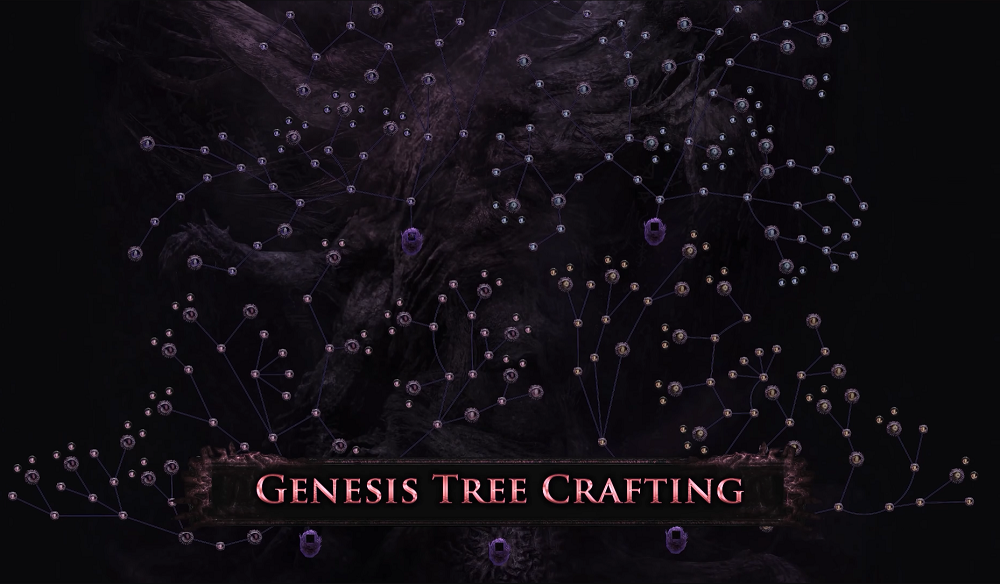
The Genesis Tree is the new crafting system attached directly to the Breach league mechanic. Think of it as a large node-based board where you spend points into branches, and each branch steers the outcome of items you create. The Tree lets you produce gear, currency, breach stones, and new base types not available from any other source in the game.
In PoE 2 0.5, the Tree is split into five separate branches:
Belts (bottom right)
Rings (bottom left)
Amulets (top right)
Currency (top left)
Breach Stones (bottom center)
Each Womb Gift type slots into its matching branch, so once you control-click a gift it lands in the correct spot automatically.
Before going deeper, it's worth comparing this new PoE 2 version against the PoE 1 tree veterans have already played with.
PoE 1 Genesis Tree vs PoE 2 Genesis Tree - What Are the Differences?
If you played PoE 1 recently, you've likely interacted with the original Genesis Tree for the past two leagues. The PoE 2 version keeps the same core idea but expands it dramatically.
Size and scope. The PoE 2 tree is roughly eight times larger than the PoE 1 version. Where PoE 1 gives you a single large branch for all unique equipment, PoE 2 gives each slot its own dedicated section — amulets alone look about as big as the entire PoE 1 tree.
Specificity of choices PoE 1 forces you to manipulate skill points across a broad branch to steer toward a result. PoE 2 lets you narrow choices per category. For amulets, you can push toward a specific base type (like stellar), bias resistance rolls toward fire, cold, or lightning, and choose whether the item leans energy shield or armor.
New item types PoE 2 adds items you can only obtain through this system, including new breach rings, absent amulets (such as one giving level 19 Eternal Rage costing 100 spirit), and new catalysts that apply quality to jewels.
Minion-specific branch A fresh addition in PoE 2 is a dedicated branch for minion-related modifiers on jewelry, a major win for summoner players.
Free respec Both versions allow unlimited free respeccing between crafts, which carries over to PoE 2.
Now that the comparison is clear, let's look at the two ingredients that actually power the Tree.
How Does Hiveblood & Genesis Tree Crafting Work in PoE 2 0.5?
Using the Genesis Tree requires two resources working together: Hiveblood and Womb Gifts.
Hiveblood - The Fuel
Hiveblood is the non-tradeable resource that powers every craft. You earn it by actively running Breach encounters in maps. A typical mid-tier Womb Gift requires around 1,700–1,800 Hiveblood per use, and higher-level gifts demand more. A Tier 14–15 map will typically grant 700–800 Hiveblood per Breach encounter, with some Breaches even giving 1,000 to 1,400.
A few things worth noting:
Hiveblood cannot be traded, so anyone using the Tree must run Breach themselves.
The cap on stored Hiveblood is 100,000, so spend it before hitting that ceiling.
Hiveblood cost scales with Womb Gift level - a level 78 Lavish gift costs 734, level 79 jumps to 1,269, and level 80 climbs to 1,364.
Wombgifts - The Blueprint
Wombgifts are tradeable items placed into one of the five slots on the Tree. Each gift is slot-specific:
Lavish → Currency
Ornate → Amulets
Banded → Belts
Signet → Rings
Womb Gifts drop from Breach encounters and carry level values matching the map they came from. A Tier 15 map produces level 79 gifts; Tier 16 with the right tablets pushes them up to level 82.
Earning Genesis Tree Points
You don't start with all your points. Points come from feeding Hiveblood into the Tree through a quest-like progression. Early on you'll have two points, and as more Hiveblood is pumped in, additional points open up. You will never get the entire tree, eventually you'll hit the cap on how many points you can allocate.
The four branches have separate point caps: 15 each for currency and amulets, 10 each for rings and belts.
Crafting Rings & Gear
Once you've got Hiveblood, a Womb Gift, and points invested in the correct branch:
Slot the Womb Gift into its corresponding hole
Allocate your points to bias the outcome (base type, mod weights, mod tier rating, lucky rolls, etc.)
Consume Hiveblood and build the item
Some guaranteed behaviors already confirmed for birthed items:
Birthed items always roll a resistance modifier
Birthed items always roll a defensive modifier (armor, evasion, or energy shield)
Birthed items always roll life or mana
RNG still exists, but it's heavily constrained. By investing more points, you can remove that RNG further, forcing a specific resistance type, a specific defense stat, or mana over life.
With the mechanics clear, let's look at how to plan setups.
Best Items To Get on Genesis Tree (All Genesis Tree Exclusive Gear)
The Genesis Breach tree in Path of Exile 2 hides some of the juiciest loot in the current patch. Players still grinding early maps and celebrating small Divine drops often dismiss Breach content. That's a mistake. Some items pulled from this tree are worth dozens of Divines, and certain crafted versions can hit mirror-tier territory. After fully completing the tree, we've gathered every notable, unique base and item you can obtain from it. From affordable belts to absolutely overpowered amulets, here's the full rundown, including where Breach rings actually come from this patch and which item broken.
The items below are listed from least exciting to most game-changing, with the strongest pick saved for last.
Belts (Middle-Right Branch)
Belts tend to be the cheapest tier of Genesis gear since competing unique belts already cover most builds well.
Invoking Belt
Located on the first line of the branch, this belt carries a Caspi modifier. It commands a decent price compared to the others since some major builds may want it, though plenty of strong unique alternatives compete with it directly.
Stalking Belt
Grants item gain bonuses from socketed items as if it were a boot. The concept sounds appealing, but a unique belt already exists offering two socket slots without restricting them to a single equipment type. Inferior items rarely justify heavy investment late game. The one redeeming quality is its ability to roll resistances, something the comparable unique belt cannot do.
Sinew Belt
Provides strength as its base stat. Useful for strength-stacking builds, but since most belts can already roll strength as a standard affix, the appeal is fairly narrow.
Forking Belt
A budget-friendly favorite. It adds a small amount of lightning damage and pairs well with rolled resistances, allowing one slot to cover both offense and defense. Builds with two lightning resistances rolled on top can be assembled extremely cheaply, marking this as the most accessible Genesis belt for the price.
Breach Rings & Refined Breach Rings
These are the items everyone keeps asking about, and they live in the center-right branch of the tree.
Refined Breach Rings
Up to 5% more maximum quality
Drop chance: 5% chance on top of the small Breach ring spawn chance
Highest level base (ilvl 82) is extraordinarily rare and valuable even unmodified
Endgame players fracture these and roll for top-tier lines — bad rolls (like cold damage) get dumped instantly
Prices start around 1 Divine for clean bases, climbing higher for high item-level versions.
Standard Breach Rings
Up to 20% additional quality
Spawn at a 10% chance when an item rolls into the warm gear pool
Combined odds for a refined ring land around 0.5%, meaning roughly 200 attempts per refined drop
Refined Breach rings are mathematically superior to regular Breach rings due to the quality cap difference, locking them in as the best min-max ring base in the game right now.
Specialty Rings
Found primarily in the middle-right branch, these rings cater to specific build types.
Biostatic Ring
The implicit grants +1 to all maximum resistances. A nice quality-of-life addition, though not overpowered on its own.
Grasping Ring
A standout utility ring that adds a socket slot functioning as if it were a glove socket. Slotting attack speed here frees up the actual glove slot for other purposes, such as a jewel socket holding a diamond for additional lines. Only one of these idol-style items can be equipped at a time, so the chosen modifier matters.
Kinetic Ring
The implicit provides flat physical damage in the tier 3 to tier 4 range. It competes against rings that can roll all four elemental flat damage types as prefixes, but works as a budget route for builds wanting more physical damage on a ring slot.
Oneiric Ring
Carries a chaos damage implicit, ideal for chaos damage builds. A double chaos damage roll performs well in early-to-mid game before transitioning into Refined Breach rings for mana stacking and quality scaling.
Vitalic Ring & Mnemonic Rings
Vitalic rolls maximum mana, while Mnemonic rolls maximum life. Both are harder to come by than the others, giving them strong base value. A market note worth knowing, Mnemonic rings are the priciest of the four base rings outside of Breach variants. A fractured throwaway version can cost around 20 Exalted, while comparable rings sit closer to 4-5 Exalted as base prices. Both serve HP-stacking and mana-stacking builds extremely well.
Amulets
Amulets are the most expensive nodes to open on the Genesis tree, and for good reason. The center branch holds three of the strongest items in the game right now.
Corona Amulet
Adds a socket allocated as if it were a helmet socket, providing an extra jewel slot that builds otherwise wouldn't have access to. A solid pick for builds scaling around the number of socketed items.
Lament Amulet (-1 Prefix)
At first glance it looks terrible, sacrificing a prefix slot for what appears to be no benefit. The hidden value is skill allocation. The amulet grants a skill at no spirit cost, with rolls including various Heralds such as Herald of Thunder. A character running 70 spirit with Herald of Thunder already active can equip the Lament, keep the Herald running, and retain the full 70 spirit pool untouched. The trade-off, losing a prefix that could have rolled a strong stat, limits its appeal to builds that genuinely need to bypass spirit costs, particularly energy shield armor builds with low spirit allocation.
Portent Amulet (-1 Suffix)
This version sacrifices a suffix instead, which often hurts less depending on the build. Resistances typically live in suffixes, so giving one up costs defense. However, builds focused purely on offensive lines like crit chance and crit damage may not miss the suffix at all. Skill rolls on this base include options like Blink, equipping the Portent grants free teleportation without paying the 60 spirit cost normally required. Detrimental for builds that don't need the granted skill, but extremely powerful for those that do.
Absent Amulet (-1 Prefix, -1 Suffix) - The Broken One
The strongest amulet in the entire Genesis tree. Sacrificing both a prefix and a suffix initially seems brutal, but the skills it grants make the cost negligible. Examples include Archmage, normally costing 100 spirit, available for free on this base. Other powerful skills also roll here, including F'roa Mount and various Heralds.
The math behind why it works: a maxed prefix typically grants around 61 spirit. The Absent effectively provides 100 spirit worth of skill allocation, meaning the trade is one suffix for an additional 39 spirit equivalent plus a baked-in powerful skill. For builds desperate to fit Archmage or multiple Heralds, this amulet borders on broken.
Why These Amulets Are Hard to Get
Each of the three special amulets has only a 3.3% allocation chance by default when generated
Tree investment can boost one to roughly 6.6% chance
Even after pulling the right base, RNG still controls which skill rolls onto it
Bad skill rolls happen frequently, making well-rolled copies extremely valuable
Base prices for premium rolls can hit 20 Divines or more before any additional crafting
How to Get All Your Genesis Tree Points
Getting full access to the Tree requires three things working together.
Atlas Passive Points First
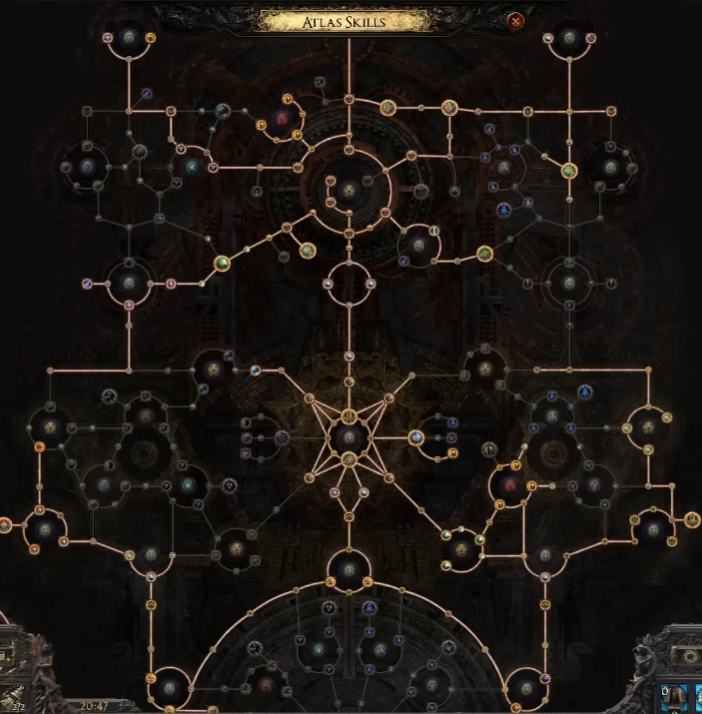
Travel to the Monastery of the Keepers and clear all the maps marked with purple beams. Each Breach Fire map grants one Atlas passive point. Within the Atlas tree, three nodes feed directly into the Genesis Tree:
A node giving two extra passive points to each Womb branch (all four wombs).
A node giving five extra points for the amulet Womb.
A node giving five extra points for the currency Womb.
There are also Atlas nodes that boost Hiveblood and Womb Gift drops by 5% each, stacking these is what eventually pushes Hiveblood gains to 5,000–6,000 per map.
Use Each Branch to Open Its Nodes
Each branch is grayed out at first. You have to keep using Womb Gifts in that branch to reveal more allocatable points. Birthing a single ring, for example, will reveal two or three additional nodes around the area you spent points. The trick: use low-level, cheap Wombgifts for this opening phase, because their Hiveblood cost is lower and you're only feeding the tree, not chasing perfect items yet.
Defeat Xesht for the Final Points
The remaining points come from the pinnacle Breach boss. You'll need to clear two Hive Fortresses and then fight Xesht using a Tier 14 or higher map. Defeating him grants the final points needed to fill the branches.
How to Get Level 82 Wombgifts
Higher item levels produce dramatically better rolls, so chasing level 82 gifts is worth the effort. Here's the setup.
Step 1: Get a Tier 16 Waystone
Take a normal Tier 15 waystone and corrupt it with a Vaal Orb. There's a chance the corruption returns a Tier 16. This is the only way to push map level high enough.
Step 2: Use an Irradiated Tablet
Doryani's "Disengage Safety" point is currently bugged, so the standard route doesn't function. Run an Irradiated tablet instead, it grants +1 to monster level, pushing the map to area level 82.
Step 3: Pair with the Right Breach Tablets
You'll need at least two Breach tablets with "Wombgifts have up to 30% chance to drop one level higher". Two viable layouts:
One Irradiated + two tablets with the +1 level mod, plus a fourth tablet on city maps for extra Breach spawns.
Double tablets with the +1 level mod and one quantity tablet if you want more total gifts.
A quick warning when buying tablets on the trade site: scammers list tablets at full price with only one use remaining. Always double-check the use counter before purchasing.
Step 4: Run and Loot
Just clear the Breaches as fast as possible. Don't waste time keeping circles open longer, testing confirms it doesn't generate more Hiveblood or better drops. Level 82 gifts are rare, but they roll noticeably higher rarity and weight than level 80s, producing far more Divines per stack.
Best Genesis Tree Setups (Based on Current 0.5 Info)
Now that the foundation is covered, here are the most effective setups based on real farming results.
1. Currency Farming - Catalyst Focus
Catalysts are the most consistent and profitable craft right now. River Catalysts go for roughly 1 Divine per 3.5, Sibilant Catalysts hit nearly 10 Exalted each, and even Tools Catalysts sell for 8.
Take Complete Refinement on the left side so you only birth catalysts.
Add additional duplicates and additional different catalysts nodes.
Stack surpassing chance to birth additional items - at 200% you guarantee three items per craft.
Block flesh and Chiula's catalysts since they're cheaper.
Skip Forge of Flesh Rejection and Ignorant of Power - testing shows they're currently bugged and not working as intended.
2. Currency Farming - Divine Orb Setup
For pure Divine hunting:
Travel up to 100% chance to birth Divine Orbs in the top-left area.
Pair it with the 50% chance node to push it to 200% chance.
Add 20% surpassing chance to birth additional items.
Pick up the 10% chance of not consuming Hiveblood node — basically a "buy 10, get 1 free" deal.
In one tested session, 80,000 Hiveblood spent on currency wombs returned 11 raw Divines, 24 Exalts, two Greater Exalts, eight Chaos, 16 Alchs, and a stack of other goodies. The 81 and 82 gifts produced visibly stronger results than 79s and 80s.
3. Energy Shield / Caster Gear Setup
For casters or CI builds chasing energy shield gear:
Allocate nodes that reduce dexterity and strength rolls.
Take nodes that increase intelligence rolls.
Lock the defense modifier to guarantee ES over armor or evasion.
Add modifier tier rating nodes to push roll quality higher.
Include a lucky roll node where available.
4. Vitalic / Melee Ring Setup
For melee players chasing Vitalic Rings (which feature an implicit increased maximum life roll):
Take Otherworldly Clutch - birthed items have a 10% chance to become Breach rings.
Pick the four "minimum modifier level 40" nodes for resistance, damage, life, and attributes. This guarantees rolls stay between Tier 1 and Tier 5.
Block intelligence if you're a strength build, or block fire/cold/lightning if your build doesn't use them.
Open one prefix or suffix slot at the end so an Exalted Orb can finish the item.
Item level matters here. Level 79 gifts let you roll up to Tier 2 on most mods, while level 82 gifts open up the absolute top tiers like 100–190 maximum life.
5. Minion Ring / Amulet Setup
A new branch found only in PoE 2 0.5:
Allocate the minion modifier nodes on the rings or amulets branch.
Guarantee two minion modifiers per birth.
Pick up the 5% chance for plus one to temporary minions and the 5% buff effect on offerings nodes.
Pair with the new refined Breach ring nodes (refined Breach rings push quality up to 25 instead of 20).
6. Target Unique Setup
For chasing high-value uniques like Choir of the Storms or Absent Amulets:
Stack "increased chance for unique to be an amulet" nodes.
Add stellar base bias if the target uses a stellar base.
Push extra rolls per craft using build additional unique nodes.
This setup takes more rolls (20–50 attempts is realistic) but the items can sell for multiple Divines.
7. SSF Resistance-Filler Setup
For solo self-found players needing specific resistance pieces:
Lock the craft to guarantee lightning, cold, or fire resistance.
Force the life modifier over mana.
Fix the defense modifier to match your build (armor for strength characters, ES for casters).
Five to ten crafts should land the piece you want.
Endgame Breach Genesis Tree Crafting Strategies
Once past the storyline and deep into the infinite Atlas, the Genesis Tree turns into a long-term farming loop. Here are the proven approaches.
Stack Breach Tablets for Focused Farming
With the new tablet system, applying three Breach tablets to a map locks out competing mechanics. This makes pure Breach maps with concentrated Hiveblood and Womb Gift drops the most efficient way to feed the Tree. Use the unique Breach tablet (Besieged) to add four rare monsters per Unstable Breach — at under 15 Exalts per tablet, it's the best rare-monster value available.
Target Desert and Mountain Biomes
Recent patches buffed both biomes considerably:
Desert is the strongest biome for killing rare monsters, adding effectiveness, quantity, pack size, and monster modifiers.
Mountain is the strongest biome for tablet drops — Breach already drops a fair number of tablets, and Mountain adds 50% more.
Use Kirac as your Atlas master to terraform Atlas spots into these biomes while juicing rare monsters. Doryani works well for cleansed/corrupted maps and Evolutionary Presence; Jadon is solid for Partial Translation, Eastern Village, and Unforeseen Threats.
Open-Layout Maps Only
Breach punishes tight corridors. Crypts and narrow indoor maps choke the expanding border, leaving monsters outside the radius. Open maps let the Breach grow fully and generate more Hiveblood and splinters per encounter.
Build Around AoE and Mobility
Breach rewards high area coverage and clear speed. Single-target boss-focused builds will struggle to fill the stability bar before it closes. Bring strong AoE, movement speed, and enough defense to survive being surrounded.
Sell Womb Gifts Instead of Crafting
If you enjoy Breach but don't care about crafting, Womb Gifts trade for around 25 Exalts each on the market. Farm Breach, sell every gift, and pocket pure currency without ever touching the Tree yourself.
Flip the Respec Freely
Respec is unlimited and free. Plan crafting sessions around what dropped:
Refund points, set up for amulet crafting, burn a few Womb Gifts.
Refund points, swap to currency farming, burn Lavish gifts.
Refund points again, try a high-roll unique chase.
Rotate setups based on what your run produced.
The Genesis Tree could be one of the most powerful crafting tools in PoE 2 0.5. Its depth far exceeds the PoE 1 version, and the split into five branches plus the minion-specific additions gives players far more control over what comes out of the system. For SSF players, it compresses RNG into a manageable window. For trade players, target-farming high-value uniques and new bases is a real income strategy.