

Path of Exile 2's 0.5 update, Return of the Ancients, brings Breach back with a major overhaul. If you played PoE 1, much of the core loop will feel familiar, but the crafting depth, reward structure, and progression path have all been expanded considerably. This guide will walk you through everything from your first breach encounter to endgame farming, so you can hit the ground running when the update drops.
PoE 2 0.5 Breach & Genesis Tree Guide
Breach in PoE 2 0.5 is a timed combat encounter where an expanding circle spawns waves of enemies, rewarding players who can clear fast and survive dense packs. Completing these encounters feeds into the Genesis Tree, a deterministic crafting system powered by Hiveblood — the primary resource you earn from breach content. The Genesis Tree in 0.5 is dramatically larger than its PoE 1 predecessor, offering granular control over the type, base, and modifier weighting of crafted items, particularly jewelry. Together, these systems form a self-contained economy loop: run breaches, collect resources, craft targeted gear or currency.
With that foundation in mind, let's get into the specifics, starting with what's actually new about the breach mechanic itself, then moving through the quest progression, reward types, encounter variants, the Genesis Tree crafting system, and finally some early thoughts on endgame mapping strategy.
New Breach Mechanic in PoE 2 0.5
The core breach mechanic carries over from PoE 1 but arrives in PoE 2 with several adjustments and new layers.
Expanding Circle & Stability Bar
When you activate a breach, a circle expands outward from the center. Monsters spawn within this circle, and you need to kill them fast enough to fill a stability bar. If you stabilize the encounter before the timer expires, tougher enemies spawn — including rare commanders and, in some cases, the named commander Rune.
Build Requirements
Breach heavily favors builds with strong AoE coverage and good clear speed. Single-target focused builds will struggle here. You also need solid defenses because monsters hit you from all directions, including from outside the visible breach border. Getting surrounded is the most dangerous situation in PoE 2, and Breach creates that scenario more than almost any other mechanic.
Timer Pressure
Unlike some other endgame mechanics, Breach has a hard timer. If you can't kill fast enough to fill the stability bar, the encounter ends early and you miss out on the better drops and commander spawns. Your movement speed and DPS both matter here.
Breach Quest Starting and Progressing
Transitioning from the mechanic itself, let's look at how you actually get started with breach content in the Atlas.
Finding Breach
The quest system directs you southward from the starting maps. There's no guesswork involved — Aliith, the NPC tied to Breach, will guide you through a tutorial-style introduction to the full mechanic from start to finish.
First Encounters
After completing your first breach in a map, Aliith appears and points you toward the nearest breach fortress in the Atlas. From there, the quest line walks you through hive encounters, fortress clears, and eventually the pinnacle boss fight against Xesh.
Breach Stones & Boss Access
To access a breach stronghold (the endgame domain), you need a breach stone. In PoE 1, these were assembled from splinters. In 0.5, you can craft a breach stone directly through the Genesis Tree using 300 splinters, which should reduce the RNG friction of the old system.
Quest Boss vs. Farm Boss
The first time you fight the pinnacle boss, it's a tutorial version — slightly easier, similar to how Worlds or Exarch worked in PoE 1. After that, you'll face the full-difficulty version when farming. There's no confirmed Uber tier for breach bosses yet.
PoE 2 0.5 Breach Rewards & Loots
Now that you know how to get into breach content, here's what you're actually farming for.
Catalysts
Catalysts drop from breach encounters. These improve quality on jewelry, making modifiers of a specific type stronger on rings, amulets, and belts.
Breach Rings
Breach rings have no implicit modifier, but they compensate with a maximum quality cap of 50 (compared to the standard 20). This means you can push modifier values — like life rolls — much higher than on normal rings.
Womb Gifts
These are the crafting seeds for the Genesis Tree. They drop from tougher enemies that spawn after you stabilize a breach, as well as from hive encounters inside strongholds. Each womb gift corresponds to a specific item slot or type and gets placed into the Genesis Tree to produce targeted crafted items.
Hiveblood
This is the fuel for the Genesis Tree. You earn it from completing (or even partially completing) any breach encounter. It's required to activate crafting nodes on the tree.
Currency Orbs
The Genesis Tree also has a dedicated branch for crafting currency orbs, giving you a non-gear path to profit from breach content.
Unique Base Types
Some base type items are only available through the Genesis Tree — they don't drop anywhere else in the game. This makes breach content the exclusive source for certain crafting foundations.
How Each Breach Type Works
Moving beyond rewards, let's look at the different encounter types you'll face inside breach content.
Standard Breach (Map Encounters)
The expanding circle encounter in regular maps. Fill the stability bar by killing monsters quickly. If stabilized, rare commanders spawn. Rune, the named commander, can drop breach rings and other specific loot. Be careful — Rune has a shotgun-like attack pattern that kills many players.
Hive Encounters (Stronghold Interior)
Inside breach strongholds, you'll find breach hives. These function as a soft tower defense mode where you protect a central point. You receive skills from Aliith — freeze abilities, damage auras, and other tools — to help defend the position while killing waves of enemies.
Hive Fortresses (Skyhives)
Larger, more dangerous versions of the standard hive encounter. You find the center, stand in the circle, and fight bigger waves of tougher monsters. A boss spawns at the end, and killing it clears the stronghold.
Breach Domain Bosses
The domain houses named bosses from PoE 1 — Tul and others — as well as the final pinnacle boss Xesh. Some reused bosses may have new move sets, so hardcore players should approach with caution even if they remember the fights from PoE 1.
Breach Bosses
With the encounter types laid out, here's a closer look at the specific bosses you'll face throughout the breach progression and what to expect from each.
Commander Rune
Rune is not a full boss in the traditional sense but rather a powerful named commander that can spawn after you stabilize a breach encounter in maps. He drops breach rings and other valuable items. His most dangerous ability is a shotgun-style attack that fires multiple projectiles in a cone. If you're standing too close or get caught in the overlap, the combined damage can one-shot most builds. Keep your distance and approach from an angle when possible.
Tul
Tul is a cold-themed breach boss encountered inside hive fortresses as you progress through the breach domain. Originally from PoE 1, Tul focuses on ice-based attacks, slows, and freezing mechanics. Builds with freeze immunity or strong cold resistance will have a much easier time here. Since some reused PoE 1 bosses may have updated move sets in 0.5, don't assume the fight is identical to what veterans remember — new abilities could catch you off guard.
Vun
Another returning boss from PoE 1 that has been carried into PoE 2's breach content. While the exact details of Vun's updated kit are not yet confirmed, GGG has acknowledged that some of the original PoE 1 boss designs felt "primitive." Expect the possibility of new or reworked attacks layered onto the familiar framework. Hardcore players should treat this as a fresh fight until proven otherwise.
Xesh - The Pinnacle Boss
Xesh is the final boss of the entire breach mechanic in PoE 2 0.5. You reach him after clearing hive encounters, hive fortresses, and the sub-bosses within the breach domain. Access requires a breach stone, which is crafted through the Genesis Tree using 300 splinters.
The first time you fight Xesh, it's a quest version — a slightly toned-down encounter designed to introduce the mechanics. After that, the farmable version is the real challenge. If the fight remains similar to its PoE 1 iteration, Xesh features multi-phase mechanics with heavy damage and complex positioning demands.
There is no confirmed Uber version of Xesh at this time. However, the quest-to-farm difficulty jump is notable — comparable to how Worlds or Exarch scaled between their quest and repeatable versions. Come prepared with capped resistances, strong sustain, and enough DPS to handle each phase before the arena becomes overwhelming.
General Boss Tips
Breach bosses all share a common trait: they spawn in environments already filled with other monsters. You're rarely fighting a boss in isolation. AoE damage helps thin the adds, but don't lose focus on the boss mechanics while clearing. Defensive flasks, movement skills, and awareness of your positioning relative to the center point are all important across every breach boss encounter.
How Does Hiveblood & Genesis Tree Crafting Work?
With all the encounter types and bosses covered, let's dig into the crafting system that ties everything together.
The Basics
Hiveblood powers the Genesis Tree. Womb gifts go into specific slots on the tree and produce a targeted item based on how you've specced your tree points. Respeccing is completely free, so you can adjust your tree for every craft without any cost.
Tree Structure in 0.5
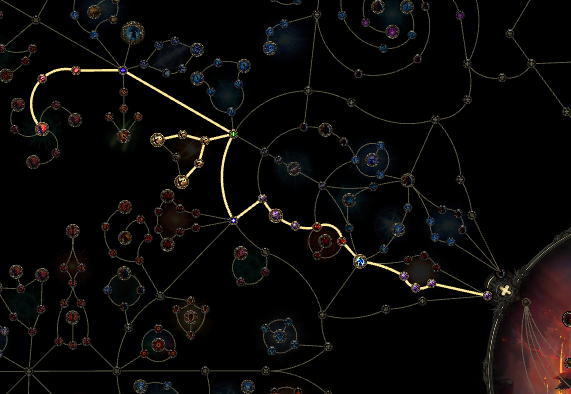
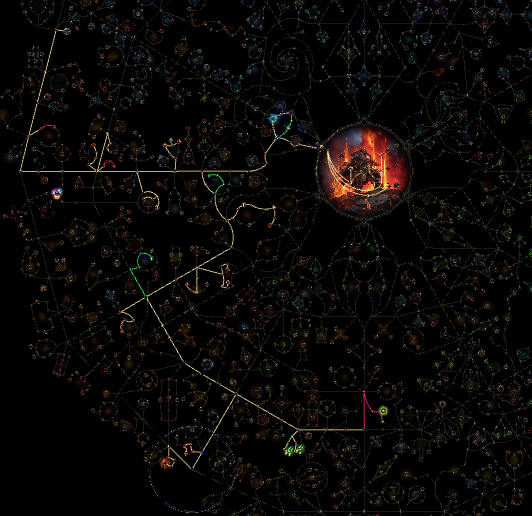
The Genesis Tree in PoE 2 0.5 is approximately eight times larger than its PoE 1 counterpart. Where PoE 1 had one general equipment branch, PoE 2 has dedicated trees for individual item types. Amulets alone have a tree roughly equivalent to the entire old system.
How Speccing Works
You allocate points into branches that influence the outcome of your craft. The logic follows a layered filtering system:
Base Type Selection — Choose the specific base (e.g., stellar amulet, mana regeneration amulet, etc.) rather than just "amulet."
Attribute Weighting — Increase or decrease the likelihood of intelligence, strength, or dexterity requirements on the resulting item. If you want an energy shield chest, you'd boost intelligence and reduce strength/dexterity weighting.
Modifier Type Weighting — Push the odds toward fire, cold, lightning, physical, or chaos modifiers. If you only care about one resistance type, you can weight heavily toward it.
Blocker Nodes — Reduce the chance of unwanted modifier categories. For example, blocking life and mana rolls increases the odds of getting defense modifiers on a chest piece.
Tier Rating — Passive nodes that increase modifier tier rating make higher-tier rolls more likely. More tier rating means you're more likely to hit top-end affixes.
Roll Quality — Some nodes give a "roll an additional time" effect, functioning like a built-in divine orb that pushes values toward the top of their range.
Fracture Chance — There may be nodes that give items a chance to have a fractured modifier — a hardcoded stat that cannot be removed by chaos orbs, annulments, or other rerolling methods.
Crafting Example
Say you want an energy shield chest piece with chaos resistance. You would:
Select the body armor branch
Weight toward intelligence base types
Block strength and dexterity
Push toward chaos modifier chance (since chaos res might be the only relevant mod in that category, your odds improve dramatically)
Block life or mana if you don't need those categories
Add tier rating and roll quality nodes to push values higher
Minion-Specific Branch
New to 0.5, the Genesis Tree includes a dedicated branch for minion-related modifiers on jewelry. This is a first for the system and makes breach content particularly attractive for summoner builds.
Breach Endgame Profit Mapping & Farming Strategy
Finally, let's talk about how to approach breach as a repeatable endgame farming strategy.
Tablet Stacking
The Atlas tablet system in 0.5 appears to cap at three league mechanics per map. If you slot three breach tablets, you should only encounter breaches in that map — no random abyss or other mechanics spawning. This gives you focused, consistent farming.
Map Layout Matters
Open layouts are far better for breach than tight corridors or crypt-style maps with lots of walls. The breach circle needs room to expand. If it hits walls early, fewer monsters spawn and you lose potential loot. Prioritize the most open maps available to you.
Stronghold Farming
Breach strongholds (accessed via breach stones) are a strong source of womb gifts. The hive encounters inside drop crafting materials at a good rate, and you get boss loot on top of that.
What to Craft for Profit
Since breach is the only source for certain base types and the minion modifier branch, items crafted through the Genesis Tree may hold strong trade value — especially early in the league when supply is low. Currency orb crafting through the tree's dedicated branch is another option if you prefer liquid returns.
Current Limitations
Map selection in PoE 2 is less flexible than in PoE 1, which limits your ability to always run ideal layouts. The full profit meta will take time to develop once players have access to all the tree branches and can test drop rates at scale.
The information above is based on what's been revealed for the 0.5 update combined with applicable experience from PoE 1's breach system. More accurate and detailed meta rankings, crafting breakdowns, and farming benchmarks will be continuously updated here as the expansion goes live and more data becomes available. Check back regularly for the latest.