


Path of Exile 3.28's Mirage League has restructured how endgame mapping works, and two systems sit at the center of it all: Voidstones and Nightmare Maps.
In 3.28, Voidstones have been reworked to function on a per-quadrant basis, each one boosting all maps in its corner of the Atlas to Tier 16 while also providing a global bonus and a cumulative chance for Nightmare Maps to drop. Nightmare Maps themselves are the successors to the old Tier 17 system, five high-difficulty maps with upgraded bosses that serve as the primary gateway to Uber Pinnacle content and drop exclusive fragments, unique items, and exceptional support gems. Here is everything you need to know about how these two systems work, how to obtain and socket your Voidstones, and how to run Nightmare Maps profitably.
PoE 3.28 Voidstones: How the New Atlas Structure Works with Voidstones
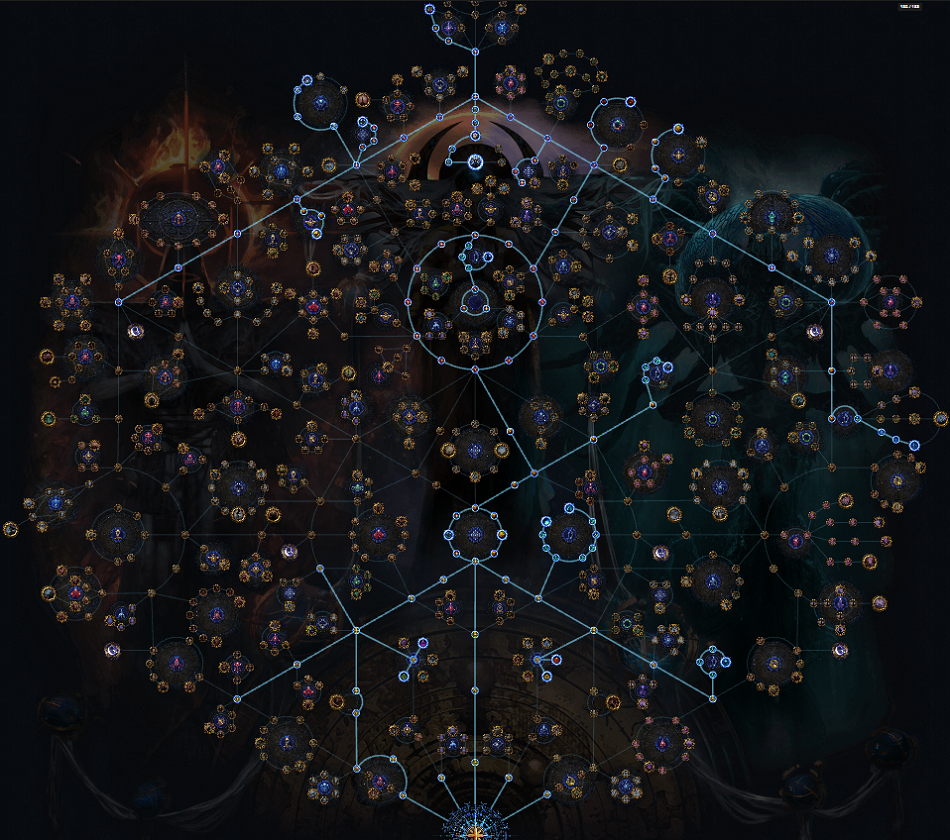
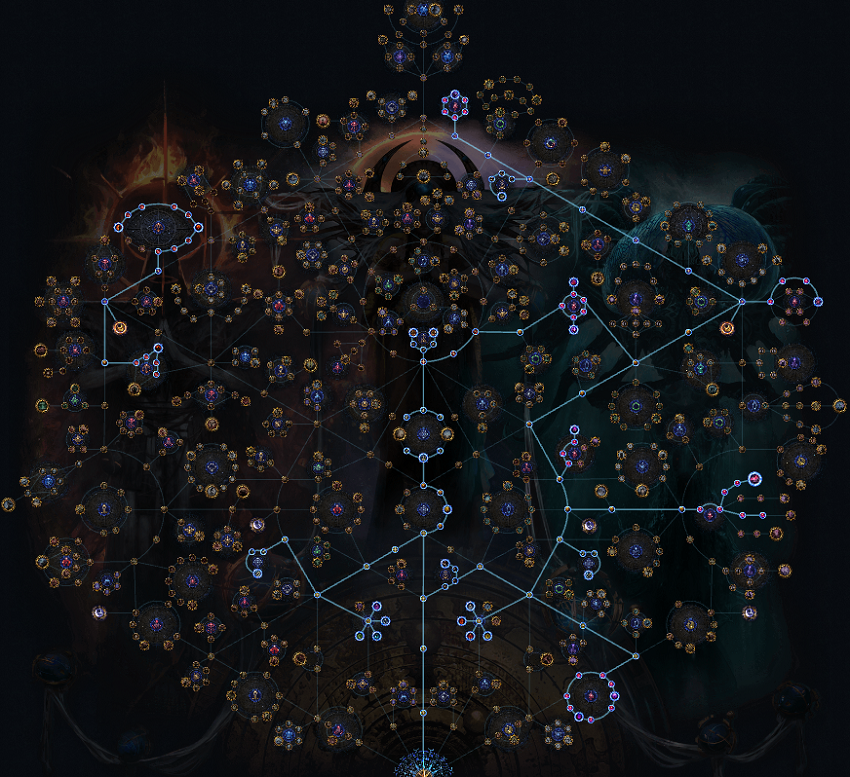
The Atlas in 3.28 is divided into four quadrants, with your starting point at the center. Each corner of the Atlas has a single Voidstone socket. When you place a Voidstone into one of these sockets, every map area within that quadrant has its minimum tier raised to 16. This means that once a Voidstone is socketed, you can no longer run maps below Tier 16 in that quadrant — the game simply won't allow it.
Alongside this tier upgrade, each socketed Voidstone causes Tier 1–15 maps that would normally drop within that quadrant to instead drop one tier higher. Any map that still falls at Tier 15 or below after this bonus is automatically converted into Gold rather than dropping as a map item. This is a notable shift from previous leagues: lower-tier maps no longer accumulate in your inventory from Voidstone-active quadrants, and the old "map equity" system that used to bank failed low-tier drops toward a future Tier 16 drop has been removed. Instead, you simply receive Gold, which you can then spend at Kirac's shop to buy maps, reroll his vendor page, or purchase scarabs and special maps.
In practical terms, once all four Voidstones are socketed, your entire Atlas is Tier 16, and every sub-16 map drop across the board becomes Gold. Map sustain at this point comes purely from natural Tier 16 drops, and thanks to the new universal map system (where map items are not tied to specific layouts), you can choose which map area to run any Tier 16 map on. This makes sustain feel smoother than it might sound on paper.
One more mechanical note: each socketed Voidstone also adds a side map node to the Atlas interface. These side nodes are used to access pinnacle boss arenas, Nightmare Maps, Vault Key areas, and Valdo's Puzzle Box maps. These side areas cannot be affected by Astrolabes or be part of a Memory Thread.
The Four Voidstones and How to Get Them?
There are four Voidstones in 3.28, each obtained by defeating a specific set of pinnacle bosses for the first time. Every Voidstone shares the same baseline effects (tier upgrade, gold conversion, and Nightmare Map drop chance), but each also carries a unique global bonus that applies to all maps across the entire Atlas, not just the quadrant it's socketed in.
Eldritch Voidstone — Obtained by defeating both The Searing Exarch and The Eater of Worlds. Its global bonus gives Eldritch Altars a 25% chance to have an additional upside and downside from the other Eldritch Influence type.
Originator Voidstone — Obtained by defeating the Incarnation of Dread (the final boss of the Aeon memory questline). Its global bonus allows bosses within the Atlas to drop Astrolabes and Exceptional Support Gems.
Decayed Voidstone — Obtained by defeating both The Shaper and The Elder (or alternatively, Uber Elder). Its global bonus gives maps a 25% chance to have either Shaper or Elder Influence when opened.
Ceremonial Voidstone — Obtained by defeating The Maven. Its global bonus allows bosses witnessed by the Maven to drop Maven Chisels.
Note that in 3.28, you no longer receive separate Voidstones from The Searing Exarch and The Eater of Worlds individually. They have been combined into one requirement. The freed-up Voidstone slot is now filled by the Originator Voidstone from the Incarnation of Dread.
Recommended Order for Farming Voidstones
If you are playing through the Atlas progression yourself rather than buying boss carries, the order in which you pursue these Voidstones matters quite a bit for efficiency.
The Eldritch Voidstone is generally the best first target. The Searing Exarch and Eater of Worlds fights are among the most accessible pinnacle encounters, and their quest progression begins as early as Tier 7–8 maps. However, there is a geographic constraint: you must progress to the bottom-left quadrant of the Atlas (reaching Tier 16 Palace) and socket the influence items in that specific quadrant to advance the quest. Many players in 3.28 have reported wasting time by exploring other quadrants first, not realizing the Exarch and Eater quest chain is tied to the bottom-left corner. Prioritize pathing toward that quadrant early.
The Originator Voidstone is a natural second choice. The Aeon memory quest line triggers organically as you run maps — translucent memory tears spawn in your maps, and you chain together a set of memory maps through the NPC Egon. There are three quest stages, and the final fight against the Incarnation of Dread completes the chain. A helpful tip: you can run the memory chain maps as white (unmodified) maps, since they use Tier 16.5 modifiers that can be quite dangerous. Get this done quickly and without fuss.
The Decayed Voidstone is your third target. You need to defeat both The Shaper and The Elder separately (Uber Elder also works but is not required). For Shaper, you must progress to the top-right quadrant and run the four Shaper Guardian maps, which now appear as blank-canvas side nodes you socket into that corner. After collecting all four fragments, you fight the Shaper. For the Elder, you can click any map and run Elder-influenced maps to collect the Elder fragments, then fight the Elder. A commonly shared tip: do not Maven-Witness either of these fights on your first attempt — keep it simple and just secure the Voidstone.
The Ceremonial Voidstone from The Maven is typically the hardest and is saved for last. You need to progress the Maven witness questline by having her observe boss kills across multiple maps, complete the 10-way Maven invitation, and then fight the Maven herself. Her arena is in the bottom-right quadrant (Tier 16 Silo).
A single farming strategy, running Shaper and Elder influenced maps with destructive play — can progress you toward the Decayed, Originator, and Ceremonial Voidstones simultaneously, since influenced maps generate Maven invitations, memory tears, and Shaper/Elder fragments all at once.
How Map Items and Map Areas Work in PoE 3.28?
A common source of confusion in 3.28 is the relationship between map items and map areas. The system has been overhauled so that map items are no longer tied to specific layouts. A "Tier 10 Map" is just a generic Tier 10 item — when you go to use it, you choose which map area on your Atlas to place it on.
The tier listed on each map area on the Atlas acts as a minimum requirement. You can run a higher-tier map item on a lower-tier map area, but not the reverse. For example, if Mesa has a minimum tier of 8, you can place a Tier 10 map on it and the resulting zone will be level 77 (matching Tier 10), not level 75 (which would match Tier 8). The map item dictates the zone level; the map area's tier is just a floor.
This has a major practical benefit: you can complete your entire Atlas progression — white, yellow, and red map bonuses — while running high-tier maps, as long as your character can handle them. The bonus objectives only require that you kill the boss in a magic map (for white-tier areas), a rare map (for yellow-tier areas), or a rare and corrupted map (for red-tier areas). There is no tier-specific requirement for these bonuses. So a player who gets powerful quickly through Heist, Sanctum, or another early currency strategy can skip the slow tier-by-tier grind entirely and complete white map bonuses while running Tier 16 content.
This also has implications for special map types like Blighted Maps. A "Tier X Blighted Map" can now be placed on any map area at or below that tier, so you can choose your preferred layout — narrow corridors, open fields, or anything else — rather than being stuck with whatever map name happened to roll.
PoE 3.28 Nightmare Maps: What They Are
Nightmare Maps are the replacement for the old Tier 17 map system. There are five of them: Abomination, Citadel, Fortress, Sanctuary, and Ziggurat. Each one appears as a side node on the Atlas, attached to the quadrant of its associated Voidstone.
Despite having an area level of 83 (the same as regular Tier 16 maps), Nightmare Maps are considerably harder. They feature an expanded modifier pool that includes exclusive "Nightmare" affixes, many of which impose severe penalties on players while also granting substantial bonuses to pack size, item quantity, rarity, and currency/map/scarab drops. They also contain exclusive monster packs, including enhanced versions of various map bosses and special enemies.
Each Nightmare Map's boss is an upgraded ("uber") version of an existing league mechanic boss. For example, you'll face enhanced versions of Catarina (Betrayal), Uhtred (Expedition), and The Unbreakable (Heist). These bosses serve as the bridge between regular pinnacle content and Uber Pinnacle content, a difficulty tier that was previously missing from the game.
Completing each of the five Nightmare Maps for the first time awards 1 Atlas passive skill point, for a total of 5 additional points. The fifth scarab slot in the Map Device is also granted upon completing a non-Valdo's Nightmare Map.
How To Get Nightmare Map & Drop Rates
The chance for Tier 16 maps to convert into Nightmare Maps is tied to the number of Voidstones you have socketed. Each Voidstone grants a 0.4% conversion chance per Voidstone socketed (not a flat 0.4% each). The formula is 0.4 × v², where v is the number of socketed Voidstones. This produces the following drop rates:
1 Voidstone: 0.4%
2 Voidstones: 1.6%
3 Voidstones: 3.6%
4 Voidstones: 6.4%
With four Voidstones and a reasonably invested map, players can expect roughly one Nightmare Map drop for every five maps run. However, there is a diminishing returns mechanic within each individual map: the first Nightmare Map that drops uses the full conversion rate, but subsequent drops in the same map instance have a reduced chance (the exact diminished rate has not been disclosed by GGG). This prevents heavily "juiced" maps from producing a disproportionate number of Nightmare Maps.
Nightmare Maps cannot drop inside other Nightmare Maps.
Nightmare Map Rewards: Uber Fragments, Uniques, and Gems
The primary reward from Nightmare Maps is Uber Pinnacle Boss Fragments. Each Nightmare Map boss can only drop specific fragments, corresponding to the pinnacle bosses found in that map's quadrant:
Fortress — Decaying Fragment (Uber Elder), Synthesising Fragment (Venarius), plus Cosmic Fragment (Shaper) and others shared across its connections. Drops the unique Yoke of Suffering.
Citadel — Cosmic Fragment (Shaper), Synthesising Fragment (Venarius), plus Traumatic Fragment (Fear) and Lonely Fragment (Neglect). Drops the unique Manastorm.
Abomination — Reality Fragment (Maven), Blazing Fragment (Exarch), plus Synthesising Fragment (Venarius) and Traumatic Fragment (Fear). Drops the unique Malachai's Mark.
Ziggurat — Devouring Fragment (Eater), Reality Fragment (Maven), plus Synthesising Fragment (Venarius) and Reverent Fragment (Dread). Drops the unique Wraithlord.
Sanctuary — Blazing Fragment (Exarch), Devouring Fragment (Eater), plus Awakening Fragment (Sirus) and Reverent Fragment (Dread). Drops the unique The Dark Seer.
Each boss also has an exclusive Exceptional Support Gem tied to it (e.g., Unholy Trinity Support from Abomination, Minion Pact Support from Ziggurat). The unique items listed above have been removed from the core drop pool and now drop exclusively from these Nightmare bosses, rebalanced to match the difficulty of the content.
Fragment Drop Quantity Thresholds
The number of Uber Fragments a Nightmare Map boss drops is influenced by the area's total Increased Item Quantity. Community testing has identified the following approximate thresholds:
0–135% IIQ: 1–2 fragments
135–210% IIQ: 1–3 fragments
210–250% IIQ: 2–3 fragments
250–400% IIQ: 2–4 fragments
400%+ IIQ: 3–4 fragments
The average number of fragments per run tends to hover around two. On occasion you will see one or three, and at very high quantity values, four becomes possible. Importantly, preliminary testing suggests that map quantity and item quantity on the area itself affect fragment drops, but sources that only increase the difficulty and loot of the boss specifically (such as Titanic Scarabs, Armoursmith's Delirium Orb, or Scarab of Wisps) do not appear to influence fragment counts.
Eldritch Altars that grant "% Increased Quantity of Items Found" do count toward these thresholds, so picking those up on the path to the boss during a rush strategy can push you from a 1–2 fragment outcome to a guaranteed 2+ outcome.
Nightmare Boss Rush Strategy
One of the most profitable early-league strategies in 3.28 is the Nightmare Boss Rush: buying Nightmare Maps in bulk, rushing to the boss, killing it as fast as possible, and selling the fragments.
The core logic is simple. Each Nightmare Map costs a set amount (early in the league, roughly 20–25 chaos). Each run produces an average of two Uber Fragments. If the fragments from your chosen map are worth 80–100 chaos combined, you are netting 55–80 chaos profit per map just from the fragments alone, before counting unique drops or other incidental loot. The strategy then becomes a speed game: the faster you kill the boss, the more maps you run per hour, and the more profit you generate.
Choosing Your Map: The two best maps for this strategy are Abomination (which biases toward the Reality Fragment, one of the most valuable) and Ziggurat (which biases toward the Devouring Fragment, the other high-value fragment). Ziggurat's boss has multiple invincibility phases that slow down your runs, so Abomination is generally faster and more profitable per hour. However, fragment prices shift constantly based on supply and demand — if everyone runs Abomination and floods the market with Reality Fragments, Ziggurat may become more profitable. Keep an eye on current prices.
Map Device and Fragments: Run Searing Exarch influence for access to Eldritch Altars, which can grant IIQ bonuses on the way to the boss. Slot in Sacrifice fragments (Dusk, Midnight, Noon, Dawn) or Mortal fragments to add flat quantity to the map, pushing you closer to the 210%+ threshold where you are guaranteed at least two fragment drops.
Atlas Tree: The Atlas tree for this strategy is relatively lean. Take Settlers of Kalguur nodes for a chance at Starfall Crater encounters (which have a small chance to reward Svalinn, a chase unique), but only interact with these if they appear on the direct path to the boss. Do not full-clear maps looking for them. Shrine nodes are also useful for the power buffs they provide during the boss fight.
Mirage Interaction: Occasionally, the Mirage league mechanic will spawn over the boss arena in a Nightmare Map. When this happens, you effectively get to run the boss a second time within the same map, doubling your fragment output for a single map's entry cost. This is pure bonus profit when it occurs.
Rolling Your Maps: Aim for 85%+ quantity on your Nightmare Maps. They can only be directly modified by Chaos Orbs, Vaal Orbs, Delirium Orbs, and Chisels. Corrupted Nightmare Maps can sometimes roll 8 affixes, which further increases quantity and pack size.
Tips for Running Nightmare Maps
Nightmare Maps are noticeably harder than regular Tier 16 content. If your build is not yet strong enough to comfortably handle them, several tools can help:
Using a Scarab of the Sinistral or Scarab of the Dextral removes half of the map's modifiers while empowering the other half. If the removed modifiers are the ones most dangerous to your build, this can effectively turn a Nightmare Map into something close to a white map in terms of difficulty. This is especially useful when first attempting Nightmare content or when running them for Atlas skill points.
A Scarab of Stability grants extra portals, giving you more room for error. Applying a single Delirium Orb (for 20% Delirium) causes the boss to deal only 6% more damage and have 16% damage reduction, but the frequent Delirium skill interruptions will stagger the boss's attacks and can make the fight more manageable.
Atlas passives like The Dutiful Soldier, Mighty Hunter, and Packed with Energy provide combat buffs. Shrines (from the shrine Atlas package) and Tormented Spirits with Speaker of the Dead can also grant player-side buffs during the encounter.
Map Sustain and the Gold Conversion System
A frequent concern among players in 3.28 is map sustain once Voidstones are socketed. Because every sub-Tier 16 drop in a Voidstone quadrant is converted to Gold, there is no longer a trickle of lower-tier maps feeding into the old map equity system. Your Tier 16 supply comes entirely from natural Tier 16 drops.
In practice, sustain at Tier 16 is quite generous thanks to the shaping nodes on the Atlas tree (which give maps a chance to drop one tier higher, converting more Tier 15 drops into Tier 16s) and the fact that all Tier 16 map items can now be placed on any layout. You are not chasing a specific map name — any Tier 16 works for any Tier 16 map area. This dramatically reduces the friction that used to exist with map sustain.
If you do run low, Kirac's shop (accessible via Gold) sells maps and can be rerolled. The Beastcrafting recipe that formerly granted Kirac missions now grants a Nightmare Map instead, which is another supplementary source. And for players who want to farm lower-tier content (such as Tier 7 Essence farming), you will need to remove Voidstones from the relevant quadrant to allow those tiers to drop, since the Voidstone bonuses are quadrant-specific. This is by design — the Voidstone bonuses are oriented entirely around Tier 16 farming.