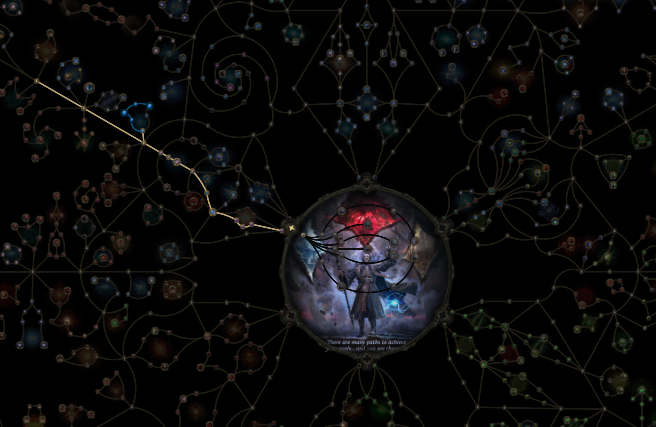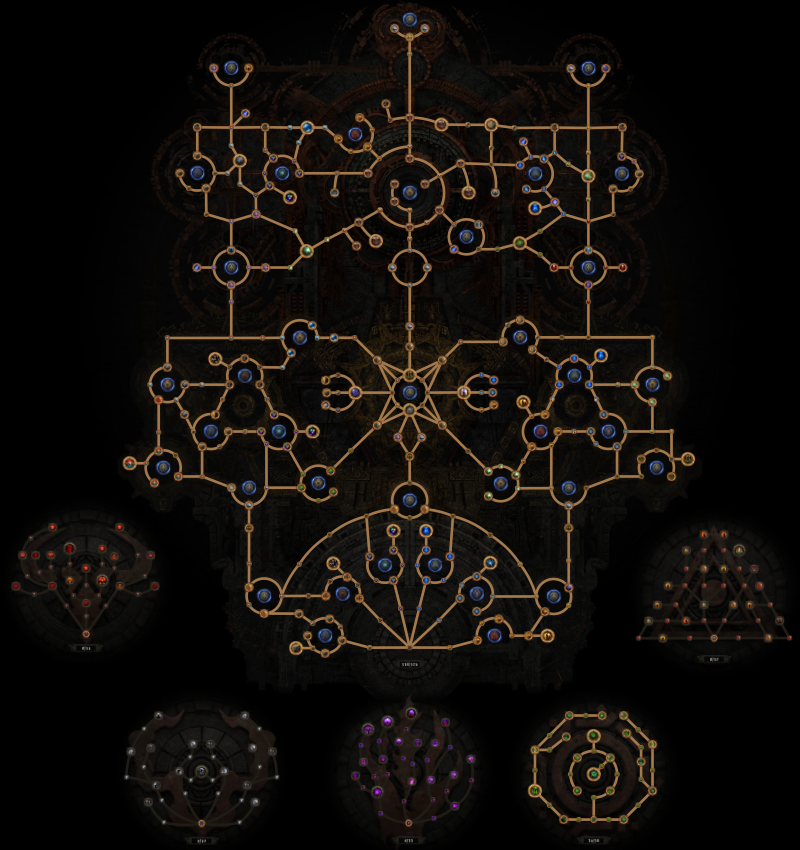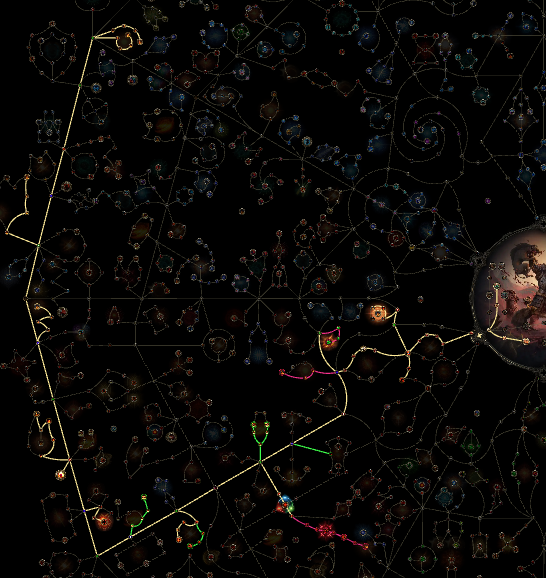



The full release of Path of Exile 2 delivers a massive, system-wide rework to the character passive skill tree. This is not a small balance patch. GGG has rewritten large sections of the tree layout, added hundreds of new passive modifiers, restructured all jewel sockets, removed critical strike chance from passive nodes, introduced unique new keystones, and paired these tree changes with updates to ascendancies, support gems, base items, uniques, the Atlas passive tree, core skill behaviours, and the new league mechanic. This guide covers PoE 2 1.0 passive tree changes, and breaks down new keystones and notables.
PoE 2 1.0 New Passive Tree Changes & Rework
The overall design goal of the Path of Exile 2 1.0 passive skill tree overhaul is to increase build diversity. The complete passive tree has undergone a ground‑up major overhaul, adding hundreds of brand‑new modifiers distributed across many tree branches. This update is far more than minor stat tweaks; it expands native passive support for dozens of mechanics that previously required clunky pathing, unique item crutches, or almost no passive investment options at all. Many old clusters have been reshuffled, new small passive nodes and Notable passives inserted, and the physical layout adjusted to accommodate the new jewel socket placement and expanded mechanic coverage.
1. New and Updated Passive Nodes by Region & Gameplay Mechanic
Multiple distinct zones of the tree receive expanded node sets, targeting weapon archetypes, totem play, ailments, flask builds and previously neglected mechanics.
Warrior (Marauder‑adjacent) Tree Section: This area receives substantial buffs, introducing a suite of interconnected small passives and Notable nodes built for Fissures, Ancestral Boosting, and Melee Totem playstyles. Before 1.0, totem‑focused slam builds struggled to find cohesive, nearby passive bonuses and were forced to travel long distances across unrelated tree sections. The updated warrior cluster bundles fissure branching, totem damage, totem area of effect, and slam‑related bonuses together. This directly synergizes with new skills like Molten Forge and new Notables such as Tawhoa’s Overgrowth and Cataclysm, creating a complete home for totem‑slam builds.
Mechanics With Expanded Tree Support: A long list of under‑supported systems have gained dedicated passive options across different tree quadrants: Pin, Flasks, Fragments, Recoup, Bleeding, Elemental Ailments, and Chaos Damage. For example, bleed‑focused builds now have access to stacked bleed magnitude and bleed duration nodes without travelling deep into ranged‑focused parts of the tree. Flask‑oriented characters can pick up flask charge gain, flask effect, and flask duration bonuses within nearby clusters. Chaos hit builds (separate from chaos damage‑over‑time) now have improved access to chaos hit scaling, which pairs well with the new Withering Disintegration keystone.
New Weapon‑Type Dedicated Nodes: Additional passive nodes are implemented for newer base weapon archetypes, primarily Swords and Daggers, matching the massive influx of over 200 new base item types arriving in 1.0. These nodes deliver weapon‑specific bonuses such as attack speed, physical damage, crit multiplier (crit chance is removed, but multiplier remains available), and ailment application chances for these weapon families.
2. Jewel Socket Relocation: Major Structural Tree Change
Jewel sockets represent one of the most impactful structural overhauls to how players navigate and invest points in the passive tree.
Old State: Prior to 1.0, there were 18 Jewel Sockets, positioned along the main attribute “highway” paths of the tree. These sockets sat on primary travel routes; nearly every build would collect them automatically with almost zero opportunity cost. It became standard practice to grab every jewel socket you passed, regardless of whether your build actually benefited from additional jewel capacity. Jewels became free extra power with very little trade‑off.
1.0 Changes: All Jewel Sockets are relocated to sit behind Notable clusters. To unlock a jewel socket, you now must spend passive points to work your way into that specific notable cluster. Total jewel socket count rises to approximately 60. A subset of these newly‑positioned sockets possess a unique secondary property: they can functionally bridge two previously disconnected clusters, opening new pathing shortcuts for creative build planning.
Design Intent & Build Consequences: The core goal is improved build diversity. You are forced to weigh trade‑offs: is this cluster (and its jewel socket) genuinely valuable for my build? You can no longer collect sockets for free while travelling to your primary damage nodes. Some builds may skip many jewel sockets entirely to allocate points into damage or defence nodes instead. High‑investment jewel builds will need to commit meaningful passive points to unlock multiple sockets, which raises the opportunity cost of stacking large numbers of jewels.
3. Critical Hit Chance Fully Removed From Passive Skill Tree
Removal of critical hit chance from passive nodes is arguably the most controversial and meta‑defining change for PoE2 1.0. Crit multiplier values are still present on the tree; only flat and increased critical hit chance modifiers are deleted from all passive nodes.
You cannot source any crit chance from small passives, Notables or cluster nodes. Crit‑based builds remain fully viable, but critical hit chance must be gathered exclusively from gear, rare jewels, unique jewels, support gems, Ascendancy bonuses, and other external sources. Reaching high crit chance or near‑100% crit chance will demand deliberate item‑based investment; it can no longer be achieved cheaply by picking several easy passive nodes.
In the pre‑1.0 patch, critical hit chance was extremely abundant and broadly accessible across the passive tree. There were spell crit chance nodes, attack crit chance nodes, weapon‑specific crit chance passives, and flat crit chance bonuses scattered throughout caster, warrior and ranger sections. This caused a huge percentage of endgame characters to converge toward crit‑based scaling. Hit‑based builds of nearly every variety gravitated toward crit because it represented the highest‑return damage vector available with minimal point investment. Community data showed well over two‑thirds of high‑level characters built their damage strategy around critical hit mechanics.
Practical build impacts:
Snapshot‑reliant builds take the biggest hit: Playstyles that depended on landing one massive snapshot critical hit (examples include certain Flame Blast ignite setups and Oil Grenade chain builds) lose their easy access to stacked crit chance, and must compensate via gear or gem choices.
Crit is not dead: Crit builds remain playable but require more gear focus. Players will need to explore alternative scaling pathways: flat added damage, accuracy‑to‑damage conversion, ailment magnitude stacking, recoup, and other damage multipliers to fill gaps where passive crit chance once carried builds.
Short‑term adjustment pain is expected: The transition period for existing build concepts will likely feel awkward at launch. If alternative damage scaling sources are under‑powered at release, many established builds will see noticeable damage drops, and further balance tuning from GGG is anticipated post‑launch.
Important note: Crit multiplier passives still exist on the tree. If you can source crit chance from equipment, you can still scale how hard your critical hits land via passive points.
4. Support Gem System Redesign, Interacting With Passive Tree Builds
Support gems receive a comprehensive re‑work that pairs hand‑in‑hand with the expanded mechanical options of the new passive tree. These gem changes unlock many off‑meta skill‑gem combinations that were previously impossible, letting you make full use of new passive‑tree mechanics.
Spell‑Attack adaptive support gems:
Support gems no longer hard‑code to be spell‑only or attack‑only. Instead, they dynamically adapt to the primary Skill Gem they are linked to. A given support will output attack damage when supporting an attack skill and spell damage when supporting a spell skill. As one cited example: Living Lightning previously dealt only minion damage; now it will produce spell damage or attack damage matching its supported skill. This removes many rigid linkage restrictions.
Buff and consolidation for under‑performing legacy supports:
Chain: No longer applies a damage penalty against the first hit target, removing one of its biggest historical downsides.
Cold Penetration, Fire Penetration, Lightning Penetration: Three separate support gems are merged into a single universal Elemental Penetration support gem, simplifying gem setup for mixed‑element builds.
Brutality: Now adds its damage bonus as extra Physical damage, expanding its usability across more skill types.
Improved in‑game support‑gem recommendations:
The client’s automatic support‑gem suggestion system is overhauled to present smarter, more relevant gem options aligned with your character’s passive‑tree specialisation.
PoE 2 1.0 New Keystones & Notable Passives
Keystones are transformative high‑impact passive nodes that fundamentally alter core rules for your build. Below is a detailed breakdown of previewed keystones and key Notable passives, including function, intended use‑cases, build synergies, and hard limitations to keep in mind.
1. Arcane Archer (Keystone)
This brand‑new passive‑tree keystone is explicitly separate from the Ascendancy class concept “Arcane Archer”, which is not confirmed for 1.0 release.
Core function & uses:
While your main‑hand weapon is a Bow, you are permitted to equip a Wand inside your quiver equipment slot. However, all effects coming from this wand operate at 50% reduced effectiveness. This 50% penalty applies to all wand modifiers: damage, spell bonuses, stat bonuses, unique item special effects, everything sourced from the wand in the quiver slot.
It enables a highly experimental hybrid playstyle blending bow weapon setup with wand‑based spell bonuses and unique wand effects. This is not a general‑purpose buff for ordinary bow builds; it shines almost exclusively when paired with carefully selected unique bows and unique wands. Generic rare bow + rare‑wand combinations deliver very little pay‑off due to the 50% effectiveness penalty.
High‑potential unique‑item synergies:
Voltaxic Rift (Bow): Converts 100% of your Lightning Damage into Chaos Damage, and chaos damage from hits contributes to shock chance. When paired with a spell‑focused wand such as one granting Spark, you can create chaos‑converted Spark setups.
Adonia’s Ego (Wand): Enables snapshotting huge elemental‑damage multipliers by consuming Power Charges. Each consumed power charge grants significant more elemental damage. High‑charge stacking builds can snapshot this bonus for bow‑based elemental attacks, generating massive damage amplification.
Runeseeker's Call (Wand): Multi‑socket rune‑based wand. Equipped in the quiver slot under Arcane Archery, runes slotted into this weapon can grant large quantities of added damage, spell damage, critical multiplier and life scaling modifiers. It competes against standard powerful quivers; whether it surpasses top‑tier quivers remains dependent on final balancing numbers.
Doomfletch (Bow): Grants physical damage converted into extra elemental damage of all types. Can pair with life‑stacking strategies and runes that boost maximum life inside Rune Seeker’s Call, working alongside items like the Bursting Decay ring which converts max life to added physical damage.
Critical limitations:
Most native quiver, arrow and projectile modifiers tied to bow equipment do not apply to spells coming from the wand. For example bonuses for additional arrows, arrow fork, arrow pierce will not interact with wand‑sourced spells such as Spark. Build builders must filter out bow/arrow‑specific modifiers and focus on general damage conversion and spell scaling. This keystone is firmly off‑meta niche content rather than league‑start friendly.
2. Withering Disintegration (Keystone)
This keystone completely re‑writes the fundamental behaviour of the Wither ailment.
Effect:
Wither that you inflict on enemies will increase Chaos Hit Damage Taken by targets. In exchange for this hit‑damage bonus, your character is completely unable to deal any form of Damage‑over‑Time.
By default in PoE2, Wither raises the amount of chaos damage‑over‑time that afflicted targets receive, making it the staple ailment for chaos DoT builds.
Build application:
This keystone is built exclusively for chaos hit‑based characters. If you allocate this keystone you must abandon all chaos DoT mechanics (decay, wither DoT, poison DoT etc). It turns Wither into a debuff purely to amplify direct chaos hit damage. It pairs very well with the expanded chaos‑hit passive nodes added across the tree.
3. Tawhoa’s Overgrowth (Notable Passive)
Melee totem‑focused Notable for warrior‑region totem builds. When your Melee Totems enter the Overgrown state, three bonuses activate:
Fissures created by totems branch one additional time (expanding fissure coverage and clear speed).
Melee strikes performed by totems deal splash damage for improved screen clear.
Slam skills cast by totems carry a 20% chance to trigger an extra Aftershock for supplementary burst damage. Designed to pair with totem‑slam builds and the new skill Molten Forge.
4. Cataclysm (Notable Passive)
Effect: Molten Fissures you create automatically trigger an Aftershock effect every four seconds.
This adds consistent extra area burst and supplementary single‑target pressure for builds built around Molten Fissure slam totems or self‑cast slam setups.
5. Spring Forest (Notable Passive)
Mana Flasks regenerate 0.25 charges every second passively.
Whenever you consume any Flask charge, nearby allied plant‑type minions enter the Overgrown state. This supports flask‑sustained plant‑totem playstyles, combining flask utility with plant‑minion mechanics.
6. Shattering Claws (Notable Passive)
Ice Fragments you produce possess a 20% chance to detonate for a second time. Provides multiplicative clear‑speed and single‑target damage for builds centred around ice‑fragment hit mechanics.
New Skill Gems Supported by the Reworked Passive Tree
These newly‑revealed skills receive native support from updated passive‑tree clusters, some tied to Ascendancy reworks.
Molten Forge (Attack‑Slam Skill Gem): Requires mace‑class weapons (one‑hand or two‑hand mace). Summons a crashing blazing anvil after a short one‑second delay. Striking the anvil creates a damaging shockwave and stacks Forged in Flame buff on your weapon, granting added fire damage to slam abilities. If the anvil becomes ignited, shockwaves gain expanded radius and increased fire damage. It has a 2.4‑metre impact radius, 14 mana cost and a six‑second cooldown. Fits naturally into warrior‑area totem‑slam nodes and synergises with Tawhoa’s Overgrowth / Cataclysm.
Covenant of Ghorr (Spell‑Aura, Infernalist Ascendancy Meta‑Gem): Sustained aura that drains life per second. Every two‑second interval spawns swarms of Withering Bloatflies. You and your allies inside its four‑metre radius gain increased damage‑over‑time and recover a percentage of maximum life upon killing enemies. Only one Covenant may be active at once; cooldown recovery modifiers adjust spawn frequency for Bloatflies. This DoT‑oriented skill cannot work alongside Withering Disintegration keystone due to the DoT‑disable penalty.
Demon Magus (Minion‑Meta Gem, Infernalist Ascendancy): Summons a reviving Demon Magus minion which casts skill gems socketed inside this meta‑gem. Spells cast by the minion cost 50% less mana, but you pay that mana cost directly from your own pool. The Demon Magus gains more damage scaling for every distinct different skill gem socketed within it. Quality modifiers add extra maximum life for your summoned minion.
Ascendancy Reworks and Related Tree‑Linked Adjustments
Multiple Ascendancy classes get heavy revisions that interact directly with the new passive skill tree:
Mercenary, Infernalist, Blood Mage, Acolyte of Chayula: These four ascendancies undergo major reworks, with brand‑new Notable ascendancy passives.
Acolyte of Chayula special change: The signature Darkness mechanic that belonged to this Ascendancy is removed from the Ascendancy screen and converted into a standalone keystone located on the main character passive tree. This allows non‑Acolyte characters to invest into the Darkness mechanic if they wish, opening entirely new build possibilities.
Blood Mage: Receives a full suite of brand‑new Notable ascendancy passives to pair with blood‑based mechanics that also get expanded support on the main tree.