


Nightmare Maps are special endgame Tier 16 endgame content, commonly called T17 or purple maps by the Path of Exile community. They serve as a key bridge to uber pinnacle boss encounters, dropping exclusive fragments, unique items, and exceptional support gems. This guide covers effective PoE 3.29 Nightmare Maps boss rush farming strategies, optimal Atlas passive setup, the easiest Nightmare Maps to run, and more.
PoE 3.29 Nightmare Maps Guide
Different from regular Atlas maps, Nightmare Maps are not part of the standard Atlas of Worlds system and ignore some common Atlas mechanics like Astrolabe effects. They always spawn 6 fixed affixes (up to 8 affixes when corrupted) and only accept modifications from Chaos Orbs, Vaal Orbs, Delirium Orbs, and Chisels. Each Nightmare Map contains exclusive monster packs and upgraded league bosses. Completing every unique Nightmare Map grants 1 permanent Atlas passive skill point, with a maximum total of 5 points from all Nightmare Map completions.
How to Get Nightmare Maps in Path of Exile?
Nightmare Maps cannot drop randomly. They are converted from standard Tier 16 maps based on the number of socketed Voidstones in your Atlas. The conversion chance follows a non-linear formula: 0.4 × v² (v = number of socketed Voidstones). Specific conversion chances for Voidstone counts:
1 Voidstone: 0.4% conversion chance
2 Voidstones: 1.6% conversion chance
3 Voidstones: 3.6% conversion chance
4 Voidstones: 6.4% conversion chance (max rate)
With 4 Voidstones and basic map investment, players can get 1 Nightmare Map drop per 5 regular T16 maps on average. Nightmare Map drops have diminishing returns in a single map run, and they cannot drop inside existing Nightmare Maps. For early league farming, Nightmare Maps are mainly purchased from trade until players unlock 4 Voidstones.
How to Use Nightmare Maps in PoE?
Nightmare Maps are used exclusively to access special void zone areas behind Atlas Voidstone sockets, not regular T16 Atlas content. Players only need to place a Nightmare Map into the Map Device to open the exclusive Nightmare boss arena.
These maps roll a mix of red-tier (T11-T16) standard modifiers and Nightmare-exclusive modifiers. Exclusive modifiers greatly boost pack size, item rarity, currency drops, map drops, or scarab drops. Each Nightmare Map boss drops 1 exclusive unique item (5% drop rate), 1 exclusive exceptional support gem (5% drop rate), and variable uber pinnacle fragments.
Area Item Quantity (IIQ) directly affects fragment drop numbers: 0-235% IIQ drops 1-3 fragments, 235-250% IIQ drops 2-3 fragments, and over 250% IIQ guarantees 2-4 fragments per boss kill.
PoE 3.29 Fortress Nightmare Map Boss Rush Strategy
After the PoE 3.29 Atlas rework, this strategy becomes far more accessible than previous leagues. Map dangerous modifiers are also easier to avoid and reroll, making fast boss kills consistent even with basic league-start builds. It outperforms traditional Legion juicing and shrine blasting in early league efficiency due to its faster run speed and fewer pickup requirements. The core gameplay loop is extremely streamlined and repeatable. Players skip full map clearing and ignore most secondary league mechanics. The only goal is to sprint directly to the Fortress boss arena, defeat the boss quickly, collect exclusive drops, and reset for the next map.
No mandatory fragments or high-cost scarabs are required for baseline farming, keeping entry costs at an all-time low. Players only need to trigger basic on-map buffs including shrines, Niko's Sulphite Veins and Searing Exarch altars if encountered on the path to the boss, to boost clear and boss damage without extra investment. Most single map runs can be finished in under 1 minute, with an average total cycle time (including hideout reset and stash management) of 1.5 minutes per map. Different from other boss farming strategies, this method requires almost no post-map cleanup. Loot is concentrated on high-value stackable drops, eliminating frequent hideout trips and greatly improving farming continuity.
Best Nightmare Maps
Fortress is the exclusive best map for this strategy in 3.29, with no viable alternatives for early league profit.
Nightmare maps are universal and undervalued in early leagues, costing only 30 Chaos Orbs per map. They are primarily sought after only by boss rush players, ensuring stable supply and low entry cost. Fortress stands out among all Tier 17 Nightmare maps for its simple layout, short boss arena access path, and nerfed boss health pool in 3.29. Its map modifiers are far less punishing than Abomination, Sanctum or Ziggurat Nightmare maps, allowing consistent fast runs without build-specific countermeasures. Players can purchase pre-rolled Fortress Nightmare maps via asynchronous trade. Custom regex filters can remove all dangerous negative modifiers while ignoring positive stats like pack size, item quantity and rarity, completely eliminating manual map rolling costs.
Atlas Passive Tree & Setup
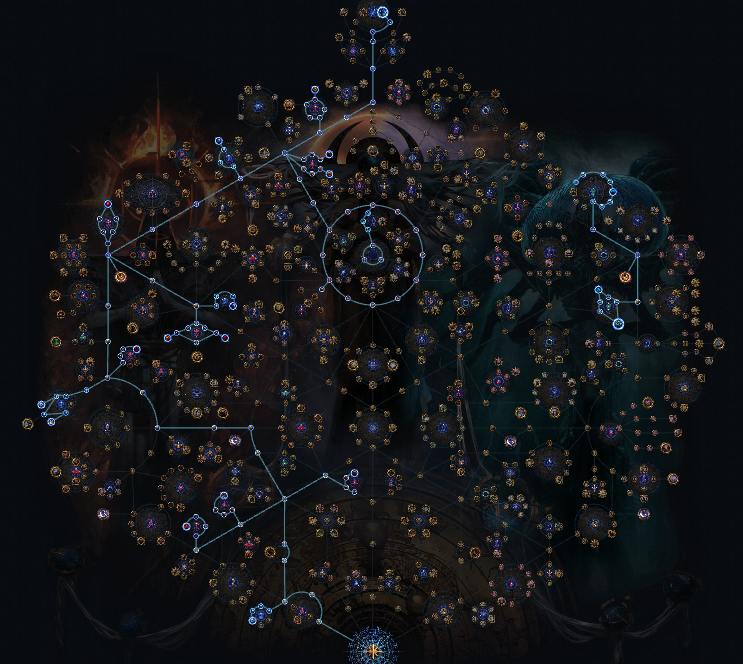
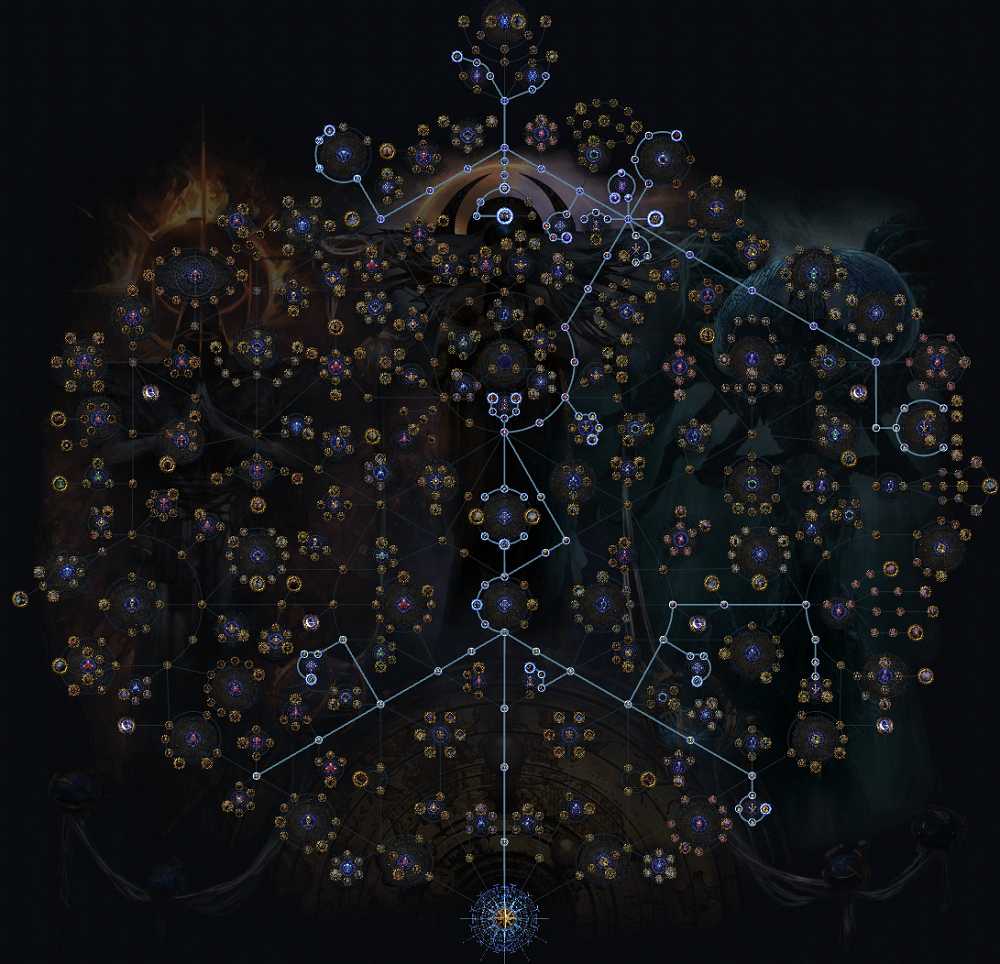
The Atlas passive setup focuses on low-effort buffs to boss drop quality and map consistency, without heavy investment. Core Atlas nodes prioritize slight increases to area quantity and explicit modifier effects. Though area quantity has a reduced impact on Uber fragment drops in 3.29 compared to old leagues, it still provides a small stable boost to overall loot value.

Drop Details & Drop Rate
The strategy’s profit comes from two core high-value drops, plus supplementary early-league currency and materials. All core drops are highly liquid and easy to sell during league start.
Uber Key Fragments: Every Fortress boss kill drops 1 to 3 Uber fragments, with most runs yielding 2 or 3 fragments. The two main types are Decaying Fragments and Synthesising Fragments.
Yoke of Suffering: The unique drop from Fortress bosses. The official baseline drop chance is 5%, but practical in-league drop rate averages 8%-10%. Unidentified Yoke of Suffering is extremely valuable in early league.
Secondary loot includes occasional Divine Orbs, Chaos Orbs, Astrolabes, Heist blueprints and materials, low-tier scarabs, and miscellaneous maps. Fully revealed heist blueprints have notable early-league value, while standard supplementary drops provide steady small profits without relying on RNG. Unique item drops from this farm are almost universally low-value and can be ignored for profit calculation.
League Start Build Requirement
A viable boss rush build must have three core attributes: fast movement speed, quick map clearing for trash mobs on the boss path, and strong single-target burst damage for fast boss kills. The Eye of Penetration Warden build is the optimal league-start choice for this strategy, with stable performance and flexible late-game expansion potential. A practical build state is level 94-98 with nearly complete early-endgame gear, minor unspent passive points, and a optimized tincture setup. The updated tincture mechanic auto-deactivates at 12 mana burn stacks, eliminating self-drain risks while maintaining nearly 100% tincture effect uptime for consistent boss damage.
PoE 3.29 Quantity Stack Nightmare Map Boss Rush Strategy
The nightmare map system received a key rework in 3.28 that carries over to 3.29. Old segmented T7 nightmare maps are unified into a single generic Nightmare Map item, greatly simplifying purchase, storage and farming preparation. Different nightmare map types require specific atlas progression unlocks before access. Players must complete prerequisite endgame content to unlock corresponding boss arenas: complete Eater of Worlds or The Searing Exarch content to unlock Ziggurat maps, finish the full questline to access Sanctuary maps, and clear Shaper, Elder or Cortex content to unlock Citadel and Fortress variants.
The core tactic relies on two key scarabs to standardize map rolls and stabilize item quantity. Combining Scarab of the Sinistral and Scarab of the Dextral removes all random modifiers from nightmare maps, eliminating risky map mods and variable quantity bonuses. This creates a fixed baseline map environment, allowing players to stack controllable quantity bonuses for consistent fragment drops. Unidentified nightmare maps are a critical optimization. Running unidentified maps preserves the unidentified quantity bonus while retaining the full modifier-cleaning effect of the two core scarabs, boosting baseline item quantity without extra risk.
Fragment Drop & Quantity Scaling
Fragment drops are the core profit source of this strategy, and map item quantity directly impacts drop outcomes, verified by large-scale map data testing. All nightmare bosses drop 1–3 fragments naturally, and quantity scaling adjusts drop floor, ceiling and average value steadily:
0–49% Quantity: Random 1–3 fragments, high chance of only 1 fragment drop
50–100% Quantity: Average 2.0–2.1 fragments per run, stable baseline profit
200%+ Quantity: 3-fragment drop rate rises from 14% to nearly 50%
250%+ Quantity: Drop floor upgrades to 2 fragments, total fragment range expands to 2–4 per run
Different nightmare map bosses drop exclusive fragment pairs. Ziggurat bosses only drop Eater and Exarch fragments. Fragment market prices fluctuate with league meta builds—popular endgame builds directly drive fragment value, determining the most profitable nightmare maps for early league farming.
Best Nightmare Maps
Map selection prioritizes fragment profitability, extra unique drops and boss kill speed. Ziggurat Nightmare Map is the most stable early league choice. It drops high-demand Eater/Exarch fragments, features simple boss mechanics and fast kill speed, perfectly fitting the boss rush fast-clear rhythm.
Optimal Atlas Passive Tree Setup
The 3.29 Nightmare Boss Rush atlas tree focuses on quantity stacking, scarab efficiency, map sustain and auxiliary bonus gains, with flexible minor passive points.

Scarab & Map Device Configurations
Two practical setups are available for different player strength and profit needs, both centered on the core Sinistral + Dextral scarab combination:
Normal Easy Setup (New Player Friendly): 1x Sinistral Scarab + 1x Dextral Scarab + 3x Sacrificial Fragments. This setup removes all map mods, provides a stable 55% baseline quantity, and ensures smooth, low-risk boss rushes.
Hard High-Profit Setup (Endgame Builds): 1x Sinistral Scarab + 1x Dextral Scarab + 2x Sacrificial Fragments + 1x Interference Scarab. The Interference Scarab spawns extra T14 endgame bosses (Shaper Guardians, Conquerors, Synthesis bosses) alongside the nightmare boss. These extra bosses drop valuable guardian and conqueror maps, adding 8–12 chaos profit per run with only 3 chaos extra scarab cost.
Advanced Late-League Variants (Day 3+)
After stable early-league farming, players can switch to high-investment high-return nightmare stacking strategies with refined atlas trees and scarab combinations:
Nightmare Adversary Rare Stacking Strat: Uses 2xAdversaries, 2x Nemesis, 1x Divinity scarabs, paired with delirium orbs. Roll maps for 51%+ scarab bonus, farmed mainly on Sanctuary maps for maximum value. It yields around 30 divines per hour with extremely high difficulty.
Abyss-Assisted Nightmare Strat: Adds abyss mechanics to rare monster stacking, improving divine drop rates per map. Hourly currency income is comparable to the basic stacking strat, with slightly longer clear time due to abyss pit and chest looting.
PoE 3.29 Easiest Nightmare Maps Tier List
This tier list ranks all PoE 3.29 Nightmare Maps based on boss difficulty, run efficiency, loot value, and suitability for boss rush farming.
1. Fortress Nightmare Map - S Tier (Easiest)
It is the undisputed best Nightmare Map for league-start boss rush farming in 3.29. The map receives a dedicated nerf with reduced area level, lower uber boss health, and far less punishing negative modifiers compared to other Nightmare Maps.
Its uber boss features extremely simple, predictable attack mechanics and no one-shot kill abilities, allowing even mid-tier league-start builds to secure fast kills consistently. When using an Interference Scarab, it only spawns 1 extra boss, eliminating chaotic multi-target combat and ensuring ultra-fast, low-risk runs.
Core exclusive drops include high-value Decaying Fragments (Uber Elder) and Synthesising Fragments (Venarius), plus the rare unique amulet Yoke of Suffering — one of the most profitable early-league exclusive drops with high resale value. This map perfectly fits the zero-mod basic boss rush strategy, offering the most stable profit and the lowest entry barrier for new players.
2. Ziggurat Nightmare Map - A Tier (Easy)
The most balanced high-yield Nightmare Map tailored for advanced interference boss rush strategies. It has the maximum extra boss spawn count among all 3.29 Nightmare Maps, spawning 4 additional bosses with an Interference Scarab, which greatly boosts supplementary loot output and doubles overall farming profit.
The main boss is Uber Catarina, whose skills are fully interruptible with stable and controllable damage output. There is no sudden burst one-shot damage, ensuring safe multi-boss fights even with stacked enemy mobs.
It drops Blazing Fragments (Searing Exarch) and Devouring Fragments (Eater of Worlds). These two core fragments maintain steady high market value throughout the entire league, making this map the top choice for late-league high-efficiency boss rush after build maturation.
3. Sanctuary Nightmare Map - B Tier (Moderate Difficulty)
This map has moderate boss mechanics and spawns 2 extra bosses when using an Interference Scarab, with a moderate combat workload for players. Its biggest advantage is exclusive high-value drops unavailable from other Nightmare Maps.
Unique core loot includes the rare high-value support gem Scornful Herald Support, plus hard-to-obtain Dread, Fear, and Neglect fragments. The only obvious downside is that the main boss can deal unexpected sudden burst damage, requiring basic build defensive stats to avoid frequent deaths. It is only recommended for targeted farming of exclusive support gems and rare fragments.
4. Citadel Nightmare Map - C Tier (Harder)
With an Interference Scarab equipped, this map spawns 3 extra bosses, leading to crowded, cluttered boss fights that increase combat difficulty and extend run time. The main boss continuously deals stacked elemental damage overload, which poses a sustained threat to low-defense builds.
It only has farming value under specific market conditions. Players can only profit from running this map when Shaper-related fragment prices spike sharply in the early-to-mid league market. It is not suitable for daily stable boss rush farming.
5. Abomination Nightmare Map - D Tier (Hardest)
It is the hardest Nightmare Map for boss rush in PoE 3.29. It features dense monster packs, chaotic multi-boss combat mechanics, and frequent high burst damage, resulting in extremely high death risk and long, inefficient fight durations.
Although it drops valuable Sirus and Maven fragments, the huge time cost and unstable survival rate completely offset its loot advantages. This map is totally unsuitable for fast boss rush and mass farming, and is not recommended for all players in regular league gameplay.