

UPDATED on May 9th, 2026! Grinding Gear Games (GGG) has now finally leaked the trailers of Path of Exile 2: Return of the Ancients (0.5 expansion). What new content, classes, and endgame changes will arrive in this next PoE 2 0.5 update? Here we will present the full Path of Exile 2 0.5 Patch Notes to give you a clear picture of what to expect from the Return of the Ancients expansion and Runes of Aldur league update in 2026.
PoE 2 0.5 Release Date - When is the PoE 2 Next Season?
GGG (Grinding Gear Games) has finally dropped the official announcement for Path of Exile 2 Patch 0.5.0 — Return of the Ancients, and the release date is set for May 29th at 1:00 PM PDT on PC and Consoles. Yes, unfortunately, there has been a delay - but the wait should be worth it.
Before that, the official livestream reveal will take place on May 7th at 1:00 PM PDT on twitch.tv/pathofexile, where more details on the revamped endgame and major new content will be revealed. The stream will be hosted by ZiggyD, joined by Jonathan and Mark for a full Q&A session. Viewers can also earn new Twitch Drops during the broadcast and are free to co-stream the event.
So mark your calendars:
Livestream Reveal: May 7, 1:00 PM PDT
0.5.0 Launch: May 29, 1:00 PM PDT
That's roughly three weeks between the reveal and release, significantly longer than the usual one-week gap. It's a slightly unusual schedule, but GGG seems to want extra runway to build hype.
PoE 2 0.5 Patch Notes (New Ascendancies, Uniques, Skills, League Content)
Grinding Gear Games has now revealed the full scope of Path of Exile 2 Patch 0.5.0: Return of the Ancients during the May 7th livestream hosted by ZiggyD with Jonathan Rogers and Mark Roberts. When GGG said this was their biggest update ever, they were not exaggerating. The patch reworks virtually every endgame system, adds two new ascendancies, introduces over 50 new pinnacle bosses, debuts an entirely new league mechanic with over 100 new crafting runes, overhauls the Atlas passive tree, and adds dedicated questlines to every single endgame mechanic. Notably, there is no new base class and no new weapon type in this update - the Duelist and swords that the community widely expected did not make the cut, as GGG chose to dedicate the full development cycle to the endgame overhaul the game desperately needed.
Below is the full list of PoE 2 0.5 Patch Notes for a quick takeaway:
Main League: Runes of Elder
Players meet Farrow, a blacksmith researching ancient Ezomyte rune smithing.
Core mechanic
In each area, players find rune remnants with slots for runes.
Combining runes crafts rewards (currency, gear, skills, etc.).
The chosen runes also empower resurrected monsters with themed abilities.
More rune slots = stronger crafting options but much harder fights.
Major additions
Over 100 new runes and crafting currencies.
New “Runic Ward” defensive system:
Acts like an extra life pool after HP is depleted.
Can be added to almost any armor, including uniques.
New runic skills powered by Runic Ward instead of mana.
Runic support gems usable with normal skills.
Unique weapon reforging system that upgrades weak uniques into endgame-capable versions.
Advanced crafting systems:
Element conversion crafting
Jewel sockets from rune sockets
Time-themed modifiers
Alloy crafting with special affixes
New Ascendancies
Spirit Walker (Huntress)
Focuses on animal spirits:
Stag
Owl
Bear
Features
Summons
Buffs
Spirit-powered attacks
Beast boss taming
Martial Artist (Monk)
Focuses on:
Hollow martial techniques
Illusions
Stone-enhanced combat
Rune tattoos
Upgraded “stone fist” gloves
Strong synergy with rune systems and melee combat.
New Unique Items
Examples shown:
Cold-converting mace with meteor attacks
Runic ward amulet with ice flower explosions
Minion raven staff with madness debuffs
The update strongly emphasizes:
Build experimentation
Complex crafting
Long-term progression
Interconnected endgame systems
Expedition Overhaul
The Expedition mechanic becomes a huge ocean exploration system.
Features
Logbooks now let players explore ocean sectors and islands.
Islands contain:
New encounters
Hidden secrets
Vaults
Bosses
Environmental mechanics
Main storyline revolves around:
Finding Gwennen
Ancient Kalguuran tombs
Powerful Verisium meteors
An unknown eldritch horror
Endgame additions
5 new bosses
New pinnacle boss
Deep exploration progression system
Atlas / Endgame Revamp
The Atlas receives a complete redesign.
Key changes
Fixed points of interest and questlines.
Massive new “Fortress” storyline involving ancient precursor superweapons.
More structured progression instead of random discovery.
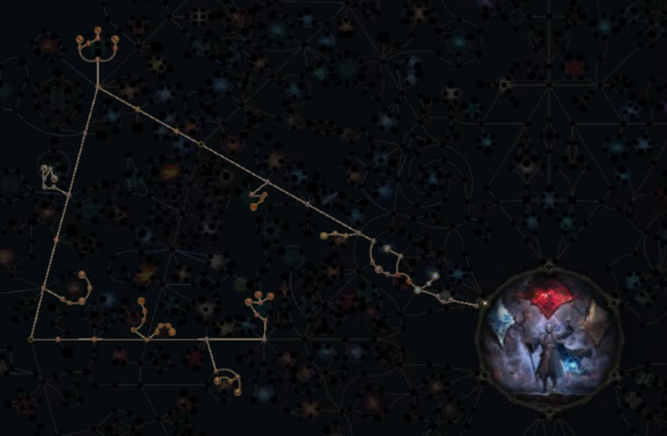
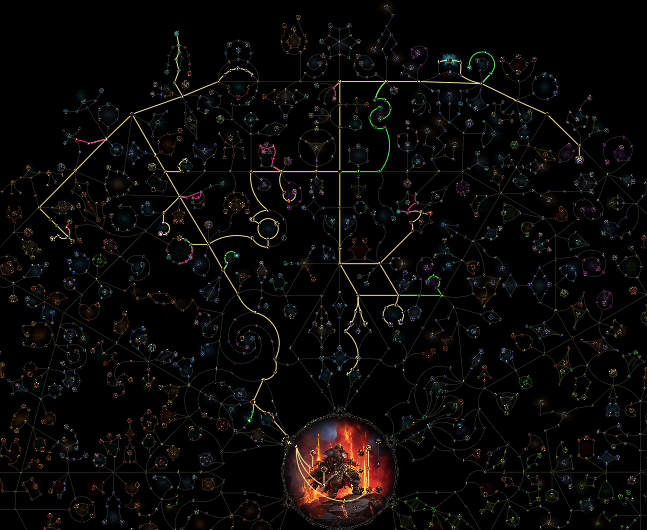
Atlas Passive Tree overhaul
Entire tree can eventually be allocated.
Nodes now offer:
Multi-choice specialization
Combined mechanics
Dynamic encounters
More meaningful bonuses
Examples
Rogue exiles that flee and return stronger
Spirit-possessed strongboxes
Boss shrine modifiers
Multi-faction city invasions
Masters of the Atlas
A new “Atlas Ascendancy” system.
Atlas Masters
Different masters specialize your mapping style.
Jado
Focuses on:
Uniques
Corruption
Risk/reward mapping
Hilda
Focuses on:
Boss hunting
Harder pinnacle fights
Better rewards
Players can swap masters depending on strategy.
Revamped Endgame Leagues
Delirium: “The Hare and the Raven”
Story centered around Tangmazu, the Raven Trickster.
New mechanics
Delirium depth meter
Special mirror shard encounters
Progressive insanity systems
Fog spreading across Atlas regions
New crafting
“Liquid emotions” craft jewel modifiers.
New amulet notables.
Pinnacle content
New Tangmazu boss encounter
Harder repeatable versions
Dedicated Delirium Atlas tree
Breach
Breach becomes a full hive invasion campaign.
New mechanics
Stabilized breaches
Hive incursions
Sky hives
Hive blood resource
Genesis Tree crafting
Players grow items using “wombgifts” and hive blood:
Create jewelry
Control affixes
Unlock exclusive bases
Special caster/minion mods
Bosses
Tul and Esh return
Xesht pinnacle encounter expanded
Ritual: Rite of the Nameless
Centered around:
Aoife
The King in the Mists
The Bodach
Major mechanic
A multi-map ritual chain:
Consecutive maps add more bosses and enemies.
Rewards escalate heavily.
Final ritual grants access to pinnacle content.
Rewards
Ritual rewards now focus on:
Uniques
Omens
Extremely high-value loot
Overall Endgame Vision
The update introduces:
5 major endgame storylines
Structured quest progression
Dedicated hubs
Pinnacle bosses
Atlas-specific progression systems
Better onboarding for newer players
The goal is to make endgame progression clearer, more varied, and far more content-rich.
Challenge System
For the first time in POE2:
League challenges return.
Completing them unlocks:
Knight of Aldur armor set
Hideout statues
Prestige indicators
Below is a full breakdown of everything coming in the 0.5.0 patch:
1. New League Mechanic: Runes of Elder
The 0.5 league mechanic is called Runes of Elder, a highly crafting-focused system that combines elements reminiscent of Path of Exile 1's Crucible and Bestiary leagues with Expedition-style exploration flair. The league introduces an NPC named Farrow, a blacksmith who has dedicated his life to researching the ancient Ezomyte art of rune smithing — a lost craft capable of imbuing weapons and armor with extraordinary power through the combination of engraved runes.
Core Mechanic: In each area, players will discover rune remnants — ancient stone altars with slots for runes. Players collect runes throughout gameplay (some found through Expedition-style encounters, others as drops from monsters and league content) and then combine them at these altars. The specific combination of runes chosen determines the crafting outcome: currency, gear, skill gems, unique items, and more. However, the runes chosen also empower resurrected monsters with themed abilities corresponding to the rune types used. A fire rune might cause resurrected enemies to cast flame abilities, a storm rune might add lightning-based attacks, and so on. The more rune slots a player fills, the stronger and more varied the crafting options become — but the resurrected enemies become exponentially more dangerous. This creates a clear risk-reward loop: more complexity equals more difficulty equals more reward.
Major Additions:
The Runes of Elder mechanic introduces over 100 new runes and crafting currencies to the game. Some runes function like Essences, guaranteeing specific modifiers when used in crafting. Others interact directly with sockets in items, and some act as metacrafting tools that expand the modifier pools available during rolling — for example, enabling cooldown reduction on gloves, a stat that was previously impossible to roll on that slot. There are also new alloy materials that allow players to manipulate crafting further, adding entirely new modifier categories to items that previously could never have had them.
Runic Ward - A New Defensive System: Perhaps the most significant mechanical addition is Runic Ward, an entirely new defensive layer. Runic Ward acts as an extra life pool that sits on top of a player's health — once life is depleted, Runic Ward absorbs damage before death occurs. Critically, this is not a cheat-death mechanic. If a player has 1,000 life and 100 Runic Ward, a single hit of 1,100 damage will still kill them outright. Runic Ward is simply additional survivability layered onto the existing health system. It can be applied to almost any piece of armor in the game, including unique items, through the use of Verisium — a new resource obtained from the Runes of Elder mechanic. Runic Ward opens up new build possibilities because several new runic skills are powered by Runic Ward instead of mana, creating a resource trade-off where using these abilities costs you defensive padding. New runic support gems are also available and can be used with normal skills, broadening the system's applicability beyond dedicated runic builds.
Unique Weapon Reforging ("Upping"): One of the most requested features finally arrives in 0.5 — the ability to upgrade low-level unique items into higher-level versions with improved base stats. Many unique items in Path of Exile 2 have compelling effects and interesting build-defining modifiers, but sit on base types with such low damage or defense values (such as a 15 energy shield helmet or a 10-damage fist weapon) that they are completely unusable past the early campaign. With the new upping system, players can take these low-level uniques and reforge them onto higher-level base types, making them viable for endgame use. This single addition is expected to unlock dozens of previously useless unique items and create entirely new build archetypes overnight.
Advanced Crafting Systems: Beyond the core rune mechanic, several advanced crafting subsystems are introduced. These include element conversion crafting (allowing players to shift damage types on items), jewel sockets derived from rune sockets (creating new itemization pathways), time-themed modifiers (a new affix family with temporal effects), and alloy crafting with special affixes that expand what items can roll. Together, these systems represent the most significant expansion of PoE 2's crafting since launch and directly address the community's frustration with the crafting gap left by the Homogenization Orb's removal in 0.4.
Campaign Integration: In Act 4, the Runes of Elder mechanic integrates with Expedition encounters, allowing players to blow up runing remnants within Expedition sites to obtain league rewards and runes. This interaction is reportedly extremely dangerous and likely to produce memorable death clips, but the rewards justify the risk.
2. Expedition Overhaul - Ocean Exploration
The Expedition mechanic receives a complete transformation in 0.5, evolving from a contained digging-and-detonation system into a massive ocean exploration experience that functions almost as a self-contained endgame within the endgame.
Features: Logbooks no longer simply open a single excavation area. Instead, they now allow players to sail across ocean sectors and discover islands within the Atlas. Each logbook is a chain of connected maps that culminate in pinnacle boss encounters. King's March, the Expedition hub from the campaign, has been destroyed — setting up the new storyline that drives the mechanic forward.
Islands within the ocean sectors contain new encounters, hidden secrets, vaults filled with treasures, bosses guarding ancient relics, and environmental mechanics unique to each island type. The exploration system is expansive enough that players who wish to engage exclusively with Expedition for their entire endgame experience can do so — you can essentially "be a boat person" full-time if that appeals to you.
Main Storyline: The Expedition narrative now revolves around several interconnected threads: finding Gwennen (Rog's wife, who has gone missing), exploring ancient Kalguuran tombs scattered across the ocean, investigating powerful Verisium meteors that have crashed into remote island chains, and confronting an unknown eldritch horror that lurks beneath the waves. Completing the logbook reward chain gives players a new logbook to embark on another journey, creating a self-sustaining loop of exploration.
Endgame Additions: The Expedition overhaul introduces 5 new bosses — including returning favorites like Urid and Olroth in new, more challenging forms — and a new pinnacle boss that spawns after defeating all the questline bosses. GGG chose not to spoil this pinnacle encounter during the reveal stream, but confirmed it exists. A deep exploration progression system tracks player progress through the ocean sectors, providing long-term goals and escalating rewards. Both small and large Expedition encounters can spawn, with some spanning a massive portion of the screen. There were also visual hints at a fishing rod during the reveal, which has fueled speculation that fishing may arrive as a minigame within the logbook system.
3. Atlas / Endgame Revamp
The Atlas receives a complete redesign in 0.5, fulfilling GGG's long-standing promise to overhaul what has been widely regarded as Path of Exile 2's greatest weakness since launch. The endgame is no longer the unguided, directionless experience it was — it now features structured progression, dedicated questlines for every mechanic, and clear goals that guide players from the moment they finish the campaign.
Key Changes: The Atlas now features fixed points of interest with static positions, ensuring players always have visible landmarks to work toward rather than wandering aimlessly through an infinite procedural space. Every endgame mechanic has its own dedicated questline with associated rewards, progression milestones, and pinnacle boss encounters. The onboarding experience for every single mechanic has been reworked, meaning new players entering the endgame for the first time will have a dramatically better understanding of what each system offers and how to engage with it.
The Fortress Storyline - Origins of Divinity: The main Atlas questline is called "Origins of Divinity" and centers around a massive Fortress that spawns after players complete their first tower. The Fortress is a walled-off region of the Atlas containing maps with extra rewards and new mapping mechanics (some of which are reworked systems from PoE 1). Players progress through citadels at static positions within the Fortress, providing clear waypoints and eliminating the "lost" feeling that plagued the previous endgame. The questline involves uncovering ancient precursor superweapons and culminates in a new Arbiter boss that unlocks the Infinite Atlas. The old Arbiter of Ash remains farmable for fragments, but this new encounter serves as the gateway to the expanded endgame — and reportedly, it is significantly more challenging.
More Structured Progression: The early Atlas experience is now considerably more finite and guided, easing players into the mechanics before opening up to the Infinite Atlas later. By the time the Infinite Atlas unlocks, players have a much deeper understanding of the game's systems and can engage with the open-ended content from a position of knowledge rather than confusion. Players can immediately choose which league mechanic to pursue upon entering the endgame and begin progressing toward rewards right away, eliminating the previous problem of mapping from tier 1 to tier 15 without earning meaningful loot.
4. Atlas Passive Tree Overhaul
The Atlas Passive Tree has been completely reinvented from its previous iteration, which Mark Roberts famously dismissed on camera as something that "sucks."
Key Design Philosophy: The new tree can eventually be fully allocated — every single point can be taken. This initially sounds like it removes choice, but GGG has implemented an elegant solution: many nodes feature multi-choice specialization options, functioning similarly to masteries in PoE 1's passive skill tree. When a player allocates certain nodes, they must choose between multiple sub-options that determine how that node functions.
Examples of Multi-Choice Nodes: On a shrine node, players might choose between "25% chance for you to receive a shrine buff" or "25% chance for the map boss to receive a shrine buff, but drop significantly more loot." On other nodes, choices might include: rogue exiles that flee from combat and return in later maps significantly stronger (with better drops), spirit-possessed strongboxes that spawn empowered enemies alongside their loot, boss shrine modifiers that make pinnacle fights harder but more rewarding, or multi-faction city invasions where multiple league mechanics converge on a single map simultaneously.
Combined Mechanics and Dynamic Encounters: The reworked tree enables combinations that were previously impossible — nodes that blend different league mechanics together, create escalating challenge scenarios, or modify the fundamental rules of how content spawns. The result is a tree where every point matters, every allocation feels impactful, and the choices between sub-options provide the meaningful decision-making that the previous tree lacked entirely.
Overall Assessment: The new Atlas tree represents a philosophical shift — rather than restricting players through limited points (as PoE 1 does brilliantly), PoE 2 provides agency through branching choices within a fully allocable framework. Both approaches create meaningful decisions, but PoE 2's version ensures players never feel punished for engaging with content they enjoy.
5. Masters of the Atlas
A brand-new system called Masters of the Atlas introduces what is essentially an Atlas Ascendancy — a way to further specialize and customize your endgame mapping experience through NPC allegiance.
How It Works: Three new Atlas Master NPCs are introduced. Players complete missions for these masters, level them up, and unlock their individual small passive trees that provide powerful bonuses to specific playstyles. Players can switch between masters depending on their current strategy, and the system is designed to be flexible rather than permanently locking players into a single path.
Jado: This master specializes in unique items, corruption, and risk/reward mapping. Players aligned with Jado will find more opportunities for high-variance outcomes — corrupted items with extraordinary rolls, dangerous map modifiers with outsized rewards, and unique item drop rate bonuses. Jado is the master for players who enjoy gambling on outcomes and pushing the boundaries of item power.
Hilda: This master focuses on boss hunting, harder pinnacle fights, and better rewards from difficult content. Hilda empowers boss encounters to be more challenging while proportionally increasing their drop tables. Players who enjoy the thrill of pinnacle boss farming and want to push the difficulty ceiling will gravitate toward Hilda's tree.
The Third Master (Avali/Sorani): A third master was shown but details remain somewhat unclear. Based on the reveal stream, this master appears to offer a different axis of specialization, potentially focused on quantity-based farming or mechanic-specific bonuses. More information is expected in the patch notes.
The Masters system works alongside the Atlas Passive Tree to create layered customization — the tree provides broad choices about how mechanics function, while masters provide focused bonuses that amplify specific playstyles.
6. Revamped Endgame League: Delirium - "The Hare and the Raven"
Delirium receives a full rework with a new storyline centered around Tangmazu, the Raven Trickster — confirming for the first time in official PoE 2 canon what the community long suspected: that Tangmazu is the voice behind the Delirium fog. This confirmation was treated as a significant lore moment during the reveal stream.
New Mechanics: Delirium now features a depth meter displayed clearly in the UI, showing players exactly how deep into the fog they have progressed. The visual presentation has been improved for clarity, making it easier to read what is happening during Delirium encounters. Special mirror shard encounters appear within the fog — new colored Delirium shards that empower monsters in specific ways. Red shards in particular send players into a Delirium instance described as "your worst nightmare" — a separate zone featuring extremely dangerous content (the reveal stream showed a recreation of the infamous Shrek swamp zone from PoE 1).
A progressive insanity system tracks engagement with Delirium across multiple maps, with fog spreading across Atlas regions as players delve deeper. New encounters within the fog provide escalating challenges and rewards the further players push.
New Crafting: Delirium introduces "liquid emotions" — a new tier of distilled emotional essences that can craft jewel modifiers with guaranteed affixes. New amulet notables are also available through the Delirium crafting system, expanding build options for players who invest heavily in the mechanic.
Pinnacle Content: Tangmazu himself is now the pinnacle boss of the Delirium questline, with harder repeatable versions available after the initial encounter. The Delirium Atlas tree section provides dedicated progression toward this fight and specialized rewards along the way. Elder Maddox, an NPC, points players toward a new Atlas location that serves as the source of the Delirium, with all surrounding maps featuring the reworked Delirium mechanic.
7. Revamped Endgame League: Breach - Hive Invasion Campaign
Breach evolves from a simple mechanic into a full hive invasion campaign with dramatically expanded scope, drawing heavily from PoE 1's Breach systems while amplifying them significantly.
New Mechanics: Normal breaches now function like unstable breaches from PoE 1 — players kill monsters within an expanding circle, filling a stabilization bar. Once the breach stabilizes, runic rears appear with additional challenges. Hive incursions replace the old breach fortress system, functioning similarly to Defense-style breaches from PoE 1. Sky hives (formerly sky fortresses) provide another layer of content. A new resource called hive blood powers the expanded Genesis Tree crafting system. Breach stones return as a mechanic (obtained only from womb gifts), while breach charges have been removed entirely. Killing breach monsters spawns a circular area that must be completed before accessing the boss fight.
Genesis Tree Crafting: The Genesis Tree from PoE 1 returns but has been dramatically expanded — described during the reveal as having "taken crack cocaine" in terms of complexity and depth. Players use womb gifts and hive blood to grow items through the tree system. The crafting allows players to: create jewelry from scratch, control specific affixes on crafted items, unlock exclusive base types unavailable elsewhere, and access special caster and minion modifiers unique to the Breach system. The tree is far more complex and in-depth than its PoE 1 counterpart, offering meaningful long-term investment for players who specialize in Breach content.
Bosses: Classic breach lords Tul and Esh return as encounters within the hive system. The Xesht pinnacle encounter (the final breach boss) has been expanded with additional phases and mechanics. Killing all breach bosses grants access to Xesht's ultimate form.
Chayula remains a friendly NPC in 0.5, though community speculation suggests this may not last forever given the thematic tension of having both Doriani and Chayula as permanent allies.
8. Revamped Endgame League: Ritual - Rite of the Nameless
Ritual receives a narrative overhaul centered around three key figures: Aoife (the Druid's wife, who has been stolen away), the King in the Mists, and the Bodach.
Major Mechanic - Multi-Map Ritual Chain: The core ritual gameplay remains the same — kill monsters within a circle, watch previously slain monsters resurrect for additional tribute — but the endgame progression is entirely new. Rituals now primarily drop uniques and omens as rewards (with some modifications available that shift drops to currency-only). Any unspent tribute can be invested directly toward progressing the King in the Mists boss fight.
After defeating the King in the Mists, players wear his head and transfer his name, unlocking access to a new Wildwood area and ritual maps. This opens a chain of empowered rituals — a multi-map sequence where each consecutive map adds more bosses and enemies to the ritual encounters. Rewards escalate heavily with each map in the chain, with confirmed sightings of items like Mageblood among the possible rewards (though the exact acquisition method — possibly divine syncing or keystone interaction — remains unclear).
Each empowered map in the chain adds the defeated boss to the ritual pool for the next map, meaning the final maps in a chain feature massive clusters of bosses spawning simultaneously within the ritual circle. This is the content that was described during the reveal as "screaming 'please go Spark'" — encouraging builds with massive area coverage.
Pinnacle Content: Completing the full chain of empowered rituals grants audience with the true ritual boss — a separate, ultimate encounter beyond the King in the Mists. The possibilities enabled by this system include scenarios like double bosses, six bosses in a single ritual, and other combinations that push build limits to their absolute maximum.
9. Overall Endgame Vision
The 0.5 update introduces 5 major endgame storylines running simultaneously, each with its own structured quest progression, dedicated hubs, pinnacle bosses, and Atlas-specific progression systems. The total count across all revamped mechanics is approximately 50 new pinnacle bosses — a staggering number that ensures players will have aspirational content to chase for months.
Better onboarding for newer players ensures that the transition from campaign to endgame no longer feels like falling off a cliff into an ocean of confusion. Every mechanic now clearly communicates what it offers, how to engage with it, and what the ultimate reward is for full investment. The goal is to make endgame progression clearer, more varied, and far more content-rich than anything the game has offered before.
An in-game build planner has also been added, allowing players to follow build guides directly within the game client. This integrates with community resources and guide creators, dramatically lowering the barrier to entry for players who previously had to alt-tab between the game and external tools.
10. Challenge System
For the first time in Path of Exile 2, league challenges return as a formal system. Completing challenges throughout the Runes of Elder league unlocks cosmetic rewards and prestige indicators including: the Knight of Aldur armor set (a full cosmetic set earned through challenge completion), hideout statues commemorating league accomplishments, and prestige indicators visible to other players. This gives completionist-minded players structured goals beyond simply farming currency and provides visible markers of achievement within the community.
11. New Ascendancies
Two new ascendancy classes arrive in 0.5. No new base class or weapon type was added, but these ascendancies significantly expand build diversity for existing classes.
Spirit Walker (Huntress Ascendancy)
The Spirit Walker is a Huntress subclass built around commanding Asmiri animal spirits — the Stag, the Owl, and the Bear. Each spirit offers distinct capabilities and can be specialized individually, or players can choose to summon all three simultaneously for a broader but less focused approach.
Features: The Spirit Walker can summon spirits that fight alongside the player, provide powerful buffs to the player and allies, and enable spirit-powered attacks that channel the essence of each animal. The Stag offers mobility and evasion-related bonuses, the Owl provides intelligence and spell-related enhancements, and the Bear delivers raw strength and defensive power.
Most excitingly, the Spirit Walker features a beast boss taming mechanic — players can tame powerful bosses encountered in the world and summon them as combat companions. Confirmed tameable creatures include the gorilla boss and the powerful Ultimatum bird, creating scenarios where players bring enormous, screen-filling allies into combat. This ascendancy is expected to be extremely popular among players who enjoy companion-focused builds and represents one of the most unique ascendancy designs in either Path of Exile game.
Martial Artist (Monk Ascendancy)
The Martial Artist is a Monk subclass focused on hollow martial techniques, illusions, and stone-enhanced combat. This ascendancy pushes the Monk class in a more mystical, internal-power direction compared to the existing Monk paths.
Features: The Martial Artist can spawn illusions — copies of themselves that mimic attacks and confuse enemies. A signature mechanic involves summoning an illusory bell that the Martial Artist carries on their back, which procs on critical strikes and deals additional damage or applies effects. Players can tattoo runes onto their character for extra bonuses, creating synergy with the Runes of Elder league mechanic. The ascendancy also features upgraded "stone fist" gloves — empowered gauntlets that dramatically increase unarmed damage and add visual effects to melee strikes.
The Martial Artist has strong synergy with both the rune systems introduced in the new league and traditional melee combat, making it appealing to players who want a more technical, combo-oriented playstyle with flashy visual payoffs. Channeling abilities are central to the kit, rewarding players who position carefully and commit to attacks rather than constantly kiting.
12. New Unique Items
The 0.5 update introduces a large wave of new unique items, many of which are designed around the new systems introduced in the patch. Examples shown during the reveal include:
A cold-converting mace that triggers meteor-style attacks on hit — visually resembling a Paladin fantasy from the Diablo franchise, featuring massive leap slams that chunk bosses for enormous damage. This was described as one of the most powerful items shown in any GGG trailer to date, suggesting it will be a chase unique for melee builds.
A Runic Ward amulet that triggers ice flower explosions when Runic Ward is depleted or damaged, creating a defensive-offensive feedback loop where taking damage generates area-of-effect retaliation.
A minion raven staff that summons ravens which apply madness debuffs to enemies — essentially creating a "Righteous Fire with birds" aesthetic where the player is surrounded by a swirling murder of ravens that damages everything nearby. This was immediately identified by the community as a build-defining item for Delirium-themed characters.
A spear unique with an enormous leap slam attack that covers massive distance and deals devastating damage on landing — the sheer power displayed in the trailer suggests this will be one of the most sought-after items in the league.
The update strongly emphasizes build experimentation through unique items that interact with new systems (Runic Ward, rune crafting, spirit summoning), complex crafting pathways that let players enhance these uniques beyond their base power, and long-term progression goals tied to finding, upgrading, and perfecting rare items across interconnected endgame systems.
13. Additional Major Announcements
Last Patch Before 1.0: GGG confirmed during the reveal that 0.5 is the final major patch before the full 1.0 release. There will be no additional numbered league between 0.5 and 1.0. The full release will come after ExileCon 2026 (November 7–8) but within 2025 — meaning either late November or early December 2026 is the 1.0 launch window. GGG indicated they may run mini-leagues or events to keep the community engaged between the end of the Runes of Elder league and the 1.0 launch.
Fate of Vaal Going Core: The Fate of the Vaal league ends before 0.5 launches, with characters and items migrating to Standard or Hardcore Early Access leagues. Vaal runes and the Temple mechanic are expected to become permanent core content, though reward rates will likely be adjusted downward from their league values.
No New Class or Weapon Type: Despite widespread community expectation, neither the Duelist class nor swords were ready for 0.5. GGG prioritized the endgame overhaul over new class development. The remaining classes (Duelist, Templar, Shadow, Marauder) and their associated weapon types are now expected to arrive with the 1.0 release or be revealed at ExileCon 2026.
More Updates Coming in PoE 2 Next Seasons in 2026
As Path of Exile 2 approaches its 1.0 release, several major additions are on the table for the remainder of the year:
PoE 2 1.0 Full Release & ExileCon 2026: ExileCon 2026 is set for November 7th and 8th, and anticipation is building that this will be where GGG announces the official launch date for Path of Exile 2 version 1.0. Multiple clues from interviews and the content release cadence suggest that December 2026 remains the most likely window for the full release. A plausible timeline would see the endgame overhaul and a new league mechanic in 0.5, the Duelist (if not in 0.5) along with a major balance pass and performance improvements in 0.6, and Acts 5 and 6 revealed at ExileCon as part of the 1.0 launch.
New Campaign Acts: Current information points toward Act 5 launching either with 0.5 or in the 0.6 update. The final act (likely Act 6, described as shorter) is expected to be reserved for the 1.0 release. The six-act structure was part of Path of Exile 2's original promise, and while the team has adjusted expectations about having every feature in place for 1.0, a complete campaign journey spanning all acts and interludes remains the goal for December. With only two league cycles remaining before the expected 1.0 window, the timeline for finishing the campaign is tight but feasible.
New Classes: The remaining four base classes (Duelist, Templar, Shadow, and Marauder) are expected to arrive across the remaining updates in 2026, though possibly not all before 1.0. The community largely expects Duelist in 0.5, with at least one or two more classes arriving between 0.6 and 1.0. Shadow is widely expected to be held for 1.0 due to the hype it generates and the complexity of implementing both daggers and traps as new weapon types.
New Ascendancies: Path of Exile 2 is planned to have 12 character classes, each with 3 ascendancy paths. Currently there are 19 ascendancies in the game. New ascendancy paths are being rolled out with each major update, with the Arcane Archer and Wildspeaker being the strongest candidates for 0.5. Existing classes are also expected to receive their third ascendancy options over the coming updates.
Free To Play: Free-to-play remains at the center of PoE 2's plans, just as with the first game. The transition to a complete release later in the year will not change that. As in Path of Exile 1, monetization will rely on cosmetic microtransactions, support packs, and expansion content, with no paywall for core gameplay.
Path of Exile 2's 2026 roadmap promises a packed year for both new and returning players. The 0.5 update with its confirmed endgame overhaul, new league mechanic, and very likely new class, represents the most ambitious single patch since early access began. The end-of-April announcement will finally give us concrete details about what GGG has been building during this extended development cycle.
Stay tuned to official channels for the live reveal and patch notes as the new league approaches. PoE 2's journey through early access is far from over, and this next update may well define the game's direction for the rest of the year and beyond.